Best Keno Online Casino Australia: What the Law Allows
 Available in US
Understand how draw keno, keno slots, real-money claims and casino terminology fit within Australia’s online gambling rules.

- The Australian Pokies Paradox: What the Law Actually Permits
- Keno Casino Games: Draws, Numbers, and the Language of Chance
- Real-Money Keno Machines and the Limits of the Phrase
- Finding a Keno Casino Without Mistaking a Label for a Licence
- Inside Keno Casino Sites: Payments, Verification, and Withdrawal Friction
- Keno Slot Machines: The Reel-Based Cousin of Draw Keno
- Free Keno Slots: Practice, Entertainment, and No Cash-Out Illusion
- Keno Slot Strategy Meets Randomness
- Canada, Four-Card Keno, and the Geography of Casino Search Terms
- Keno Bonuses and Bitcoin Searches After the Payment Ban
The Australian Pokies Paradox: What the Law Actually Permits
Australia’s gambling law has a distinctly Australian habit: it permits one form of wagering while refusing another that may look remarkably similar on a screen. The central statute is the Interactive Gambling Act 2001 (IGA), which governs the supply of online gambling services to people in Australia. Its dividing line is not whether money changes hands, but what kind of gambling product is being offered and by whom.
For Australian residents, online casino games are prohibited services. That category includes online pokies, roulette, blackjack and live-dealer tables. A real-money online casino offering pokies to Australians is therefore not a locally licensed entertainment business waiting to be discovered; it is offering a product the law does not permit. There is no Australian licence for an online casino product of that kind.
The player and the provider occupy different positions under the law. The Interactive Gambling Act targets the provider rather than the individual punter. Australians are not committing a crime merely by placing a bet with an offshore site, while the operator remains responsible for whether its service may legally be offered to people in Australia. That distinction is easy to miss in promotional language, where “available” can sound suspiciously like “approved”.
This shortlist helps Australian players assess notable online casino options for keno in 2026. Use each brief verdict to identify the operator features most relevant to your preferred deposit, bonus, licensing, or payout needs.
License: Curacao eGaming Licence · Min. deposit: A$10 Rocket Play is notable for its Curacao eGaming Licence and low A$10 minimum deposit.
License: Tobique Gaming Commission · Bonus: up to A$8,000 + 400 free spins across 4 deposits · Payout speed: crypto ~10-15 minutes, fiat 1-5 days · Min. deposit: A$30 SkyCrown stands out with a bonus of up to A$8,000 plus 400 free spins across four deposits. Crypto payouts are listed at around 10–15 minutes, while fiat payouts take 1–5 days; the minimum deposit is A$30.
License: Curacao eGaming Licence · Min. deposit: A$10 PlayWest combines a Curacao eGaming Licence with a low A$10 minimum deposit.
License: Curacao eGaming (Dama N.V.) · Bonus: up to A$10,000 + 180 free spins, 40x wagering JeetCity Casino operates under a Curacao eGaming licence through Dama N.V. Its offer includes up to A$10,000 plus 180 free spins, with 40x wagering.
License: Curacao, operated by Dama N.V. · Bonus: 325% up to 5.25 BTC + 250 free spins across 4 deposits 7Bit Casino is operated by Dama N.V. under a Curacao licence and offers up to 325% up to 5.25 BTC plus 250 free spins across four deposits.
License: international iGaming licence – jurisdiction not named in the source · Bonus: 100% up to A$1,000 + 100 free spins, 35x wagering · Payout speed: PayID 1-24 hours · Min. deposit: A$30 (PayID from A$10) House of Pokies lists an international iGaming licence, with the jurisdiction unnamed in the source. Its offer includes 100% up to A$1,000 plus 100 free spins with 35x wagering, while PayID payouts are listed at 1–24 hours.
License: Curacao · Bonus: 100% up to A$500 + 200 free spins, 10x wagering · Payout speed: crypto 30-60 minutes, fiat 1-5 days · Min. deposit: A$10 Wild Tokyo operates under a Curacao licence and offers 100% up to A$500 plus 200 free spins with 10x wagering. Crypto payouts are listed at 30–60 minutes and fiat payouts at 1–5 days; the minimum deposit is A$10.
Bonus: up to A$750 + 50 jackpot spins, 35x wagering · Payout speed: crypto ~90 minutes, fiat 1-5 days · Min. deposit: A$30 Kingmaker offers up to A$750 plus 50 jackpot spins with 35x wagering. Crypto payouts are listed at around 90 minutes and fiat payouts at 1–5 days, with a A$30 minimum deposit.
Bonus: up to A$6,600 + up to 250 free spins across 4 deposits DragonSlots Casino is highlighted by a bonus of up to A$6,600 plus up to 250 free spins across four deposits.
License: Curacao · Bonus: up to A$10,000 multi-stage + 500 free spins · Min. deposit: A$20 (POLi) Lucky Dreams offers a multi-stage bonus of up to A$10,000 plus 500 free spins. The minimum deposit is A$20 when using POLi, and the listed licence is Curacao.
Where Keno Fits
Keno occupies the awkward middle ground that produces much of the confusion around searches for casino keno, keno casinos and online casinos with keno. Keno is among the online gambling products that may be permitted and licensed for Australians, alongside lotteries and pre-event sports and racing wagering. That status does not transform an online casino into an Australian casino, nor does the presence of a keno game legalise prohibited casino games on the same platform.
The product matters. A permitted keno offering and a prohibited online pokies service are not interchangeable merely because both involve numbers, chance and a cash balance. Search labels are less disciplined than legislation. “Best online keno casinos” may describe a page built around a legal keno product, an offshore casino advertising keno beside prohibited games, or simply a loose commercial phrase. The words alone settle nothing.
Australia’s system is also divided between federal and state or territory responsibilities. The IGA supplies the main federal boundary for online gambling services, while relevant licences for lawful products sit within the broader Australian regulatory structure. Licensed bookies may offer sports and racing wagering, and lotteries operate within their own permitted framework. Land-based casinos remain a legal option for casino gambling, including pokies in the settings where those machines are authorised.
This creates the paradox. Australia does not prohibit gambling as a social activity; it sorts gambling into categories and assigns each category a different legal fate. A lottery ticket may be lawful. A pre-event racing bet may be lawful. Keno may be a permitted, licensable product. An online casino offering pokies to the same resident is prohibited.
The distinction is less dramatic on a phone than it is in a statute book. On a screen, every product can arrive as a tile, a balance and a button. Legally, they are different creatures.
That is the essential context for any discussion of keno casinos or casino sites carrying that label. Keno’s permitted status must be considered separately from the status of online casino games surrounding it. A name, menu, or marketing promise cannot create an Australian casino licence where the law provides none.
Numbers are selected from a pool and compared with a drawn result following a specific paytable.
Play is organised around reels, symbols, and paylines where the spin is the basic event.
Keno Casino Games: Draws, Numbers, and the Language of Chance
A keno casino game is built around a draw. Numbers are selected from a larger pool, a punter chooses a set of numbers, and the result depends on how many selections match the drawn numbers. The visual style may be bright, theatrical, and decorated with the usual casino vocabulary, but the underlying idea is closer to a number draw than to a traditional reel game.
That distinction matters because “casino keno” can describe several closely related experiences. In a physical venue, it may refer to a displayed draw followed by a settlement of winning combinations. In a digital setting, it can mean a self-contained keno title, a branded interface built around numbered balls, or a section containing several draw-based games. The name signals the format, not a single universal rule set.
What happens in a draw-based game
The essential sequence is simple:
- A selection of numbers is made from the available pool.
- The game produces a draw.
- The selected numbers are compared with the drawn numbers.
- The result is settled according to the applicable paytable.
The paytable is the game’s real grammar. It defines which matches count, how different selections are treated, and what outcome corresponds to each combination. Two casino keno games can therefore look almost identical while handling selections and prizes differently. The title alone does not explain the mathematics.
This is also why keno is not best understood as a game of pattern recognition. A cluster of numbers that appeared recently does not become more or less entitled to appear next merely because the screen has displayed it several times. The draw is the event; the previous draw is history.
Keno and reel-based pokies are not the same thing
Pokies, as Australian English calls them, organise play around reels, symbols, paylines or ways to win, and the spin as the basic event. Keno organises play around numbers and a draw. Even when both appear inside a casino interface, they speak different visual languages.

A pokie spin may show symbols such as fruits, characters, or feature icons arranged on reels. A keno game normally presents a numbered field, marked selections, and a drawn result. One is symbol-and-reel based; the other is number-and-draw based.
The difference is not erased by software. Online pokies and slot machines use the same reels, RTP, and volatility, differing only in local terminology. Keno may also be delivered by software, but its defining structure remains the draw rather than the reel spin. Calling every digital gambling title a “slot” is convenient, but it is not precise.
RTP, where a game publishes it, describes a long-term theoretical average. It does not predict the result of an individual keno session, nor does it turn a sequence of misses into evidence that a win is due. The language of chance is stubbornly less dramatic than the advertising around it.
Why the terminology overlaps
The phrase “online casino keno games” combines a format with a setting. “Keno casino games” reverses the order without changing the subject. “Casino games keno” and “keno online casino games” are similarly compressed labels for people trying to identify a number-draw product within a wider casino catalogue.
This blending happens because casino menus often group unlike games under one commercial roof. A page may place keno beside pokies, table games, and live products, even though their mechanics differ. An app may be called a keno casino app because it packages the game in a mobile interface, not because “casino” defines the draw itself. Several keno casino apps can therefore offer materially different presentations while sharing the same broad format.
The useful question is not which word comes first. It is whether the title uses numbered selections and a draw, and whether its rules explain how matches are settled. That is the identity of the game. Everything else is packaging.

Real-Money Keno Machines and the Limits of the Phrase
“Real-money keno machines” sounds precise until the machinery of language is examined. In practice, it may describe a draw-based keno game played for cash, a keno-themed electronic gaming machine, or a reel game that borrows keno’s name. The words identify a gambling experience, not a legal category. That distinction matters in Australia, where familiar labels have often travelled further than the permissions attached to them.
A keno casino real-money game normally means that a punter stakes money on an outcome rather than using a free-play mode. The stake may be attached to drawn numbers, a machine interface, or reels styled around keno symbols. “Keno casino” therefore does not automatically mean a traditional keno draw, just as “machine” does not automatically mean an Australian-licensed pokie. Marketing is fond of collapsing these differences. Regulation is less forgiving.
Money play is not the same as local authorisation
For Australians, the important question is not whether a website calls itself a real online casino keno service. It is what the service is offering, and under which authority. Real-money online casinos offering pokies to people in Australia are banned under the Interactive Gambling Act 2001. No Australian licence for online pokies exists, and none has ever existed.

That makes phrases such as “play casino keno online” legally incomplete. If the product is a keno-branded pokie or another online casino game, the Australian market does not supply a domestic licence that makes it lawful for a provider to offer. The label cannot create one. A polished interface cannot create one either.
The law is directed at the provider, not the individual punter. Australians are not prosecuted under the Interactive Gambling Act for placing bets with an offshore site. That is a narrower statement than saying every offshore arrangement is safe, approved, or equivalent to a locally licensed service. It simply identifies where the Act places its enforcement emphasis.
Offshore casinos in Curaçao, Anjouan, and similar jurisdictions may accept Australian residents. Their existence explains why searches for online casino real-money keno produce results at all. It does not turn them into Australian casinos. Their licence, if they hold one, belongs to the jurisdiction named in their own regulatory documentation.
What the phrase can conceal
A page promising online casino keno rules may be describing several different rulebooks:
- a number-draw game in which selected numbers are compared with the draw;
- a keno-themed electronic game with paylines, reels, RTP, and volatility;
- a casino product presented as keno but governed by the operator’s general game terms;
- a free interface that resembles a cash game but does not permit withdrawal.
These are not interchangeable. A draw game and a reel-based game can share symbols, colours, and vocabulary while producing outcomes through different formats. The word “keno” is doing rather a lot of unpaid labour.
The same problem appears with searches for free keno slot machines online. “Free” may indicate a demonstration mode, a promotional presentation, or simply a page discussing the game without offering cash play. It does not imply that winnings can be withdrawn. Nor does a free keno slot machine become a real-money product merely because the same title exists elsewhere for stakes.
The useful boundary is functional: does the platform accept money for the game, and does it present the game as an online casino product to an Australian customer? If so, the terminology should not be mistaken for local approval. “Keno casino real money” describes the intended mode of play. It does not describe an Australian licence.
- Check the issuing regulator’s public register.
- Identify the legal entity and governing terms.
- Verify independent testing of the random number generator.
- Assuming an Australian flag or English language implies a local licence.
- Treating offshore licences (Curaçao, Malta) as Australian authorisation.
- Mistaking a keno-branded product for a permitted local service.
Payment language has its own boundary
Crypto casino keno is another phrase that combines a game label with a payment method. For online wagering in Australia, a specialist industry review records that credit cards, credit-related products, and cryptocurrency have been banned as payment methods since 11 June 2024. That restriction makes cryptocurrency wording especially poor evidence of legitimacy. A crypto badge is not a regulatory seal.
The sensible reading of these phrases is therefore modest. They may indicate what a site claims to offer, whether the game is free or cash-based, and whether the interface is built around keno or pokies. They cannot establish that the product is licensed in Australia, that its rules are locally approved, or that its payment route is lawful for Australian online wagering.
Names are convenient. Jurisdictions are not.
Finding a Keno Casino Without Mistaking a Label for a Licence
A site can call itself a “keno casino” without possessing an Australian casino licence. The label describes a product or marketing position, not legal permission. That distinction matters because the Interactive Gambling Act 2001 governs online gambling in Australia, while no domestic licence exists for an online casino offering pokies, roulette, blackjack, or comparable casino games to Australian residents.
The sensible screening method therefore begins with jurisdiction, not a homepage badge.
Start with the licence, then read the fine print
An offshore operator may display a licence from Curaçao, Malta, or another recognised jurisdiction. The licence number should be checked against the issuing regulator’s public register, where such a register exists. A logo alone proves very little. Nor does an Australian flag, Australian dollars, or a page written in local English turn an offshore casino into an Australian-licensed casino.
That is the awkward truth behind searches for the best keno online casino Australia 2026: “Australian-facing” and “Australian-licensed” are not interchangeable descriptions.
The site should also identify the legal entity operating the account, its governing terms, complaint route, and the jurisdiction in which disputes are handled. If those details are buried, contradictory, or absent, the cheerful keno branding is doing too much work.
Look for independent testing
A credible platform should explain how its games are generated and identify independent testing of its random number generator. Licensed Australian-facing platforms are required to use independently audited random number generators; an operator that merely says “fair” without naming the testing arrangement offers a slogan, not evidence.
The same restraint applies to game information. Rules should explain the winning conditions, available bets, RTP where supplied, and any relevant volatility description. RTP is a long-term theoretical measure, not a promise about one evening. A glossy “best online keno casino” claim cannot alter mathematics.
Treat account controls as part of the product
Identity verification should be clear before money is moved out of the account. The platform should state what documents may be requested, how personal information is protected, and whether Australian residency must be confirmed. SSL encryption is a basic security expectation, but security language should sit beside an actual privacy policy rather than replace one.
Verification Steps
- Confirm which identity documents are accepted.
- Verify if proof of Australian residency is required.
- Ensure the payment method belongs to the account holder.
- Check for any account limits applied during verification.
Responsible-play tools deserve the same scrutiny. Deposit limits, self-exclusion, and session time reminders are meaningful only when their operation is explained. An offshore casino must not be presented as covered by BetStop or a national self-exclusion register. That protection cannot be inferred from a responsible-gambling badge.
Read the money rules before depositing
Deposits and withdrawals belong in the terms, not in a promotional footnote. A specialist affiliate review reports deposit maximums of A$5,000 to A$10,000 per transaction at the Australian-facing casinos it examined, while another such review reports withdrawal limits of A$500 to A$2,000 per request for standard players. Those are source-specific observations, not Australian market rules.
The minimum deposit also needs checking. One industry comparison reports A$10 as the minimum at many casinos. The figure is less important than whether the site states its own minimum plainly, applies wagering conditions to deposits or bonuses, and explains pending withdrawals, identity checks, cancellation rules, and fees.
A proper comparison of casino keno online platforms is consequently less glamorous than a ranking table. It asks who operates the site, which regulator can be verified, how randomness is audited, what the terms actually disclose, and what protections exist when the marketing voice falls silent.
Labels are cheap. Evidence is not.
Inside Keno Casino Sites: Payments, Verification, and Withdrawal Friction
Finding a keno casino site is only the beginning. The operational test starts when an account is opened, money is moved, and a withdrawal meets the platform’s internal checks. A polished page for keno pokies, keno slots, or keno slot games says little about what happens behind the welcome screen.
Account checks before the cash-out
Identity verification is not an ornamental step added at the cashier. Offshore casinos serving Australians may request identity and residency documents before releasing funds, even when deposits were accepted without much ceremony. The practical distinction matters: depositing can be quick, while withdrawing may pause until the account holder, payment method, and account details have been matched.
That makes the verification wording worth reading before any deposit. The relevant questions are plain:
- Which identity documents are accepted?
- Is proof of Australian residency required?
- Must the payment method belong to the account holder?
- Can a withdrawal remain pending while documents are reviewed?
- Are any account limits applied during the check?
A site that leaves these conditions buried in a help page has created friction by design, or at least by neglect. Neither is a particularly charming feature.
Deposits and the PayID clock
The minimum deposit is not a universal market rule. One profile review reports AU$10–AU$20 for many Australian-facing platforms, but the cashier on the selected site remains the controlling source. Payment options can also differ between a general casino lobby and a particular keno or live-keno section.
PayID is a distinctly Australian point of comparison. One specialist review records deposits as updating the casino balance within 2–5 minutes. That is a reported observation, not a promise for every operator or banking app. PayID itself does not charge players a transaction fee, but a casino can still impose its own conditions elsewhere in the payment process.
Credit cards, credit-related products, and cryptocurrency cannot be treated as interchangeable alternatives for online wagering in Australia. Since 11 June 2024, those methods are banned for this purpose. A platform advertising them to Australians is displaying a compliance problem, not extra convenience.
Withdrawals reveal the real terms
The withdrawal page often tells more than the games catalogue. A platform may advertise keno slots online, draw games, or casinos with live keno, yet make the cash-out process conditional on verification, payment-method rules, minimum withdrawal thresholds, or operator-set caps.
A specialist review reports daily and weekly withdrawal caps of A$5,000–10,000 at Australian-facing offshore casinos. That range is a source-specific report, not a standard applying across the market. Another profile review reports standard-player withdrawal limits of A$500–A$2,000 per request. Both figures belong in the comparison file only with their source and context intact.
For PayID, one specialist review records withdrawals clearing within 1–24 hours after account verification. The clock begins after the account has passed the relevant checks, not necessarily when the withdrawal button is pressed. Pending, approved, and paid are separate stages. A cheerful “fast payouts” label does not merge them.
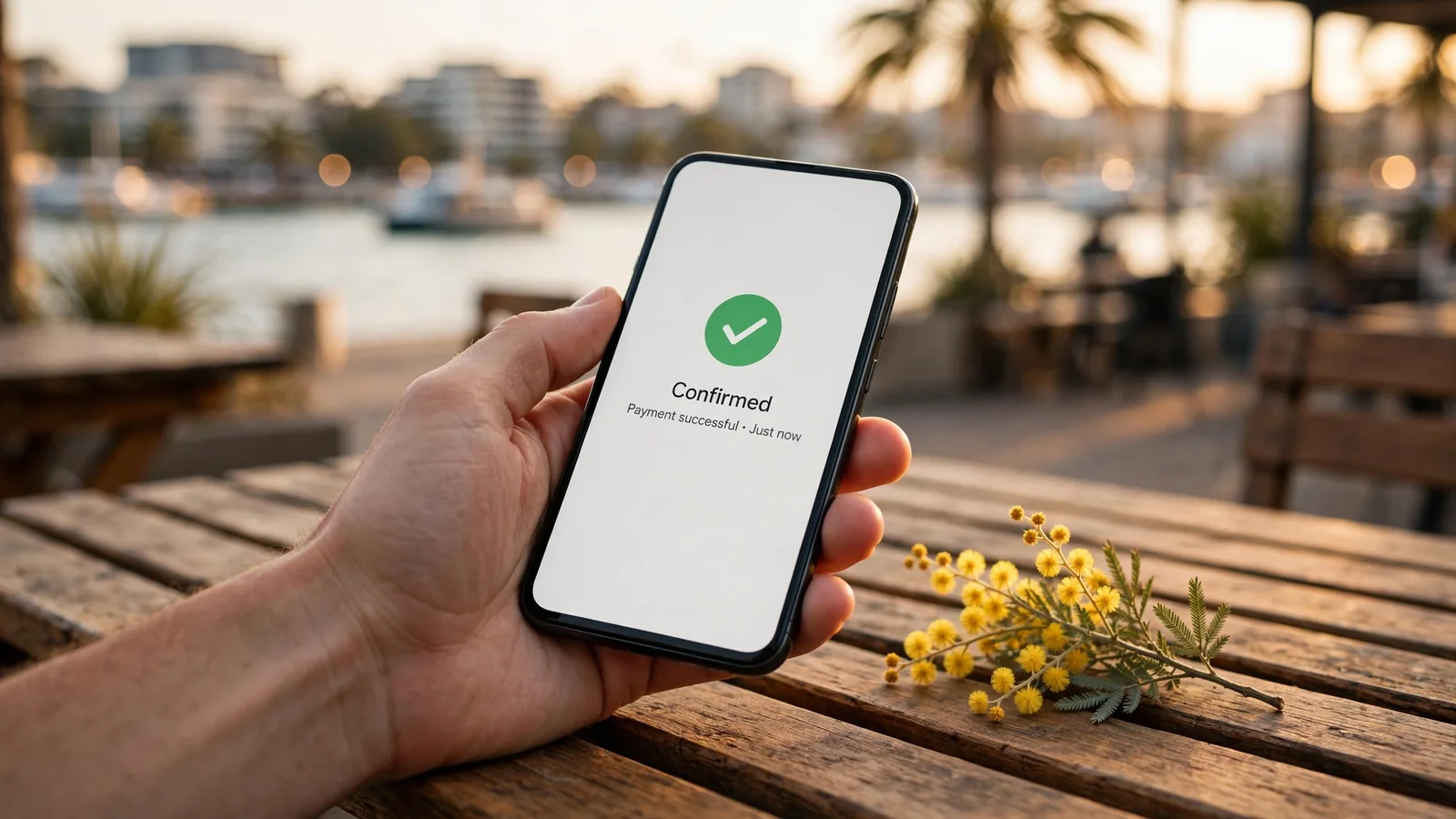
The useful record is therefore mundane: deposit method, verification status, requested amount, stated cap, approval time, and final receipt. That paper trail exposes friction more reliably than a banner promising the best keno casino sites.
Keno Slot Machines: The Reel-Based Cousin of Draw Keno
A keno slot machine borrows the visual language of keno without necessarily using a numbered draw. Instead of selecting numbers and waiting for a result, the machine spins reels, displays symbols, and settles the outcome through its game software. It is therefore closer to a pokie than to draw-based keno, whatever the title on the screen suggests.
That distinction matters because “keno machine games” can describe two rather different experiences. In a traditional keno format, numbers are drawn and wins depend on matching selected numbers. In a reel-based format, symbols appear across fixed or expanding reels, with the paytable defining which combinations qualify. The name may nod towards keno; the mechanism remains a slot-style game.
Why the Terminology Overlaps
Australian gambling language adds another layer. “Pokies” is the familiar local term for electronic gaming machines, while international sites more often say “slots” or “slot machines”. A game labelled as a keno slot may therefore appear under several descriptions: keno pokies, keno slot machines, or keno-themed machine games.
The wording does not establish what the product is licensed to offer, where it may be played, or what protections apply. It is a label, not a regulatory category. A keno graphic cannot turn a reel game into draw keno, just as the word “pokies” cannot establish legality, fairness, or better odds.
The underlying measurements are the same ones used for other reel-based pokies. RTP describes the long-term theoretical return built into the game, not the result of a particular session. Volatility describes the shape of payouts: high-volatility games tend to pay less frequently but in larger amounts, while low-volatility games tend to pay more frequently in smaller amounts. Neither measure identifies the next spin.
Bet sizing can also vary widely. Most online pokies permit wagers from a few cents to hundreds of dollars per spin, although the available range belongs to the individual game and platform. That makes the word “keno” especially unhelpful as a shortcut for cost or risk.
Understanding RTP and Volatility RTP (Return to Player) is a long-term theoretical average, not a prediction for a single session.
Volatility describes the distribution of payouts: high-volatility games pay less frequently but in larger amounts, whereas low-volatility games pay more often in smaller amounts.
Reading a Keno-Themed Machine
A sensible examination starts with the paytable, not the artwork. The paytable shows whether the game uses paylines, symbol combinations, bonus features, or number-like selections. Its RTP and volatility information, where disclosed, describe the mathematical profile rather than promising a particular outcome.
This is where free keno slot games can be useful as demonstrations of interface and rules, but they remain separate from real-money play. A free version may show the same reels while removing the financial stakes; it does not transform a reel game into a draw, or supply evidence about future results.
The bridge between keno searches and pokies is therefore mostly linguistic. Same reels. Different costume.
Free Keno Slots: Practice, Entertainment, and No Cash-Out Illusion
Free play gives keno-style pokies a harmless-looking room in which to reveal themselves. A demo version can be opened without turning the session into a money decision, allowing the interface, paytable, symbols, and reel movement to be examined at leisure. That is the useful part. The rest is often theatre dressed as opportunity.
Free keno slots online are still software simulations of spins. The absence of a stake does not change how the game produces an outcome. Each spin is independent, so a previous win, near miss, or long sequence of losing symbols has no bearing on what appears next. The machine has no memory, despite the persuasive rhythm of its lights and sounds.
What Demo Play Can Show
A free keno slot can make several practical details visible:
- how the reels are arranged;
- where the paytable and feature rules are displayed;
- whether winning combinations are highlighted clearly;
- how bonus rounds, if present, are explained;
- whether the layout remains readable on a smaller screen;
- how quickly the game responds to a spin.
This is interface inspection, not evidence of future performance. A player can learn the vocabulary of a particular game without learning which result will follow. The distinction matters because animation invites interpretation. A symbol that lands beside a winning line feels close in a way that probability does not recognise.
Free keno slots also provide a way to compare the feel of different titles without attaching every observation to a cash balance. High-variance pokies pay out less frequently but in larger amounts; low-variance pokies pay out more often in smaller amounts. A demo session may illustrate the rhythm associated with those descriptions, but it cannot establish what a later real-money session will deliver.
Entertainment Without a Withdrawal
Searches for free keno slots, free keno machines, or ways to play keno slots often blur two separate activities: testing a game and seeking a return. Demo credits have no cash value. They cannot be withdrawn, converted into winnings, or treated as proof that a real-money version will behave more generously.
RTP belongs to the same category of easily misunderstood information. It is a long-term theoretical average, not a promise about an individual session. A displayed RTP does not turn a free spin into a forecast, and it does not make a sequence of demo results predictive.
The cleanest use of free play is therefore modest: inspect the design, understand the rules, and decide whether the presentation is intelligible. No cash-out illusion.
Is keno legal in Australia?
Keno is among the online gambling products that may be permitted and licensed for Australians, unlike online pokies or live-dealer casino games.
Can I use Bitcoin for online wagering in Australia?
No, since 11 June 2024, cryptocurrency, credit cards, and credit-related products have been banned as payment methods for online wagering in Australia.
What is the difference between a keno draw and a keno slot?
A draw-based keno game uses a numbered field and a draw, while a keno slot is a reel-based game using symbols and spins, similar to a pokie.
Keno Slot Strategy Meets Randomness
A keno slot can look as though it is inviting analysis. The screen flashes, symbols gather into combinations, and the paytable gives every result a neat numerical identity. That visual order encourages the familiar hunt for a system: a sequence that is “due”, a lucky pattern, or a way to turn recent outcomes into a forecast.
The software has no such memory.
What the software can tell
Keno casino software determines the rules, symbol arrangement, paytable, and mathematical profile of a game. Its published information may describe RTP and volatility, two measures that are useful when read without magical expectations.
RTP, or Return to Player, is a long-term theoretical average. It describes how a game is designed to perform across a very large number of plays, not what a particular session will return. A short run may finish well above or below that figure. RTP is a description of the machine’s mathematics, not a promise made to an individual punter.
Volatility describes the shape of those returns. High-volatility pokies tend to pay less frequently but in larger amounts. Low-volatility pokies tend to pay more often in smaller amounts. Neither profile changes the randomness of the next spin. It changes the distribution of possible results over time.
That distinction is easily lost beneath the lights.
What strategy cannot change
Keno slots strategy is therefore better understood as a method for reading information than as a method for controlling outcomes. Comparing the stated RTP of games, noting their volatility, and understanding the paytable can clarify what kind of gambling product is being considered. It cannot identify a winning sequence.
The same applies to a keno slot machine played online or in another digital format. A previous loss does not make a win more likely. A recent run of wins does not make a loss more likely. Each spin on a pokie is independent, and the preceding result has no bearing on the next outcome.
Patterns remain visible because human attention is designed to find them. Five similar results can feel like evidence; mathematically, they may be only five separate results. The machine is not “warming up”, becoming generous, or correcting an earlier run.
A sensible analytical approach has a narrow but valuable purpose: examine the rules, RTP, volatility, and paytable before play, then treat every spin as a separate event. It replaces the fantasy of prediction with a more modest form of literacy.
No secret sequence. Just mathematics.
Canada, Four-Card Keno, and the Geography of Casino Search Terms
Keno language travels badly. A phrase shaped in Canada can arrive on an Australian page carrying assumptions about local availability, licensing, and gambling culture that do not belong together. “Canadian online casino keno” may simply describe a Canadian operator or a game catalogue associated with that market. It does not turn the same service into an Australian option.
That distinction matters because Australia’s framework is not a general permission slip for casino websites. The Interactive Gambling Act 2001 is the central federal law governing online gambling. Australians have legal avenues through land-based casinos, licensed bookmakers, lotteries, and permitted online products such as keno. An overseas casino offering prohibited online casino games is a different matter from a licensed Australian wagering service.
Canada, meanwhile, is not a single regulatory category. Gambling arrangements can differ by province and territory, so a Canadian keno site cannot be assessed merely by the maple leaf in its branding or by the word “Canada” in its address. Nor does a Canadian licence establish permission to serve Australian customers. Geography is not a compliance certificate.
Four cards, one misleading shortcut
Four-card keno is a format description, not a jurisdiction. It generally signals that several keno cards can be played in the same session, rather than defining where the game is licensed or which operator provides it. “Multi-card keno” says much the same thing in broader language. Neither phrase establishes fairness, legality, or withdrawal protection.
This is where the wording becomes revealing. A person looking for a four-card version may care about the structure of play: several selections, one draw, and a more elaborate interface than a single card. Someone searching for a Canadian casino may instead be looking for a regional brand, payment arrangement, or familiar catalogue. The two interests can overlap without producing a suitable Australian platform.
The sensible separation is plain:
- Canadian keno identifies a regional association, not Australian authorisation.
- Four-card keno identifies a play format, not a licence.
- Multi-card keno describes breadth of play, not consumer protection.
- An Australian-facing legal option depends on the product and its permitted licensing framework, not on its label.
Search language is a map of attention, not a map of law. It records where names, formats, and habits have crossed borders. The rules remain stubbornly local.
Keno Bonuses and Bitcoin Searches After the Payment Ban
A keno casino bonus is not a single benefit but a bundle of conditions. The headline offer may be easy to spot; the exit route is where the meaning lives. Before treating bonus keno casino wording as useful, the terms should be read for five details:
- Wagering requirements: how many times bonus funds, winnings, or a combined amount must be played through before withdrawal.
- Expiry dates: the point at which unused bonus value or qualifying play disappears.
- Betting limits: a maximum stake that can invalidate bonus eligibility if exceeded.
- Restricted games: keno may contribute fully, partly, or not at all to the required wagering.
- Withdrawal conditions: identity checks, eligible payment methods, maximum cash-out rules, and any remaining play requirement.
A bonus can therefore change the practical value of a game without changing its draw or probability. Promotional language is decoration; the terms decide the furniture.
Bitcoin and the Australian payment boundary
Searches for a bitcoin keno casino or a bitcoin casino with keno describe a payment preference, not an Australian licence or a special form of keno. Since 11 June 2024, cryptocurrency, credit cards, and credit-related products are banned as payment methods for online wagering in Australia. Bitcoin wording should not be treated as evidence that a platform may lawfully accept Australian punters or that consumer protections follow the coins.
The payment method itself also matters operationally. A payment-industry comparison cited by a specialist review reports crypto withdrawals settling within minutes to 24 hours, while bank transfers take three to seven business days. That is a reported comparison, not a universal service promise, and it says nothing about whether the underlying operator may offer online casino games to Australians.
PayID is different in structure: it links directly to an Australian bank account, and the same payment reference states that PayID itself does not charge players a transaction fee. Deposits settle without card-processing delay. None of that turns a casino bonus into a regulated product. It merely describes the rail.
For any keno promotion, the sensible order is plain: read the bonus rules, identify the permitted payment method, and separate a fast transaction from a lawful gambling service. Confusing those categories is how a shiny offer acquires a legal fiction.
Are best online pokies Australia real money platforms required to use certified RNGs?
Yes, licensed Australian-facing platforms are required to use independently audited random number generators. However, online pokies cannot legally be offered to Australians under the Interactive Gambling Act 2001.
What is a good RTP for an online pokie?
A good RTP is a higher long-term theoretical return to player, but it does not guarantee results in an individual session. Each spin remains independent, and previous outcomes do not affect the next one.
Do online casinos offer play in AUD?
Yes, Australian-facing offshore casinos commonly accept AUD, with minimum deposits often set at AU$10–AU$20. Deposit and withdrawal limits vary by platform.
Created by the ”Casino Info Au” editorial team.