
VPN-Friendly Casino Australia: What the Rules Allow
 Available in US
A practical look at offshore access, Australian law, written VPN permissions and the limits of changing an IP address.

- The Australian Line: What a VPN Changes—and What It Cannot
- Why VPN-Friendly Casinos Exist Offshore
- What “Best VPN Casino” Really Means in 2026
- How VPN Access Works—and Where the Logic Breaks
- The Australian 2026 Reality Check for VPN-Friendly Casinos
- Crypto Casinos, VPNs and the Price of Apparent Privacy
- Casinos That Allow VPNs: Permission Must Be Written Down
- VPN Slots Without Pretending the IP Is a Passport
- Bitcoin, Ignition and Kirgo: Search Terms Versus Proof of Access
- Shuffle Casino VPN: Check the Terms Before the Connection
The Australian Line: What a VPN Changes—and What It Cannot
A VPN is not illegal in Australia. Using one to access an online casino is not, by itself, a criminal act. That narrow fact is often stretched far beyond its meaning, as though a technical service could redraw a country’s gambling boundary. It cannot.
A VPN changes the route by which a connection reaches the internet and replaces the visible IP address with the address of a remote server. That may allow a person to reach an international casino website that is restricted by geography. It may also make an online casino appear to be receiving a connection from another region. The appearance is technical. The person remains where the person is.
That distinction matters under the Interactive Gambling Act 2001. The law prohibits gambling providers from offering real-money online casino games to anyone in Australia. Its idea of an Australian customer is tied to physical presence in Australia, not merely to the country suggested by an IP address. A server abroad does not move a player abroad. A changed IP does not turn an Australian customer into an overseas customer.
The same rule applies across the language used for casino searches: a VPN for online casino access, a VPN slot site, a VPN casino online, or a service described as an online casino that can be reached through a VPN. These phrases describe a method of reaching a website, not a legal category. The connection may work. The legal position does not thereby improve.
Access is not eligibility
The practical confusion begins when three different questions are treated as one:
- Can the website be reached?
- Does the operator permit the account to be used from Australia?
- Is the operator legally allowed to offer the service to a person physically in Australia?
A VPN may affect the first question. It does not answer the second, and it cannot change the third.
The Interactive Gambling Act targets providers rather than players. Australians do not commit a crime merely by placing bets at offshore sites. That does not make prohibited online casino services lawful, locally licensed, or protected by Australian gambling regulation. There is no domestically licensed real-money online casino for Australian players, and no Australian gambling licence exists for casino games because offering that product to Australians is against the law.
This is where the phrase “best VPN for online casinos” becomes a misleading shortcut. The quality of a connection is one matter; permission to use a gambling account is another. A successful login is only evidence that the website responded. It is not evidence that the operator accepts the account, that withdrawals will be honoured, or that Australian law has been bypassed. Technology is literal. Marketing is less so.
The operator’s eligibility rules remain separate from the IP address. Physical location, registration information, payment details, and later account checks can all matter even when the initial connection appears to come from an accepted country. Changing an IP address does not alter legal obligations, actual location, or the conditions under which an operator may accept a customer.
The regulated line is narrower than the vocabulary
Australia does permit regulated online wagering, but the permitted categories are specific. Licensed state and territory operators may offer:
- sports betting;
- racing wagers;
- lottery products.
Online casino games do not sit inside that licensed betting framework. Pokies, roulette, blackjack, and live dealer tables offered as real-money online casino services are prohibited interactive gambling services when offered to an Australian customer. Calling a site an “offshore online gambling site” does not place it within the Australian licensing system. Nor does calling it a licensed offshore platform establish an Australian right to provide casino games locally.
This difference explains why a VPN to play online casino games should not be confused with access to licensed sports wagering. A connection tool may be used around either kind of website, but the underlying legal treatment is not the same. Sports betting is regulated through relevant state and territory licences. Online casino provision to Australians is prohibited.
There is also no single overarching gambling statute or gambling authority governing every form of gambling in Australia. Regulation operates at federal and state or territory levels. For online casino access, however, the central boundary is clear: the Interactive Gambling Act 2001 restricts the provider’s conduct, and ACMA can investigate gambling providers and take enforcement action when prohibited services are provided or advertised.
ACMA can request Australian internet service providers to block websites involved in serious breaches, including those providing prohibited online casino services to Australian customers.
ACMA can also request that Australian internet service providers block websites involved in serious breaches, including websites providing prohibited online casino services to Australian customers. A blocked domain, a changed domain, or an accessible domain does not alter the legal character of the service. The internet may offer several doors. The rule remains behind all of them.
What the VPN cannot supply
A VPN cannot provide an Australian casino licence. It cannot change a player’s physical presence. It cannot make prohibited casino games compliant with the Interactive Gambling Act 2001. It cannot create eligibility where an operator’s rules exclude the customer. It cannot convert a technical route into a legal permission.
That is the line worth keeping visible before considering any casino access: using a VPN is legal, but using one does not rewrite Australian gambling law. The IP address may travel. The customer does not.
Why VPN-Friendly Casinos Exist Offshore
The phrase “VPN casino” describes a business arrangement before it describes a technical one. It usually refers to an online casino operating outside Australia, with a website that may be reachable through a VPN when ordinary access is restricted. The operator may accept international players, hold an offshore licence, support cryptocurrency payments, and impose fewer geographic restrictions than a domestic gambling service.
That combination explains the attraction. It does not turn the operator into an Australian casino.

The offshore gap
Australia has a peculiar regulatory shape. Sports betting, racing wagers and lottery products can be licensed, while real-money online casino games are not offered through a domestic casino licence. The result is not an empty market but a displaced one: Australian interest encounters businesses based elsewhere, governed elsewhere and marketed from elsewhere.
The Interactive Gambling Act 2001 prohibits Australian-based operators from offering real-money casino games to Australian players. ACMA can investigate providers and take enforcement action where prohibited services are provided or advertised. In serious cases, it can request that Australian internet service providers block access to websites involved in prohibited online casino activity.
Offshore operators sit on the other side of that boundary. Their existence is shaped by jurisdictions where online casino licensing is available and by commercial models built around international traffic. “Offshore” is therefore a description of location and regulatory setting, not a quiet synonym for safe, approved or locally protected.
The distance is part of the product.
A website may present itself as open to international players, display an offshore licence, and accept deposits from jurisdictions beyond its home market. That can make it appear more flexible than a local betting service. It can also make every disagreement more complicated: the operator’s rules, licence, payment arrangements and complaint route may all point away from Australia.
Why players notice the difference
A specialist overview of offshore gambling sites reports that these operators may advertise larger welcome bonuses and wider game libraries than Australian-licensed operators. The claim belongs to that source and should be read as a description of the reviewed offshore market, not as a universal comparison.
Offshore operators may advertise more significant welcome bonuses and promotions.
A broader catalogue can include more casino formats, table games, and live-dealer content.
Access to various offers such as free spins, cashback, and VIP benefits.
The appeal is easy to understand. A broader catalogue can include more casino formats, table games and live-dealer content than the products available through Australia’s licensed betting framework. Bonuses add another layer: welcome offers, free spins, cashback arrangements and VIP benefits are among the promotions that VPN-friendly operators may advertise. None of those labels explains the underlying terms, and none changes the operator’s legal position in Australia. A bright banner remains a bright banner.
There is also a cultural element. Offshore casinos sell the sense of a larger international casino world: more brands, more payment languages, more jurisdictions in the footer, and fewer visible signs that Australian rules have narrowed the local menu. For some players, the attraction lies less in one particular game than in the feeling of having alternatives.
That feeling is commercially valuable. It is also easy to mistake for protection.
Why cryptocurrency appears beside VPN access
A specialist overview of VPN-friendly casinos states that crypto casino payment options may be available through offshore casinos while unavailable through Australian-licensed operators. The wording matters: availability depends on the operator and the payment arrangement, rather than on the VPN itself.
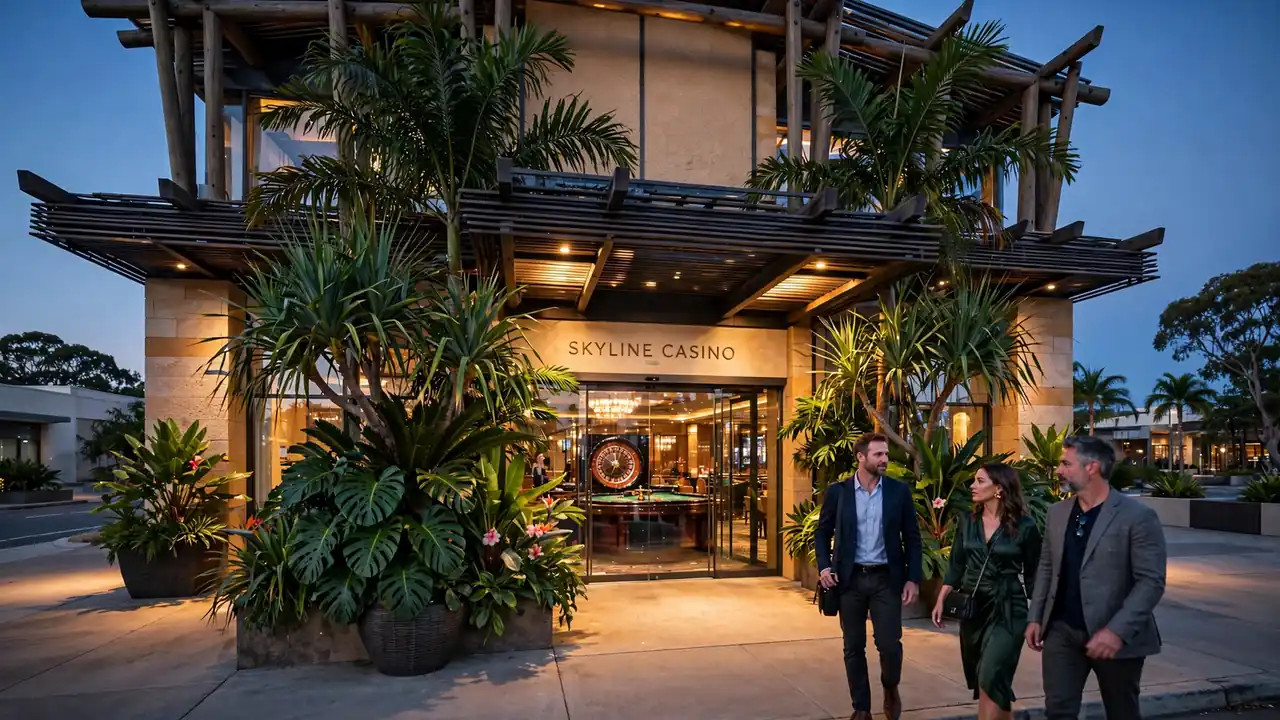
Explore Darwin Casino’s Northern Territory regulation, hotel accommodation, dining, parking, games, entertainment and responsible play…


VPN-friendly crypto casinos may support Bitcoin, Ethereum, Litecoin, USDT and other digital currencies. Some market themselves specifically around international payments, presenting cryptocurrency as a way to serve players who do not fit neatly into domestic banking channels. The separate payment system and the separate IP address can create an impression of independence from local institutions.
That impression has limits. A casino can still require registration details, transaction records or identity checks. A payment method does not settle whether an account is eligible, whether a withdrawal will be processed, or whether the operator’s terms permit the connection being used. Offshore location and crypto support are features of the business model, not evidence of Australian approval.
The same distinction applies to promotions. A regional bonus may be visible after connecting through a particular route, yet visibility is not consent. A game catalogue may load, yet loading is not eligibility. Offshore operators can design their websites for international reach while retaining contractual restrictions for particular countries, payment routes or account circumstances.
International Payment Options VPN-friendly crypto casinos may support digital currencies like Bitcoin, Ethereum, Litecoin, and USDT, often presenting them as a way to serve players outside domestic banking channels.
A market built on separation
The VPN-friendly casino exists because three systems can be separated: the operator’s home jurisdiction, the player’s physical location and the website’s apparent online location. Commercial websites are very good at making those systems look like one smooth experience. Regulation is less sentimental.
For Australian players, offshore casinos attract attention because they promise an expanded catalogue, international promotions and alternative payment options unavailable through the local casino framework. A VPN can help reach a site that is blocked or unavailable in a particular region, which explains the technical association between VPN services and offshore gambling.
But the operator landscape remains offshore. Its licence is not Australian, its consumer protections may not be Australian, and its decisions are made under terms written for a business outside the local gambling system. ACMA enforcement and website blocking remain part of the surrounding reality.
The market offers access at a distance. Distance is the cost.
What “Best VPN Casino” Really Means in 2026
This selection highlights casinos relevant to Australian players looking for VPN-friendly options in 2026. Use the listed licensing, bonuses, deposit requirements and payout details to identify which profiles match your preferences.
License: Curacao eGaming Licence · Min. deposit: A$10 Rocket Play operates under a Curacao eGaming Licence and accepts deposits from A$10, making it a straightforward option for players seeking a low minimum deposit.
License: Tobique Gaming Commission · Bonus: up to A$8,000 + 400 free spins across 4 deposits · Payout speed: crypto ~10-15 minutes, fiat 1-5 days · Min. deposit: A$30 SkyCrown stands out with a bonus of up to A$8,000 plus 400 free spins across four deposits. Crypto payouts are listed at around 10–15 minutes, while fiat withdrawals take 1–5 days; the minimum deposit is A$30.
License: Curacao eGaming Licence · Min. deposit: A$10 PlayWest holds a Curacao eGaming Licence and has a A$10 minimum deposit. Its profile may suit players who want to start with a relatively small initial payment.
License: Curacao eGaming (Dama N.V.) · Bonus: up to A$10,000 + 180 free spins, 40x wagering JeetCity Casino is licensed by Curacao eGaming through Dama N.V. Its offer includes up to A$10,000 and 180 free spins, with 40x wagering.
License: Curacao, operated by Dama N.V. · Bonus: 325% up to 5.25 BTC + 250 free spins across 4 deposits 7Bit Casino is operated by Dama N.V. under a Curacao licence and offers 325% up to 5.25 BTC plus 250 free spins across four deposits.
License: international iGaming licence – jurisdiction not named in the source · Bonus: 100% up to A$1,000 + 100 free spins, 35x wagering · Payout speed: PayID 1-24 hours · Min. deposit: A$30 (PayID from A$10) House of Pokies lists an international iGaming licence, although the jurisdiction is not named in the source. Its offer includes 100% up to A$1,000 plus 100 free spins with 35x wagering, while PayID payouts are stated as taking 1–24 hours; the minimum deposit is A$30, or A$10 via PayID.
License: Curacao · Bonus: 100% up to A$500 + 200 free spins, 10x wagering · Payout speed: crypto 30-60 minutes, fiat 1-5 days · Min. deposit: A$10 Wild Tokyo operates under a Curacao licence and offers 100% up to A$500 plus 200 free spins with 10x wagering. Crypto payouts are listed at 30–60 minutes and fiat payouts at 1–5 days, with a A$10 minimum deposit.
Bonus: up to A$750 + 50 jackpot spins, 35x wagering · Payout speed: crypto ~90 minutes, fiat 1-5 days · Min. deposit: A$30 Kingmaker offers up to A$750 plus 50 jackpot spins with 35x wagering. Crypto payouts are stated at around 90 minutes and fiat payouts at 1–5 days; the minimum deposit is A$30.
Bonus: up to A$6,600 + up to 250 free spins across 4 deposits DragonSlots Casino features a bonus of up to A$6,600 and up to 250 free spins across four deposits. The available information focuses on its promotional package.
License: Curacao · Bonus: up to A$10,000 multi-stage + 500 free spins · Min. deposit: A$20 (POLi) Lucky Dreams offers up to A$10,000 through a multi-stage promotion plus 500 free spins. It operates under a Curacao licence and lists a A$20 minimum deposit via POLi.
“Best” is a slippery word in the casino business. It often suggests a ranking, a polished logo, and a bonus placed where the eye cannot avoid it. For a VPN-friendly casino, that standard is too thin. A more useful test begins with permission, not presentation.
A suitable vpn casino site should state its position on VPNs and proxies in its terms of service. Silence is not consent. A website may load through a changed IP address while its rules still prohibit access through a VPN, restrict players from particular jurisdictions, or reserve the right to close an account when location information conflicts. Successful entry proves only that the page opened.
That distinction matters because the account is not anonymous. A casino can collect registration details, payment information, cookies, device data and identity-verification documents. The VPN changes the apparent network address; it does not erase the rest of the account trail. Privacy, in this setting, is a narrow technical feature rather than a financial shield.
A practical standard instead of a ranking
The strongest way to assess a best VPN casino is to check four areas:
-
Written VPN policy. The terms should clearly say whether VPN or proxy use is allowed, restricted or prohibited. Vague language leaves the operator room to interpret events later, particularly when a withdrawal is pending.
-
Transparent eligibility rules. The registration conditions should identify permitted countries and any location-based exclusions. A platform that welcomes “international players” in promotional language may still exclude a particular country in its legal terms. The two statements are not interchangeable.
-
Payment compatibility. A usable casino must support a payment method that matches the player’s real circumstances, not merely the VPN server’s apparent location. Payment providers can reveal a location different from the VPN location, which may lead to additional checks. Making financial details appear consistent with a server location is not a sensible workaround; it creates another contradiction.
-
A workable verification process. Some VPN casinos may require verification before processing withdrawals, according to a specialist industry review. That possibility should be treated as part of the decision, not as an unpleasant surprise at the end. The relevant question is whether the operator explains what verification involves and what happens when location signals do not agree.
This is also the difference between searching for the best VPN for casino use and assessing the casino itself. A VPN may provide an encrypted connection and a different IP address, but it cannot grant eligibility, alter registration facts or provide protection against an operator’s account decision. The software is not the contract.
What “friendly” should mean
A vpn friendly casino website is not simply one that remains visible when a VPN is active. “Friendly” should mean that the operator’s published rules address VPN use directly and that the payment and verification procedures do not depend on an accidental appearance of residence elsewhere.
The same caution applies to searches involving a Stake casino VPN, a best VPN for Stake casino, or an Emu Casino VPN. A brand name in a query is not evidence of a current policy. Operator terms can change, and a connection that works today does not establish permission tomorrow. The sensible assessment is therefore specific to the operator’s written rules, the account’s real information and the withdrawal process.
- Check the operator’s written VPN and proxy policy.
- Verify permitted countries and location-based exclusions.
- Confirm payment methods match your real circumstances.
- Assume a successful login means legal permission.
- Use a VPN to disguise false registration details.
- Mistake technical visibility for legal protection.
Even a service described in promotional material as an Aussie VPN friendly casino still requires this check. Offshore status, crypto support or a generous offer does not create Australian consumer protection, and a VPN does not provide financial protection when using an online gambling operator.
The result is less glamorous than a top list. It is also more honest: permission, eligibility, payments and verification. Without those four pieces, “best” is merely decoration. Fancy, but fragile.
How VPN Access Works—and Where the Logic Breaks
A VPN changes the route, not the reality behind it. That distinction is the whole mechanism in miniature.
The technical sequence is straightforward:
- The user connects the VPN to a server in a supported country.
- The VPN encrypts the connection and routes traffic through that remote server.
- The casino website sees the VPN server’s IP address rather than the user’s real IP address.
- If the site is restricted by IP region, it may become technically reachable as though the connection originated from the server’s location.
That is why a VPN can sometimes open an international casino website that is unavailable from an Australian IP address. It is also why people describe these services as a way to play online casino games through a different region. The software changes the visible network address. It does not move the person sitting behind the screen.
Access is not permission
The first break in the logic appears when technical access is mistaken for authorisation. A website loading successfully proves only that its network filter did not stop the connection at that moment. It does not prove that the operator accepts VPN users, that the account is eligible, or that a later withdrawal will be processed.
Casino systems can compare the apparent IP location with other account signals. Registration details, payment information and login history may point to a different place. A mismatch can trigger security or eligibility checks, particularly when the account appears to move between regions.
The same issue applies to questions such as whether a VPN will work with a named casino. The answer cannot be inferred from the site opening in a browser. A provider may permit access at the technical layer while reserving the right to restrict accounts whose location signals conflict with its terms. The connection works. The arrangement does not necessarily work.

Understand how Australian law treats iPhone casinos, why Safari is often the app, and how…


An IP address is not an identity
An IP address is one data point, not a passport. Changing it does not alter the player’s actual location, legal obligations or the operator’s eligibility requirements. Nor does encryption make a gambling account anonymous.
A casino may still receive registration and payment information, while other account signals can connect activity over time. Payment providers may reveal a location that differs from the VPN location, leading to additional checks. A separate IP therefore offers no reliable way to make financial details appear consistent with a server abroad. That is less a loophole than a reconciliation problem waiting to be noticed.
The practical question is not simply whether a VPN can connect to an online casino. It is whether the operator’s rules, identity checks and location requirements remain satisfied after the connection has been made. Those are separate tests.
Where the sequence ends
A VPN can alter the path between a device and a website. It cannot rewrite the facts used to assess an account. It cannot turn a restricted service into an eligible one, and it cannot settle a disagreement between the server location and the player’s real circumstances.
Technical Reality A VPN changes your visible IP address, but it does not change your physical location or your legal standing under Australian law.
So the clean technical answer is yes: a VPN may change the IP address and make a region-restricted casino reachable. The compliance answer is conditional: that access may still conflict with operator requirements, and location mismatches may affect account checks or withdrawals.
The signal changed. The situation did not.
The Australian 2026 Reality Check for VPN-Friendly Casinos
In Australia in 2026, technical access and legal availability remain separate things. A site may load after a VPN connection, display its registration page, and accept an account request. None of that turns the service into an Australian online casino, and none of it supplies a local casino licence that does not exist.
The relevant boundary is set by the Interactive Gambling Act 2001. Real-money online casino games cannot be offered to people in Australia. The rule covers familiar products such as slots, roulette, blackjack and live dealer tables when they are supplied to an Australian customer. It also prohibits Australian-based operators from offering real-money casino games to Australian players.
That wording matters because the legal connection is not reduced to an IP address. The Act refers to customers physically present in Australia. A VPN can alter the address visible to a website; it does not move the person, rewrite the operator’s obligations or turn an offshore service into a locally licensed business. Geography is stubborn in that respect.
Accessible does not mean authorised
This is the point at which the phrase “VPN-friendly casino Australia 2026” can become misleading. “Friendly” may describe a website that remains reachable through a VPN, or an operator whose terms do not immediately reject VPN traffic. It does not establish that the operator is permitted to provide online casino games to someone physically in Australia.

Nor does a successful login prove consent. A casino may allow registration to proceed and examine location later, particularly when an account requests a withdrawal or when payment information conflicts with the apparent connection. Access is therefore only an access event. Permission is a separate question, and Australian law is another one.
ACMA can investigate providers that supply or advertise prohibited gambling services and can take enforcement action. It can also seek website blocking through Australian internet service providers when serious breaches are involved. A page that is visible today may not remain available, while an account that opens today may not remain usable when its history is reviewed.
The distinction also explains why advice about “checking an Australian casino licence” needs care. No domestically licensed real-money online casino exists for Australian players. Australian licensing applies to permitted gambling categories, not to online casino games. A foreign licence, even where an offshore operator holds one, is not an Australian authorisation.
The login is not a legal certificate
Treating a working connection as proof of eligibility creates practical risks as well as a false sense of security. The operator may close the account, refuse a withdrawal or retain funds under its terms if the location signals do not align. The VPN has not provided financial protection; it has merely changed one technical signal.
The sensible reading of an offshore casino is therefore narrow: it may be reachable, but reachability says nothing conclusive about lawful availability in Australia. The screen can open. The legal position does not move with it.
Using a VPN does not rewrite the Interactive Gambling Act 2001, and offshore status does not grant Australian consumer protections.
Crypto Casinos, VPNs and the Price of Apparent Privacy
Crypto appears beside VPN-friendly casinos for a practical reason: it can cross borders more easily than familiar Australian payment rails. A specialist review source reports that offshore casinos may offer crypto payment options unavailable through Australian-licensed operators. That difference helps explain the pairing of crypto casino VPN in everyday discussions. It does not make the arrangement safer, lawful, or anonymous.
The currencies mentioned in specialist casino coverage include Bitcoin, Ethereum, Litecoin and USDT, alongside limited bank-transfer options. Another specialist review source says that some VPN-friendly casinos support more than 100 cryptocurrencies, including Bitcoin and Ethereum. Such breadth is attractive to players who want to avoid a card transaction or use an asset already held in a digital wallet. It is still an operator feature, not a consumer-protection mechanism.
Faster rails, thinner comfort
Crypto transactions can be faster than bank transfers, while card and bank-transfer payments may take several business days, according to a specialist review source. Speed, however, is not the same as finality in a dispute. A transfer that reaches an offshore operator quickly does not create a refund route, a local gambling licence, or financial protection. The payment method changes the movement of funds. It does not improve the status of the recipient.
This is where the phrase “no-KYC crypto casino” becomes misleading. A casino may advertise reduced friction at registration, yet still request information later. Casinos can collect registration details, payment records, cookies, device information and identity-verification documents. Some VPN casinos may require verification before processing a withdrawal. The quiet account at deposit becomes less quiet when money is leaving.
The IP address is not a disguise
A VPN replaces the visible IP address with the address of its remote server. That can make a payment session appear to originate elsewhere, but the payment provider may reveal a different location. Registration data, wallet activity, device signals and login history can form a much fuller picture than the IP address alone.
Identity Verification Casinos may still collect registration details, payment records, cookies, and device data, which can reveal a user’s true location despite a VPN.
A mismatch between the apparent VPN location and payment details can trigger additional security or eligibility checks. Withdrawals may then be delayed or permanently blocked. The separate IP has provided privacy theatre, not anonymity.
Crypto is therefore a payment choice, not a passport. It may explain why offshore platforms attract interest, but it cannot turn prohibited online casino services into compliant ones or make an account invisible. A wallet is not a legal shield. Neither is a VPN.
Casinos That Allow VPNs: Permission Must Be Written Down
A casino that loads through a VPN has not necessarily agreed to VPN use. The website may simply be reachable. Permission is a separate matter, and it belongs in the operator’s written terms before registration or deposit.
The relevant wording may appear under several headings:
- VPN, proxy, or anonymising services
- prohibited software or access methods
- country restrictions
- account verification
- inaccurate registration information
- bonus eligibility and abuse
A vague statement that “international players are welcome” is not the same as permission to connect through a VPN. Nor is the absence of a warning on the registration screen. Terms can reserve the operator’s right to verify location, reject an account, cancel bonuses, close an account, or withhold funds when access signals conflict with its rules.
What explicit permission should clarify
A usable policy should state whether VPNs and proxies are allowed, prohibited, or handled case by case. It should also explain whether the permission applies to registration, gameplay, deposits, bonuses, and withdrawals. A casino that permits a VPN for privacy but forbids it for disguising residence has created a distinction that matters.
That distinction is especially important for Australian players. Changing an IP address does not change physical location, legal obligations, or the casino’s eligibility requirements. It cannot turn an unavailable service into an authorised one. A written policy from an offshore operator is not an Australian gambling licence.
The account is not anonymous, either. Registration details, payment records, cookies, device information, and identity checks can connect activity to the person behind the altered IP address. When the apparent VPN location conflicts with registration details, payment information, or login history, security or eligibility checks may follow.
A specialist gambling review notes that some VPN casinos may request verification before processing a withdrawal. That possibility turns a quiet deposit into a rather louder later conversation. It also explains why a successful login proves very little.
A sensible reading order
Before creating an account, the terms should be checked for:
- An explicit VPN or proxy rule.
- The countries and customer categories the operator accepts.
- The information required for identity or location verification.
- The consequences of a breach, including account closure or withheld funds.
- Any separate restrictions attached to bonuses or withdrawals.
The phrase “top casinos allowing VPN gambling” therefore has no reliable meaning without this document-level check. A casino can appear in a comparison, accept an email address, and allow a game to open while retaining the right to reject the account later. Access is a technical event. Consent is a contractual one. Different things.
VPN Slots Without Pretending the IP Is a Passport
Slots are often the first thing people mean when they look for casino access through a VPN. A remote server may make a region-restricted website appear reachable, including pages offering international online casino games. Technically, that can open a door. It does not establish that the person standing outside the door is eligible to enter.
For an Australian player, the distinction matters. Online slots are casino games, and no Australian gambling licence exists for real-money online casino games. The Interactive Gambling Act 2001 prohibits providers from offering prohibited online casino services to customers physically present in Australia. A changed IP address does not change that physical presence. It is a new label on the connection, not a new legal identity.
The same separation applies to promotions. A VPN may display a region-specific bonus or offer that is not visible from an Australian connection. A specialist affiliate review describes such regional promotions as a possible feature of VPN-accessible casinos, but visibility is not entitlement. The offer may be restricted by the operator’s terms, the registration country, payment information, or later verification.
A slot page loading successfully therefore proves very little. It may show that the website is technically reachable. It does not prove that the casino accepts Australian customers, permits VPN use, or will honour a withdrawal after reviewing the account. Location signals can be compared with registration and payment details, and a mismatch may lead to additional checks, delayed withdrawals, or a blocked account.
Verification Checklist
- Review the written policy regarding VPN and proxy use.
- Confirm the operator’s stance on international players.
- Verify if payment methods are compatible with your actual location.
- Check the requirements for identity and location verification.
There is also no reliable catalogue of named slots that can be recommended here with verified game-level information such as provider, return rate, or volatility. The sensible standard is narrower: treat the game as available only when the operator’s written eligibility rules permit access, and keep the legal position separate from the screen in front of it.
An IP address is not a passport.
Bitcoin, Ignition and Kirgo: Search Terms Versus Proof of Access
Names such as Ignition and Kirgo can appear beside VPN and Bitcoin in discussions of offshore gambling. That association is not evidence of a current policy. No verified basis is available here for claiming that either operator permits Australian access through a VPN, accepts a particular cryptocurrency, or will honour a withdrawal made after a location change.
Bitcoin can still be relevant to the practical question. Bitcoin, Ethereum, Litecoin, USDT and limited bank transfers are payment methods described by a specialist industry review as available at many VPN-friendly casinos. The same review states that some such casinos support more than 100 cryptocurrencies. That is a description of reported market offerings, not a promise attached to Ignition, Kirgo, or any other named brand.
Crypto may also alter the payment experience. A specialist industry review describes crypto payments as faster than bank transfers, while card and bank-transfer transactions may take several business days. Speed, however, is not protection. A cryptocurrency transfer does not make an account anonymous, reverse a disputed transaction, or make an offshore service lawful for Australian casino play.
The decisive evidence remains in the operator’s own terms. Before registration, the policy on VPNs, proxies, Australian customers, and conflicting location signals needs to be read as a single set of conditions. A successful connection proves only that the website loaded. It does not prove permission.

Withdrawal is where the decorative promise tends to meet the administrative wall. A specialist industry review notes that some VPN casinos may require verification before processing withdrawals. Registration details, payment records, device data, login history, and identity documents can expose a mismatch between the VPN server and the player’s real circumstances. The result may be additional checks, a delayed withdrawal, or permanent blockage where the terms allow it.
So the sensible reading of “Bitcoin casino with VPN access” is narrow: a payment method may be available, while eligibility remains unresolved. Search labels are not contracts. A name is not consent.
Shuffle Casino VPN: Check the Terms Before the Connection
A search for Shuffle Casino and VPN access should begin with the operator’s written policy, not with the fact that a website loads. A working connection proves only that the page is reachable. It does not prove that VPN use is allowed, that an Australian player is eligible, or that a withdrawal will be honoured.

The relevant terms should be read before registration. Look for clauses covering VPNs, proxies, concealed locations, restricted territories, account verification, and conflicting location signals. If the policy is silent, that silence is not permission. Offshore operators may interpret it later, particularly when a payment, registration detail, or login history points to a different country.
A mismatch between the apparent IP location and the information attached to an account can trigger security or eligibility checks. The contradiction need not be dramatic: the VPN may indicate one jurisdiction while the payment trail or previous logins suggests another. Technology is excellent at producing such small bureaucratic mysteries.
Withdrawal is where the distinction becomes expensive. A specialist gambling review notes that some VPN casinos may require verification before processing withdrawals. That can mean identity or location checks at the point when funds are requested, even if registration and play appeared uneventful.
Shuffle should therefore be treated as a terms-check question, not as evidence of VPN acceptance. Do not submit false registration details or try to make financial information resemble the VPN location. If the published rules prohibit concealed access, the connection should not be used. A delayed withdrawal is inconvenient. A blocked one is the real warning.
Can I use a VPN to access an offshore casino?
Yes, using a VPN is legal in Australia and may allow access to an offshore casino website. However, it does not change your physical location, the operator’s eligibility rules, or the legal status of online casino services offered to Australians.
Can a VPN make an offshore casino legal in Australia?
No, a VPN cannot make an offshore casino legal in Australia. It does not provide an Australian casino licence or make prohibited real-money casino games compliant with the Interactive Gambling Act 2001.
Is online gambling legal in Australia?
Yes, some online gambling is legal, including sports betting, racing wagers, and lottery products offered by licensed state and territory operators. Real-money online casino games such as pokies, roulette, blackjack, and live dealer tables are prohibited for Australian customers.
How does ACMA block illegal gambling websites?
ACMA investigates providers and can take enforcement action when prohibited gambling services are provided or advertised. It can also request that Australian internet service providers block websites involved in serious breaches, including sites offering prohibited online casino services to Australian customers.
Written by the editors at Casino Info Au.