Best Paying Online Pokies in Australia Explained
 Available in US
A clear guide to RTP, variance, game access and the legal differences between online slots, pokies and casino venues.

- What “Best Paying” Really Means in Australia
- The Australian Online Pokies Ban Comes First
- From Pokies to Slots: How the Same Game Changes Its Character
- Pokie Machines in Australia Are a Different Legal Creature
- The Games People Associate with High-Payout Play
- What Australian Players Can Legally Access Instead
- Australian Money, Australian Venues, and the Limits of the Label
- Casino Games and Sites: The Names Are Not the Licence
- Real-Money Online Slots: Why the Promise Does Not Change the Law
- Real-Money Online Casinos and the Australian Reality
What “Best Paying” Really Means in Australia
The phrase “best paying” sounds like a league table. It suggests that one machine, game or casino pays more reliably than the rest, as if a sensible shopper could simply identify the top option and collect the difference. Gambling statistics are less obliging. A pokie can have a strong mathematical profile and still produce a losing session. Another can return a large prize after a long stretch of silence. Neither result, by itself, proves that it is the “best paying” choice.
The useful starting point is to separate four ideas that are often bundled together: RTP, variance, hit frequency and jackpot potential. They describe different features of a game. Confusing them turns a statistical description into a promise.
RTP is a long-run measure
RTP means Return to Player. It is a long-run statistical figure describing how much a game is designed to return across a very large number of spins. It does not describe what happens during one visit, one balance or one lucky afternoon.
This page highlights online pokies operators that stand out for their available bonuses, payment options, payout times, licensing details, or low minimum deposits. Use the information below to identify which offers and conditions deserve a closer look for Australian players in 2026.
License: Curacao eGaming Licence · Min. deposit: A$10 Rocket Play is listed with a Curacao eGaming Licence and a low A$10 minimum deposit, making it notable for players who prefer to start with a smaller amount.
License: Tobique Gaming Commission · Bonus: up to A$8,000 + 400 free spins across 4 deposits · Payout speed: crypto ~10-15 minutes, fiat 1-5 days · Min. deposit: A$30 SkyCrown stands out with a bonus of up to A$8,000 plus 400 free spins across four deposits. Crypto withdrawals are quoted at around 10–15 minutes, while fiat payouts take 1–5 days; the minimum deposit is A$30.
License: Curacao eGaming Licence · Min. deposit: A$10 PlayWest operates under a Curacao eGaming Licence and accepts minimum deposits from A$10. It is included as an option for players looking for a low starting deposit.
License: Curacao eGaming (Dama N.V.) · Bonus: up to A$10,000 + 180 free spins, 40x wagering JeetCity Casino is licensed through Curacao eGaming under Dama N.V. Its offer includes up to A$10,000 plus 180 free spins, with 40x wagering.
License: Curacao, operated by Dama N.V. · Bonus: 325% up to 5.25 BTC + 250 free spins across 4 deposits 7Bit Casino is operated by Dama N.V. under a Curacao licence. Its promotion offers 325% up to 5.25 BTC plus 250 free spins across four deposits.
License: international iGaming licence – jurisdiction not named in the source · Bonus: 100% up to A$1,000 + 100 free spins, 35x wagering · Payout speed: PayID 1-24 hours · Min. deposit: A$30 (PayID from A$10) House of Pokies lists an international iGaming licence, although the source does not name the jurisdiction. Its offer includes 100% up to A$1,000 plus 100 free spins with 35x wagering, while PayID payouts are quoted at 1–24 hours; the minimum deposit is A$30, or A$10 via PayID.
License: Curacao · Bonus: 100% up to A$500 + 200 free spins, 10x wagering · Payout speed: crypto 30-60 minutes, fiat 1-5 days · Min. deposit: A$10 Wild Tokyo is licensed in Curacao and offers 100% up to A$500 plus 200 free spins with 10x wagering. Crypto payouts are quoted at 30–60 minutes, fiat payouts at 1–5 days, and the minimum deposit is A$10.
Bonus: up to A$750 + 50 jackpot spins, 35x wagering · Payout speed: crypto ~90 minutes, fiat 1-5 days · Min. deposit: A$30 Kingmaker offers up to A$750 plus 50 jackpot spins, with 35x wagering. Crypto payouts are quoted at around 90 minutes and fiat payouts at 1–5 days; the minimum deposit is A$30.
Bonus: up to A$6,600 + up to 250 free spins across 4 deposits DragonSlots Casino is notable for a bonus of up to A$6,600 plus up to 250 free spins across four deposits.
License: Curacao · Bonus: up to A$10,000 multi-stage + 500 free spins · Min. deposit: A$20 (POLi) Lucky Dreams offers a multi-stage bonus of up to A$10,000 plus 500 free spins. It is listed with a Curacao licence and a minimum deposit of A$20 when using POLi.
A published RTP is therefore not a personal refund. If a pokie has an RTP figure, that percentage does not instruct the next group of spins to return the stated share. Short sessions can finish substantially above or below the published percentage. A player may see several wins in quick succession, or may receive very little back despite choosing a game with a favourable long-run figure.
That distinction is the first defence against the language of the “best paying online casino”. The casino does not owe a particular result because the game’s mathematics look attractive. RTP belongs to the model over time, not to the individual sitting in front of it.
Long-run mathematics are patient. Players rarely are.
Variance describes the shape of results
Variance, also called volatility, concerns how a game distributes its returns. A high-variance pokie pays out less frequently but in larger amounts. A low-variance pokie pays out more frequently but in smaller amounts.
Neither profile is automatically superior. They suit different appetites for uncertainty, although neither removes uncertainty. A high-variance game may create a memorable peak while offering few winning spins around it. A low-variance game may produce more visible activity, yet those smaller returns can still fail to cover the total amount staked.
This is why “best paying” cannot be read as “wins most often”. A game that produces frequent small returns is not necessarily more profitable than one that produces fewer, larger hits. Frequency describes how often a return appears; value describes its size. The two measures can travel in opposite directions.
The distinction also matters when a game is praised for its “big potential”. Large prizes may be part of the design without being a regular feature of ordinary play. A dramatic top prize is not evidence that the game will behave generously during a short session.
Hit frequency is not a profit guarantee
Hit frequency refers to how often a spin produces a winning result. It is an observation about events, not a promise about the final balance. A session can contain many winning spins and still finish behind if the returns are small or if losing spins consume more than the wins restore.
Conversely, a game with fewer winning events can have a different financial shape because an occasional larger return changes the result. That does not make it dependable. The timing of a hit matters to the session, but timing is precisely what no player can command.
RTP Long-run statistical return figure
Variance Distribution of returns (high or low volatility)
Hit Frequency How often a winning result occurs
Jackpot Potential Possibility of a large, infrequent prize
The independence of spins keeps this point stubbornly plain: each spin is an independent event, and the previous result has no bearing on the next outcome. A run of losses does not make a win “due”. A run of wins does not make another win more likely. The machine has no memory of the afternoon, despite the human tendency to give it one.
Jackpot potential belongs in a separate box
Jackpot potential is another reason a game may be described as high-paying. It concerns the possibility of a large prize, not the expected rhythm of ordinary returns. A jackpot can make a title conspicuous without making it suitable for someone seeking frequent smaller wins.
The same name may therefore attract different interpretations. One person means a high RTP. Another means regular hit frequency. A third means the chance of a life-changing prize. All three may use “best paying” while discussing different properties.
A careful comparison should ask what is actually being measured:
- RTP: the long-run return characteristic;
- Variance: whether returns tend to arrive less frequently in larger amounts or more frequently in smaller amounts;
- Hit frequency: how often winning outcomes occur;
- Jackpot potential: whether the game offers the prospect of an unusually large prize.
These categories do not merge into a single ranking. A game can score differently on each one, and a short session cannot reveal its long-run character with certainty.
Reading claims with a cooler head
Descriptions such as “best paying casino”, “best paying online casino Australia” or “best paying casino apps” often compress several promises into one neat phrase. It may be shorthand for a game with a high published RTP, a title associated with large prizes, or simply a site’s marketing language. “Fast paying” can refer to withdrawals rather than game performance; “paying out” may describe the existence of wins rather than the likelihood of leaving ahead.
Those are not interchangeable claims. Payment speed does not alter RTP. A foreign website’s label does not alter variance. A memorable jackpot does not make the next spin more likely to win. Even the most polished description cannot change the independence of outcomes.
The sensible meaning of “best paying” is therefore narrower than the phrase suggests. It means identifying the statistical feature under discussion, then refusing to treat that feature as a forecast for one session. RTP is not a guarantee, frequent hits are not the same as profit, and high variance is not a secret route to regular wins.
That vocabulary makes later comparisons less theatrical and more honest. The numbers may describe a game. They do not make a promise.

The Australian Online Pokies Ban Comes First
Before comparing payouts, game titles or platforms, there is a more useful question: can the service legally offer online pokies to Australians at all? Under the Interactive Gambling Act 2001, online casinos offering real-money pokies to Australian customers are banned. The prohibition covers the service itself, not merely the advertising language wrapped around it.
That makes the phrase “best paying online pokies Australia 2026” legally awkward from the outset. It sounds like a request for a ranking of available products, yet there is no domestically licensed real-money online casino for Australian players. No Australian gambling licence exists for casino games because offering that product to Australians is against the law. A polished website, familiar game title or foreign licence does not alter that position.
The distinction matters because gambling regulation in Australia is not built around one national casino authority issuing a neat list of approved online operators. Australia has no single overarching gambling statute or gambling authority. Responsibility is divided between federal and state or territory systems, with different products treated differently. Online sports betting is legal and licensed at state and territory level. Online casino games are prohibited.
So the legal map is not complicated, only inconvenient for commercial slogans:
- online pokies and other online casino games are prohibited when offered to Australian customers;
- licensed bookmakers may offer permitted sports and race wagering;
- lotteries are licensed products;
- land-based casinos remain lawful within the relevant state or territory framework.
That is why “best paying pokies Australia real money” cannot be treated as an ordinary shopping category. The wording implies a lawful local market containing competing online casino products. It does not. A foreign operator may describe itself as an offshore casino and may hold a licence from Malta or Curaçao, but that licence does not authorise it to serve Australian customers. Foreign regulation and Australian permission are separate questions. One cannot be used as decorative proof of the other.
What the national rule targets
The Interactive Gambling Act targets the provider rather than the player. Australians are not committing a crime merely by placing bets at offshore sites. That does not make the service lawful, safe or locally regulated; it simply identifies where the statute places responsibility. The legal risk is directed at the provision of prohibited interactive gambling services.
This difference is easy to lose in promotional copy. A page may talk about the “best paying pokies online”, “best paying Australian online pokies” or “best paying slot sites” as though the central task were finding the most generous machine. In the Australian context, the first task is identifying whether the product may be offered at all. If it is an online casino game played for money, the answer is no for a domestically licensed Australian-facing service.
Legal Restriction Online casinos offering real-money pokies to Australians are prohibited under the Interactive Gambling Act 2001.
The same principle applies to language such as “no deposit”, “real money”, “high payout” or “best paying online slot sites”. These are commercial descriptions, not legal categories. A bonus headline cannot create a licence. A payment option cannot create a licence. A page crowded with familiar game names cannot create a licence. Paperwork remains stubbornly unromantic.
Enforcement is part of the framework
The Australian Communications and Media Authority, known as ACMA, enforces the restrictions. The agency can ask internet providers to block illegal offshore gambling sites. This is not a system in which every website remains equally available while players are left to decide which claims sound respectable.
A profile-style industry review also describes ACMA’s enforcement in practical terms: blocking shady sites and warning influencers against dodgy promotions. That account should not be mistaken for a complete statement of every enforcement action, but it captures the direction of travel. The regulator is concerned not only with the operator behind a service, but also with the channels used to make prohibited gambling look ordinary, local and harmless.
That is especially relevant to affiliate-style pages presenting “best paying pokies Australia” lists. Publishing a ranking can slide into promotion when it supplies links, inducements or instructions for opening an account. Australian restrictions do not become softer because the recommendation is written as a comparison rather than an advertisement.

The lawful alternatives sit in different categories. Land-based casinos are legal options for Australians to engage in gambling. Licensed bookmakers can offer permitted wagering, and lotteries are licensed as well. Those categories should not be blended with online casino games simply because all of them involve money and chance. A bookmaker is not an online pokie operator. A lottery is not a casino licence by another name.
For that reason, any serious discussion of paying pokies in Australia has to begin with the national online rule. Game mathematics may explain volatility and RTP later. It cannot convert a prohibited online casino into an Australian-licensed service. The boundary comes first. Everything else comes after.
From Pokies to Slots: How the Same Game Changes Its Character
In Australia, the word pokies belongs to a familiar social landscape: clubs, hotels, bright cabinets, and the quiet concentration of people pressing a button in company that is not quite social. Online casino language tends to prefer slots, video slots, or online slots. The screen changes, and so does the vocabulary around it.
High-variance profile with infrequent but larger hit patterns.
Lower-variance profile with steadier, smaller returns across a session.
Recognisable title associated with linked-jackpot style play.
That vocabulary can make the same basic idea sound more technical than it is. A reel game remains a reel game whether it is called a pokie or a slot. What changes is the way its playing profile is described: volatility, hit frequency, feature patterns, and the size of possible returns. None of those labels turns an uncertain game into a dependable source of income.
Volatility is the dividing line
Volatility describes how a game distributes its returns across play. A high-variance pokie pays out less frequently but in larger amounts when winning combinations or features arrive. A low-variance pokie pays out more frequently but in smaller amounts.
This distinction matters because two games can have the same long-run RTP and still feel entirely different during a session. One may produce regular modest returns that keep the balance moving. Another may remain quiet for a long stretch before producing a much larger result. The first can feel active; the second can feel dramatic. Neither description predicts what the next spin will do.
The phrase “best paying slot” therefore hides two different wishes. One player may mean a game that produces frequent small returns. Another may be looking for the possibility of a rare, substantial hit. Search language compresses both preferences into a single adjective. The mathematics does not.

A high-variance game can be described as offering greater payout potential, but that is not the same as saying it pays better in a particular session. The larger result is less frequent by definition. A low-variance game may appear more generous because winning events occur more often, yet those returns are smaller. The emotional difference is considerable. The statistical difference is not a promise in either direction.
Why “video slots” sounds more precise than it is
Video slots is largely a format label. It can refer to games with animated reels, themed bonus features, multiple paylines, or expanding symbols. It does not, by itself, establish RTP, variance, or the likely size of a return.
The same caution applies to phrases such as best paying online slots and best paying out online slots. They are useful descriptions of what people hope to find, not technical classifications. A game cannot be ranked by its title alone, and a screen full of effects does not reveal its mathematical profile. The cabinet has always understood theatre better than accounting.
A sensible comparison separates at least three questions:
- How frequently does the game return something?
- Are those returns generally smaller or larger within the stated profile?
- Is the game’s RTP being mistaken for a session result?
The first two concern variance and hit patterns. The third concerns time. A published RTP is a long-run statistical measure, not a forecast for one sitting. A short session can finish well above or well below it. The label “high paying” cannot remove that gap between statistical expectation and immediate experience.
Two examples, without turning examples into rules
A specialist review describes Buffalo Power by Playson as a high-variance pokie, with infrequent but larger hit patterns. That description places the game in the category associated with longer quiet stretches and less frequent, potentially bigger returns. It does not establish that every session will contain a large hit, or that the title is a universally best paying online slot.
The same type of source describes Dolphin Treasure by Aristocrat as a lower-variance pokie, associated with steadier smaller returns across a session. That gives the game a different playing character: more regular activity, but not a guarantee of profit or a claim that its returns will exceed those of a higher-variance title.
Understanding Venue Limits
In the Northern Territory, gaming machine rules depend on the venue type:
- Clubs and Hotels: Maximum bet of $5 per spin and a minimum RTP of 85%.
- Casinos: No maximum bet and a minimum RTP of 88%.
These are descriptions of individual games from a specialist review, not a universal rule for every machine carrying a similar theme. Variance labels belong to the particular game and its design. They should not be stretched into a promise about the player’s balance.
The language of choice
When people compare the best paying online slots to play, they are often comparing moods as much as mechanics. Some prefer the sensation of frequent small events. Others accept fewer winning moments in exchange for the possibility of a larger result. Calling one preference “better” would confuse temperament with evidence.
In Australian discussion, pokies remains the natural local term, while slots is common in online casino vocabulary. The terminology may suggest different worlds, but the underlying uncertainty remains. A game’s name, graphics, or reputation cannot alter the independence of its outcomes. A quiet run is not building towards a correction, and an earlier win does not make the next spin more likely to succeed.
That is why a search for high-paying slots should begin with the meaning of “paying”: frequent smaller returns, rarer larger hits, or a long-run statistical figure. Without that distinction, the phrase describes an expectation rather than a measurable feature.
Pokie Machines in Australia Are a Different Legal Creature
A physical pokie machine in Australia belongs to a different legal world from an online slot. It sits inside a venue, under a state or territory regime, with rules about where it may operate, how quickly a game may run, how much can be staked, and what return the machine must provide over the long term. The cabinet is not merely a box with lights. It is a small piece of local legislation.
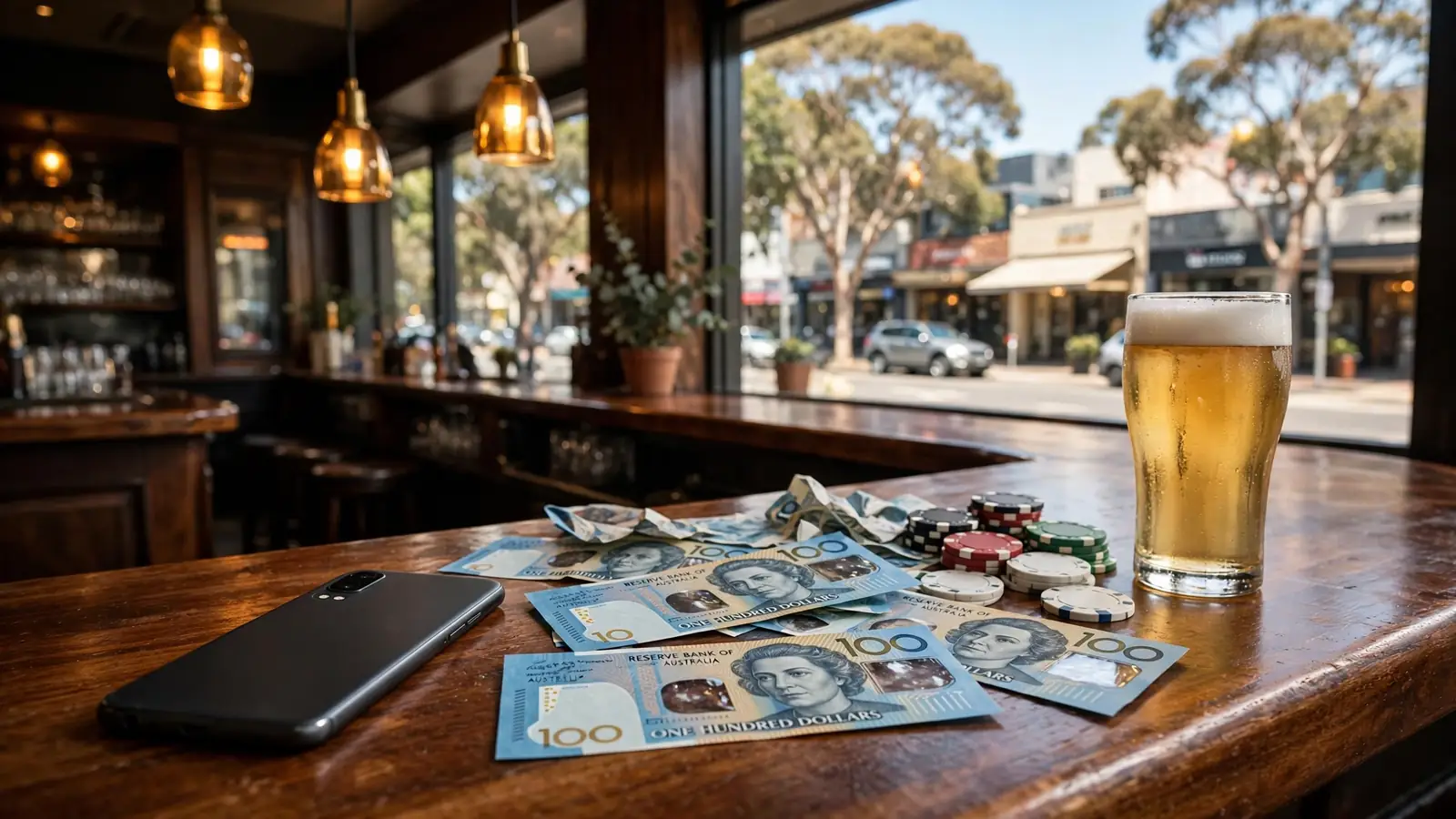
That local character matters when people talk about the best paying pokie machines Australia has to offer. A title may appear familiar across the country, but its surroundings are not interchangeable. The same style of game can be placed under different venue rules, with different limits and technical requirements. “Best paying” therefore cannot be read from a name alone.
The ACT: machines without a casino
A specialist industry overview reports that the Australian Capital Territory has 5,200 gaming machines in clubs and hotels, while Casino Canberra has none. That arrangement gives the territory an unusually clear physical setting: gaming machines are associated with community venues rather than a casino floor.
The same overview reports a maximum bet of $10 per spin and a required five-hour gambling break. It also describes a minimum RTP of 87% for ACT gaming machines. RTP remains a long-run statistical measure, not a promise attached to the next spin or the next visit. A machine meeting a regulatory floor can still produce a session that feels generous, barren, or theatrically indifferent.
The break requirement is a reminder that regulation is not concerned only with the mathematical return. It also tries to interrupt uninterrupted play, which is where entertainment can quietly turn into endurance. Five hours is a strangely precise boundary for an activity that has no natural ending.
The Northern Territory: venue type changes the rules
The Northern Territory has 2,195 gaming machines in clubs, hotels and two casinos, Sky City and Lasseters, according to a specialist industry overview. Here the distinction between venue categories is written directly into the operating conditions.
Summary of Reality
- No domestically licensed real-money online casino exists for Australian players.
- Machine mathematics (RTP and variance) describe long-run trends, not individual sessions.
- Every spin in a random number generator is an independent event.
- Land-based gaming and licensed wagering are the primary lawful alternatives.
For clubs and hotels, the reported maximum bet is $5 per spin and the minimum RTP is 85%. Casinos have no maximum bet under the same account, while their minimum RTP is 88%. That difference makes the phrase “best paying slot machines” especially slippery in a land-based context. A machine’s apparent appeal is shaped not only by its symbols or feature rounds, but also by the legal setting in which it is installed.
None of this turns a casino machine into a reliable source of profit. Each spin remains independent, and the random number generator does not respond to the hour, the number of people in the venue, or the attention being paid to the screen. A crowded room does not make a machine due. A quiet one does not make it generous.
New South Wales: scale becomes part of the story
New South Wales presents the largest machine environment among the figures reported here. A specialist industry overview lists 100,500 gaming machines: 99,000 in clubs and hotels, and 1,500 at the Star Casino in Sydney.
The distribution is more revealing than the headline number. In New South Wales, the ordinary club or hotel is not a marginal location for machine gambling; it is the main setting. The casino is visible, central and easy to imagine as the natural home of high-paying play, yet the figures place the overwhelming majority elsewhere. Australian gambling culture has long made the local venue part of the social landscape: dinner, sport, a club membership, and the machine bank occupying the same building.

That is why online language about the best paying slot machine does not transfer neatly to Australian pokies. Online, the discussion often revolves around game menus and software providers. On land, the machine is also a regulated object tied to a venue category and a jurisdiction. The law is sitting beside the screen.
A high RTP, where applicable, describes expected long-run behaviour across play, not a favourable appointment with one particular machine. Venue rules can limit the stake or interrupt the session, but they cannot make chance take personal responsibility. The machine remains random. The regulation remains local.
The Games People Associate with High-Payout Play
Certain game names have become shorthand for the idea of a large-paying session. That reputation belongs to the title’s identity, visual style and remembered stories of successful hits—not to any promise built into the name. A familiar buffalo, treasure chest or linked jackpot can make a game feel like a likely candidate for the best paying online pokie games, but recognition is not evidence of a profitable result.
The following titles are often associated with high-payout play:
- Buffalo Power — A profile review describes Playson’s game as high variance, with infrequent but larger hit patterns.
- Dolphin Treasure — A profile review describes Aristocrat’s game as lower variance, with steadier smaller returns across a session.
- Dragon Link — A recognisable Aristocrat title associated with the linked-jackpot style of machine play.
- Lightning Link — Another familiar Aristocrat title associated with linked-jackpot play.
- Buffalo King Megaways — A buffalo-themed title with the Megaways format in its name.

These descriptions are not competing definitions of quality. They point to different experiences. Buffalo Power, as characterised by that profile review, represents the appeal of waiting through quieter stretches for a larger-looking hit. Dolphin Treasure, in the same kind of player-facing vocabulary, represents a steadier rhythm of smaller returns. Neither pattern turns a game into the best paying slot game for every session, because a session is not a laboratory with a tidy ending.
A title also says nothing by itself about the result of the next spin. Each spin is independent, and the previous outcome has no bearing on what follows. A run of misses does not make a win “due”, just as a recent win does not make another one less possible. The machine has no memory. Human memory does plenty.
Published RTP can help describe a game over the long run, but it cannot settle the fate of a short visit. RTP is a statistical figure calculated across a large number of plays; a brief session may finish substantially above or below it. That is why lists of best paying slot games should be read as descriptions of game profiles or reputations, not as forecasts.
Is a high RTP a guarantee of profit?
No, RTP is a long-run statistical measure and does not predict the outcome of a single session.
Are online pokies legal in Australia?
Real-money online pokies are prohibited for Australian customers under the Interactive Gambling Act 2001.
What is the difference between pokies and slots?
In Australia, ‘pokies’ is the common local term, while ‘slots’ is more frequently used in online casino vocabulary.
Demo spins offer a less dramatic way to learn how a machine presents its features before real-money play. They can show the layout, bonus structure and pace without turning curiosity into a financial result. They cannot predict future outcomes, reproduce a guaranteed return or prove that a title belongs among the best paying out slot games.
The same caution applies to online slot games and land-based pokies. Names travel easily between screens, venues and advertising language. Statistical behaviour does not travel as neatly into a player’s particular evening. A celebrated title can produce a poor session; an unremarkable one can produce a memorable result. That is the entire problem with calling any game “best” without specifying whether the appeal is frequent small hits, rarer larger ones, a jackpot feature or simply the atmosphere surrounding the machine.
What Australian Players Can Legally Access Instead
For Australian players, the lawful alternatives depend less on the game’s appearance than on where and how it is supplied. A machine in a licensed club, hotel or casino belongs to the regulated land-based system. A lottery ticket belongs to a licensed lottery product. A bet placed through an authorised bookmaker belongs to wagering. The same vocabulary of winning and losing does not make these categories interchangeable.

Land-based gambling
Clubs and hotels are the familiar home of Australian pokies, while casinos provide a broader gambling environment. These venues operate under state or territory rules, so the available machines, limits and operating conditions are determined locally rather than by a single national casino authority.
Demo spins may be available on machines or digital interfaces, allowing players to become familiar with the layout and features before committing real money. That is a practical introduction, not evidence that a machine is more generous. A demonstration mode cannot turn chance into a method.
Licensed online options
Online access is not a blanket prohibition on every form of gambling. Licensed Australian-facing platforms may provide permitted wagering products, including sports and race betting. Such platforms are required to use independently audited random number generators where an RNG is part of the service. That technical safeguard concerns the fairness of the process; it does not create an online casino licence or make online pokies lawful.
Lotteries are another legal category, with their own licensing arrangements. They are not online casinos in disguise, even when tickets or entries are purchased digitally. Classification matters. The law is not impressed by a colourful interface.
The practical boundary
The phrase “online casino for Australian players” suggests a local service that does not exist. For legal access, the meaningful choices are land-based venues, licensed lotteries and permitted wagering services. A foreign website may display familiar pokie titles, but its availability on a screen does not move the activity into Australia’s lawful gambling framework.
- Use demo spins to understand game features and pace.
- Distinguish between RTP, variance, and hit frequency.
- Verify the legal status of a service provider.
- Treat high RTP as a forecast for a single sitting.
- Assume a recent win makes another win more likely.
- Mistake commercial branding for a legal licence.
That leaves a simpler distinction than the marketing language suggests: physical casino gambling is a regulated venue activity; online sports and race wagering is a licensed category; lotteries are separately authorised. Real-money online pokies are none of these.
Australian Money, Australian Venues, and the Limits of the Label
The phrase “Australian casino” sounds more settled than it is. It may describe a casino physically located in Australia, an Australian customer using a foreign website, or a page dressed in local language and currency. Those are not interchangeable categories. Geography, payment method and branding do not create a licence.
For real-money casino play, the decisive distinction is between a venue and a website. Land-based casinos are legal options in Australia, subject to the rules of the state or territory in which they operate. A person placing cash or an electronic payment at such a venue is participating in a regulated physical environment. The same person opening an overseas website from an Australian address is not entering an Australian casino merely because the screen uses Australian dollars or displays familiar imagery.
That makes claims about the “best paying Australian casino” rather slippery. A physical casino may offer gaming machines and other gambling products under local regulation, but its existence does not turn online casino services into a domestic product. Australian money can cross a digital border without the operator acquiring an Australian casino licence. Money travels more easily than legal categories.
The expression “best paying real-money online casino” has an even narrower problem. No online casino licensed in Australia exists for Australian players, and online casinos offering real-money pokies to Australians are banned under the Interactive Gambling Act 2001. A foreign licence may describe the operator’s position in another jurisdiction; it does not authorise service to Australian customers. Calling such a site “Australian” because it accepts Australian currency confuses the customer with the provider.
A physical venue also gives the label a social meaning that a website cannot reproduce. It has a location, a local regulatory setting and visible obligations to the jurisdiction that permits it to operate. The online version may borrow the vocabulary while avoiding the geography. A flag in the footer is not a premises.
A single profile-style review attributes ACMA’s enforcement to blocking shady sites and warning influencers against dodgy promotions. That detail matters because presentation is part of the problem: a polished local-looking page can still describe a prohibited service. The label may be Australian. The legal permission is not.
Casino Games and Sites: The Names Are Not the Licence
A familiar game title can create a misleading sense of legitimacy. Big Bass Bonanza, Starburst and Gates of Olympus are recognisable casino games, but recognition is not regulation. A title identifies a product, not the legal status of the website displaying it. The same distinction applies to colourful labels such as “Australian casino”, “trusted pokies site” or “best-paying casino games”. Branding is not a licence.
Game developers and casino operators occupy different roles. A provider may create software used across many jurisdictions, while a website decides where and how that software is offered. The presence of a well-known title therefore says nothing, by itself, about whether an Australian customer may lawfully access the service. A polished interface remains a polished interface. Nothing more.
The mathematics also resists the sales language. A pokie’s Random Number Generator operates independently of the time of day, player traffic and other external factors. A crowded website does not make a game “hot”, and a quiet one does not make it “due”. Where an Australian-facing online platform is licensed for a permitted gambling product, its RNG must be independently audited. That technical safeguard does not turn a prohibited casino service into a lawful one.
Random Number Generator A technical component that ensures each spin is an independent, unpredictable event, regardless of previous outcomes.
The legal category belongs to the service, not to the game’s reputation. Under the Interactive Gambling Act 2001, online casinos offering real-money pokies to Australians are banned. A foreign licence may regulate the operator in another jurisdiction, but it does not authorise that operator to provide online casino games to Australian customers. Nor does an Australian-sounding domain, payment label or customer-support promise create a domestic casino licence.
This is why lists of supposedly top-paying casino sites can be especially deceptive. They often place three unrelated things side by side: a game title, a commercial website and a licensing claim. One describes entertainment software; another describes a business; the third describes oversight somewhere else. Treating them as interchangeable is convenient for advertising and useless for legal clarity.
The sensible reading is narrower. Big Bass Bonanza, Starburst and Gates of Olympus belong to the broader casino vocabulary. Their names do not approve a site, guarantee a return or change Australia’s rules. A familiar label is still only a label.
Real-Money Online Slots: Why the Promise Does Not Change the Law
“Real money” is commercial language, not a legal category. It suggests that a player can move funds into an online slot, spin, and withdraw a cash balance if fortune turns favourable. Add claims about the best-paying games, and the wording begins to sound like a shopping guide. The law remains unimpressed.
Under the Interactive Gambling Act 2001, online casinos offering real-money pokies to Australians are banned. That prohibition covers the service itself, regardless of how attractively the website describes its games, payouts or payment process. A promise of larger returns cannot convert a prohibited online casino into a lawful Australian option.
Nor does a favourable result prove that a game is dependable. Each spin is independent, and the previous outcome has no bearing on the next. A winning sequence does not create momentum; a losing sequence does not make a win “due”. Commercial copy often gives randomness a costume. It is still randomness underneath.
This matters when “best paying real-money online slots” is treated as a practical category. Payout language may describe a game’s theoretical characteristics, but it does not grant permission to provide that game online to Australian customers. The label sells expectation. It does not issue a licence.
So the promise has two separate limits: chance does not become predictable, and marketing does not become legal authority. The money may be real. The invitation may still be unlawful.
Real-Money Online Casinos and the Australian Reality
The phrase “real-money online casino” sounds commercial, almost routine: choose a site, fund an account, select a pokie, and wait for the reels. In Australia, that sequence collides with the law before it reaches the first spin. Under the Interactive Gambling Act 2001, online casinos offering real-money pokies to Australians are banned. The same boundary covers other prohibited online casino services, regardless of how polished the website looks or how confidently it describes its payments and payouts.
That leaves no lawful Australian category called a “best paying online casino real money” service. A foreign licence does not turn an offshore operator into an Australian casino, and a game’s reputation cannot supply the missing permission. Marketing language is not legislation. A dry distinction, but an important one.
A regulatory overview also describes ACMA as enforcing these restrictions by blocking shady sites and warning influencers against dodgy promotions. The intervention is aimed at the supply and promotion of prohibited services, rather than turning a prohibited website into a recognised local option.
Lawful gambling in Australia therefore remains tied to permitted categories, including licensed sports and race wagering, lotteries, and physical gambling venues. The country has not abolished gambling; it has drawn an awkward line through its digital version. Some doors remain open. This one does not.
For that reason, claims about high-paying online casinos should be read as descriptions of offshore marketing, not as recommendations for Australian play. The legal reality is less exciting and considerably more useful: no domestically licensed real-money online casino exists for Australian players.
Is it legal to play online pokies in Australia for real money?
No. Under the Interactive Gambling Act 2001, online casinos offering real-money pokies to Australians are banned. Legal gambling options include land-based casinos, licensed bookmakers and lotteries.
Are real-money online casinos legal for Australians?
No. Online casinos that offer real-money pokies to Australians are prohibited under the Interactive Gambling Act 2001.
How do I judge a site for myself?
Check whether the platform is licensed for the relevant Australian market and uses an independently audited RNG. Also distinguish claims about fast withdrawals from claims about game performance, since payment speed does not change RTP or variance.
How to choose a licensed casino?
Choose a platform that is licensed for the relevant Australian market and uses an independently audited RNG. Remember that licensed status does not remove the uncertainty of individual spins.
Created by the ”Casino Info Au” editorial team.