
New PayID Pokies Australia: Payments and Safety
 Available in US
A clear guide to PayID deposits, withdrawals, limits, licensing and the difference between casino payments and banking.

- What New PayID Pokies Mean for Australian Players
- How New PayID Online Pokies Deposits Move Through the System
- New Pay ID Pokies: Withdrawals, Limits and the Bank–Casino Divide
- New PayID Pokies Australia Real Money: Licence, Law and Banking Reality
- The Best New PayID Pokies Australia Can Offer: A Safer Shortlist
What New PayID Pokies Mean for Australian Players
The phrase new PayID pokies Australia 2026 sounds as if a new kind of slot machine has appeared. It has not. The novelty is usually in the payment route attached to an online casino account, not in the reels, symbols, or mathematics of the games. “PayID pokies” is market shorthand for online pokies offered by a casino that accepts PayID as a banking option.
That distinction matters because payment language has a habit of making ordinary products sound newly invented. A slot remains a slot. PayID remains a way to address a bank payment. Put the two together and the result is a commercial label, not a separate gambling product.
PayID began with the New Payments Platform
PayID is a payment addressing service developed as part of Australia’s New Payments Platform in February 2018. The NPP provides the underlying infrastructure for participating financial institutions, while PayID supplies a simpler way to identify the account receiving the money.
Traditional bank transfers depend on details such as a BSB and account number. PayID changes the visible address. A linked mobile number, email address, or Australian Business Number can identify the account instead. The payment still moves from one bank account to another; the address is simply easier to recognise and enter.

That is the small piece of financial plumbing behind the large advertising phrase. No new currency is created, and no casino balance is held inside PayID. The system does not turn a bank transfer into a gambling transaction. It gives the transfer a different doorway.
PayID transfers move directly between Australian bank accounts without requiring the sender to enter a BSB or account number. The relevant PayID identifier is linked to the receiving bank account, while those traditional account details are not shared with the casino. For players, the practical appeal is obvious: fewer banking fields are exposed during the transfer and fewer numbers are required to remember correctly.
The infrastructure is designed for real-time payments and operates around the clock, including weekends and public holidays. That availability helps explain why the expression new PayID pokies has become common in casino advertising. The payment method belongs to the banking system, but its speed and recognisable address make it attractive to operators selling access to online games.

What “new” actually describes
In this market, “new” may refer to a newly promoted casino, a recently added cashier option, or a casino newly appearing in a comparison list. It does not automatically describe a new game, a new payment network, or a new Australian gambling category.
The phrase payid pokies new is therefore slightly misleading when read literally. The payment address is not attached to the machine itself. It is associated with the casino account and the movement of money around that account. The game lobby and the payment page are separate parts of the same commercial service.
A player might see familiar titles such as Starburst, Book of Dead, or Gates of Olympus offered through a casino that also displays PayID. Nothing about the games changes because a different payment address is available. The reels do not know whether a deposit arrived through PayID, another bank method, or a different route offered by the operator. Dry machinery, despite the marketing.
This separation is useful when assessing claims about “new PayID pokies Australia”. A new payment option can improve the route by which funds are sent, but it cannot by itself establish anything about the quality, fairness, ownership, or legal position of the casino offering the games. Those are separate questions, belonging to separate parts of the arrangement.

A payment address, not a wallet
PayID is not a wallet. There is no independent PayID balance waiting for a player to spend, and there is no gambling account contained within the payment system. The money remains part of the banking transfer between the sending and receiving accounts until the operator applies it to the relevant casino account.
PayID is also not a gambling product. It does not provide pokies, set game outcomes, calculate returns, or determine how an online casino operates. Its role is narrower: it identifies a bank account for a payment.
That narrow role can be obscured by the language used on casino pages. A heading may place “PayID” beside “pokies”, making the two terms look like a single product. Grammatically, the phrase is compact. Financially, it describes two different things:
- Pokies are the casino games made available through the operator.
- PayID is the payment addressing service used to identify a bank account.
- The casino account is the operator’s internal record of a player’s balance and activity.
Keeping these layers apart prevents a common misunderstanding. PayID does not guarantee that a casino is genuine simply because a transfer can be made to a PayID identifier. A payment route can function perfectly while the business behind it remains a separate matter. Convenience is not accreditation.
How the identifier works
A PayID identifier may be a mobile number, an email address, or an Australian Business Number linked to a bank account. The identifier points toward the account, but it does not expose the BSB and account number to the casino.
This arrangement reflects a broader shift in banking culture. Account details were once treated as the essential vocabulary of a transfer. PayID offers a more familiar label, one that can be connected to an identity already used in daily life. A mobile number is easier to recognise than a string of banking digits, although recognition should not be confused with proof of trustworthiness.
A PayID identifier can be a mobile number, an email address, or an Australian Business Number. While it is easier to recognise than traditional banking digits, it is a routing address, not proof of a casino’s trustworthiness.
The receiving account remains the important destination. The PayID is only the address used to locate it. In a casino context, that distinction becomes particularly important because the payment screen may sit beside promotional material, game names, and account features. The surrounding page belongs to the operator; the PayID service belongs to the payment infrastructure. They meet at the transfer, but they are not the same institution.
This is also why a PayID casino should not be understood as a casino created by the banks or by the NPP. A bank can support PayID as a payment service without endorsing every business that accepts it. The infrastructure is deliberately broader than any single commercial use.
The Australian setting
The Australian context gives the expression its local shape. PayID was developed within the country’s New Payments Platform, and its identifiers are linked to Australian bank accounts. A casino page using the term is therefore speaking to a familiar domestic payment environment rather than introducing a private casino currency with an Australian name attached.
That familiarity has social consequences. Bank transfers are not exotic objects in Australia; they are part of ordinary household administration. When the same addressing method appears in a casino cashier, the transaction can look as routine as paying a bill. The financial action may be familiar, while the service receiving it belongs to a very different category. The payment system cannot erase that difference.

The safest interpretation of new PayID pokies Australia is consequently a modest one: online pokies presented by an operator that offers PayID as a way to identify the receiving bank account. The wording says something about the payment option. It says nothing by itself about the games being new, the operator being trustworthy, or the service being approved.
For that reason, PayID should be considered one component of the surrounding arrangement, not its seal of quality. The service can make a bank transfer easier to address and easier to understand. It does not rewrite what the money is being used for, who controls the casino account, or what obligations apply to the operator.
The important boundary is simple. PayID is the address. The bank transfer is the movement. The casino is the business. The pokies are the games. Four things, not one.
How New PayID Online Pokies Deposits Move Through the System
A PayID deposit at an online pokies site is not a card payment and not a casino wallet transfer. It is a bank-to-bank payment routed through Australia’s New Payments Platform, with the casino using a reference code to identify whose account should receive the credit. The visible part is brief: a cashier page, a banking app, and a confirmation screen. Behind it sits a small chain of matching decisions.
That distinction matters. PayID moves the money; the operator’s cashier records it. The first system can report that a transfer has been made while the second is still deciding which player balance should be updated. A few seconds may separate those events. Occasionally, a few minutes do.
Deposit Process
Select PayID in the casino cashier and note the unique reference code and recipient details.
Open your banking application, enter the PayID identifier, and verify the recipient name matches the casino’s legal entity.
Enter the exact amount and the unique reference code, then approve the transfer through your bank.
Starting in the casino cashier
The process begins with the casino cashier, not with the banking app. A player selects PayID among the available deposit methods and enters the amount permitted by the operator. The cashier should then display the payment details needed for the transfer, including the PayID address, the registered recipient information and a unique reference code.
This is the point at which a new PayID pokies site reveals whether its payment process is actually organised. A PayID logo alone proves little. The method should appear as an active cashier option, with instructions that connect the payment to the specific casino account. If PayID is absent from the cashier, sending money by some alternative route is not a substitute for a working deposit method.
The reference code is not decorative paperwork. It is the label that allows the operator to associate an incoming payment with a player profile. Without it, the transfer may arrive at the right business account while remaining unallocated inside the casino’s payment queue. Money can be received and still not be credited. A wonderfully modern inconvenience.
The code should be copied exactly as displayed. It belongs in the field the bank provides for a description, reference or message. Adding extra words, changing characters or using an old code can make automated matching less reliable. Where the cashier generates a fresh code for a particular deposit, that code should be treated as part of the transaction itself.

Checking the recipient before approval
The banking app is the second checkpoint. After PayID is selected, the bank displays the recipient name associated with the identifier before the payment is approved. That name should correspond to the casino’s registered legal entity, not to an individual person.
This is one of the few moments when the payment interface offers a useful piece of evidence rather than another invitation to click. A casino deposit should not be sent to a personal name. Nor should it be sent to a temporary or alternative PayID supplied in a message by the operator. The recipient shown by the bank should match the business information presented by the casino.
The same caution applies to payment requests outside the banking app. A link, chat instruction or support message may explain where to find the cashier, but the transfer itself should be approved only inside the bank’s own application or online banking environment. That separation protects the payment from being turned into a theatre of urgency, where an unfamiliar recipient becomes acceptable merely because somebody has typed “instant” beside it.
A PayID identifier links to a bank account without exposing the casino to the payer’s traditional BSB and account number. That is the practical privacy feature of the system. It does not remove the need to inspect the recipient name. Less information is shared; the information that remains visible becomes more important.
Entering the amount and reference
Once the recipient has been checked, the player enters the deposit amount and the unique casino reference. The bank may also display a transfer limit or require an additional confirmation step. Those controls belong to the sending bank, not to the casino’s cashier.
- Verify the recipient name matches the casino’s business entity
- Copy the reference code exactly as displayed
- Complete all KYC verification before withdrawing
- Send money to a personal name instead of a business entity
- Reuse an old reference code for a new deposit
- Approve transfers outside of your official banking app
A specialist payment overview describes the division this way: the bank sets the daily PayID transfer limit, while the casino sets the minimum amount it will accept for a transaction. That is a useful distinction, although the two settings can look similar from the player’s side. A deposit can fail because the casino’s minimum has not been met, or because the bank will not authorise the amount. The cashier may mention one condition while the banking app enforces the other.
PayID itself does not charge Australian players for real-money transfers. The New Payments Platform does not impose an end-user fee for sending money through PayID. Any charge attached to a casino transaction is therefore an operator condition, not a fee built into PayID. The cashier’s terms are the place to check for such a charge, alongside the minimum deposit and the reference instructions.
The payment should be reviewed before approval:
- the recipient name matches the casino’s registered business entity;
- the amount meets the cashier’s stated minimum;
- the reference code is present and accurate;
- the transfer is being approved in the bank’s own app;
- the bank’s available PayID limit covers the payment.
None of these checks makes the casino trustworthy by itself. They simply reduce the chance of sending a correctly authorised payment to the wrong destination or creating a preventable matching problem.
What “instant” means here
PayID transfers are described as near real time and available twenty-four hours a day, seven days a week, including weekends and public holidays. The banking leg is therefore not tied to branch hours or a business-day calendar. A payment can move when the traditional office is closed, which is one reason the method fits the impatient architecture of online gambling so neatly.
The casino credit, however, is a separate event. PayID casino deposits usually reach the casino within seconds, although the operator’s posting can take a few minutes. The difference is small but important. The bank may confirm that the transfer has left the account before the casino has matched the reference and updated the balance.
A delay of a few minutes does not automatically mean that the payment has disappeared. Repeatedly sending another deposit is more likely to create confusion, particularly if the first transfer is still waiting in the operator’s reconciliation queue. The sensible record is the bank confirmation, the amount, the recipient and the reference used. These details give support staff something concrete to trace if the balance does not update.
The order of events usually looks like this:
- PayID is selected in the casino cashier.
- The cashier displays the recipient details and unique reference.
- The player opens the bank’s payment function and enters the PayID address.
- The bank displays the recipient name.
- The player enters the amount and reference, then approves the transfer.
- The bank processes the payment through the New Payments Platform.
- The casino matches the reference to the player account.
- The deposit is posted to the casino balance.
The first six steps concern the payment network. The last two concern the operator’s internal accounting. Treating them as one seamless action is how small errors become support tickets.
When the casino cannot match the payment
The most common operational weakness in this arrangement is not PayID’s speed but the casino’s bookkeeping. A missing reference, an incorrect reference or a recipient mismatch can prevent automatic allocation. The transfer may still have reached the business account, but the casino cannot confidently attach it to the intended player profile.
That is why the reference belongs to the deposit procedure rather than to a later complaint. A support team may ask for the bank confirmation, the exact transfer time, the amount, the recipient name and the reference entered. Keeping those details together is more useful than sending a screenshot that shows only a generic “payment successful” message.
If the cashier supplied a reference for one deposit, reusing it for another can also make the operator’s matching process less clear. The safe approach is to return to the cashier for the details of the current transaction and follow the instructions shown there. New PayID pokies online may advertise a smooth interface, but payment reconciliation remains an exercise in clerical precision.
There is another boundary worth preserving: a bank confirmation is evidence that the bank processed the transfer, not evidence that the casino is legitimate. PayID verifies an addressing route. It does not certify an operator, approve its games or guarantee that the balance will be handled fairly. A payment can be technically successful and commercially unwise at the same time.
Important Distinction PayID is merely a payment addressing service and does not serve as an accreditation or guarantee of a casino’s legitimacy.
The practical path is therefore simple but not casual: select PayID in the cashier, read the recipient name in the banking app, enter the unique reference, respect the separate bank and casino conditions, and allow the operator time to match the payment. Speed is part of the method. Accuracy is the part that keeps speed from becoming an expensive shortcut.
New Pay ID Pokies: Withdrawals, Limits and the Bank–Casino Divide
A PayID withdrawal reverses the emotional direction of a gambling transaction, but not its administrative logic. A deposit is designed to arrive. A withdrawal has to be approved, documented, matched to an account, and released by the operator before the banking network can do its relatively uneventful part.
That is why money leaving PayID pokies can take longer than money entering them. PayID itself is not the slow stage. Casino-side processing is.
Why withdrawals take longer than deposits
PayID casino withdrawals typically arrive within 2 to 12 hours because the casino may hold the request for compliance processing before sending it. During that interval, the operator can review several separate questions:
- whether wagering requirements have been met;
- whether the account has completed KYC verification;
- whether anti-money-laundering checks have been satisfied;
- whether the balance consists of available real funds;
- whether the transaction resembles suspicious activity;
- whether the operator releases payments individually or through a batched payout schedule.
A deposit is comparatively simple from the operator’s perspective. The casino receives a transfer, identifies the account through its reference code, and credits the balance. A withdrawal asks the operator to establish that the person requesting the money is entitled to receive it and that the funds can legally and procedurally be released.
The difference is easy to mistake for a fault in PayID. It is not. The payment address may be connected to a bank account, but it does not remove the casino’s internal controls. Instant payment infrastructure cannot make an operator skip identity checks. No clever label changes that.
KYC is often the first practical dividing line. If the account holder’s name, PayID details, and identity documents do not match, the withdrawal may be paused while the discrepancy is examined. The same applies when verification has not been completed before the first withdrawal. In operational terms, an account that was good enough to accept money may not yet be good enough to send it back.
That distinction is one of the less charming habits of online gambling. The cashier can feel open at the deposit stage and suddenly become bureaucratic at the exit.
The casino controls the release stage
PayID moves between Australian bank accounts through the New Payments Platform. The casino, however, controls the moment when a withdrawal request is accepted and transmitted. The payment system cannot approve a request that the operator has not yet released.
This creates two separate clocks:
- Casino processing time: the period used for verification, wagering checks, fraud review, and internal approval.
- Banking transfer time: the period after the casino sends the approved payment through PayID.
The first clock is where most friction occurs. Once the transfer is actually sent, PayID is designed for near-real-time movement and operates around the clock, including weekends and public holidays. A delay before release should therefore not be described as a failure of the payment method.
Batched payouts make the distinction even clearer. An operator may collect approved withdrawals and send them according to its own payout schedule rather than dispatching every request separately. In that case, a withdrawal can be fully approved yet still wait for the next release batch. The banking network has not lost the money; the casino has not sent it yet.
A sensible cashier review therefore needs to distinguish between “pending,” “approved,” and “sent,” where those labels are available. They describe different events. “Pending” can indicate unresolved checks. “Approved” can mean the operator has cleared the request but has not yet transmitted it. “Sent” places the transaction on the banking side, where a bank reference or PayID confirmation becomes more relevant.
Handles wagering requirements, KYC verification, and anti-money-laundering checks.
Sets daily/weekly PayID transfer limits and manages security reviews.
Processes the actual movement of funds via the New Payments Platform.
The precise labels vary by operator, but the underlying divide does not. A payment method can be fast while the merchant using it remains slow.
Limits belong to different institutions
Limits are another area where casino and bank responsibilities are easily confused. Australian banks set daily and weekly PayID transfer limits rather than casinos. The operator may impose its own cashier rules, but those do not replace the bank’s controls.
A profile-based banking review lists Australian bank Osko sending limits between A$1,000 and A$30,000 per day. That range should be treated as a source-specific description, not as a universal rule for every account. PayID and Osko operate within the same wider real-time payments environment, but an individual bank’s settings, account history, security controls, and transfer arrangements can affect what is available.
The same caution applies to a separate banking comparison that lists default daily PayID limits at major Australian banks from A$750 to A$5,000. It is a comparison figure, not a market-wide promise. A bank may apply a different limit to a particular account, payee, channel, or transaction pattern.
Commonwealth Bank provides a useful example of why “the limit” is not a single thing. A banking guide describes a default daily PayID cap of AU$1,000 for new payees, with the possibility of raising it through the app. That is a bank-specific, payee-specific condition reported by a financial-services overview. It should not be presented as the default position for every Australian bank or every customer.
The practical result is a division of authority:
| Question | Party that controls it |
|---|---|
| How quickly the casino reviews a withdrawal | Casino |
| Whether KYC is required before release | Casino |
| Whether payments are batched | Casino |
| Any casino transaction fee | Casino |
| Daily or weekly PayID transfer cap | Bank |
| Security review by the banking app | Bank |
| Whether the casino has actually sent the withdrawal | Casino |
The casino can set a per-transaction minimum or impose a processing fee. The bank can restrict the amount that may be sent within its own transfer rules. Neither institution’s setting should be confused with the other’s.
Fees: PayID is not the cashier
PayID itself is free for Australian players, and the New Payments Platform does not charge end users for real-money transfers made through PayID. Any fee shown in a casino cashier belongs to the operator’s terms, not to PayID as a payment system.
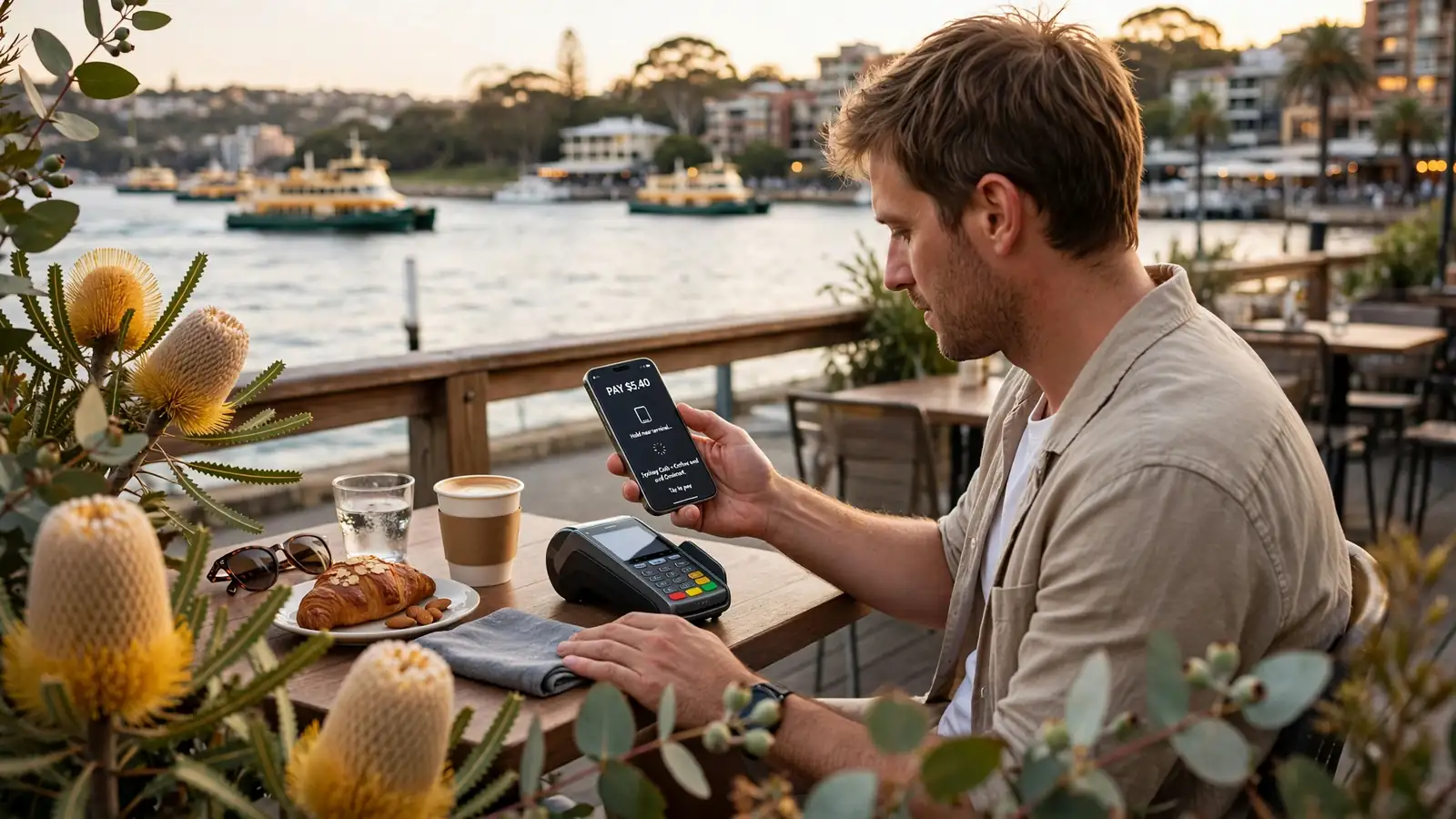
That distinction matters because a withdrawal fee can be described in vague language that makes it sound like an unavoidable banking charge. It is not automatically one. Fees charged for PayID casino transactions are set by the operator. The wording in the cashier, payment terms, or withdrawal rules should identify whether a charge applies to deposits, withdrawals, currency conversion, account inactivity, or a particular processing route.
A bank may separately apply its own account or transfer conditions, but the presence of PayID does not turn an operator fee into an NPP fee. The labels are not interchangeable. One belongs to the casino’s commercial policy; the other belongs to the bank’s account and payment framework.
This is also why a withdrawal can be under the bank’s limit and still be delayed by the casino. The amount may be technically transferable, yet remain subject to compliance review or a payout schedule. Conversely, a casino may approve the request while the bank’s own daily limit or security review prevents the transfer from proceeding as expected.
Financial Risk Attention A successful PayID transfer confirms the banking system processed the instruction, but it does not confirm the operator is licensed or legitimate.
Checks before money leaves
The safest operational sequence is deliberately unexciting. The account should complete KYC verification before the first withdrawal. The PayID name on the bank account should match the name on the casino account and identity documents. A mismatch can produce a manual review, and manual review is where the clock becomes opaque.
The withdrawal destination also deserves attention. A PayID request should not be redirected to a temporary or alternative identifier supplied informally by a casino. The payment should be approved only inside the bank’s own application, where the registered recipient name is visible. A payment instruction that depends on an individual’s personal name rather than the casino’s registered business entity is a warning sign, not a shortcut.
The same discipline applies when comparing casinos. A site that accepts PayID deposits but does not support PayID withdrawals creates an uneven payment relationship: money can enter through the advertised method, while the return route depends on another process. That arrangement does not prove misconduct, but it increases operational uncertainty and should be treated as a material condition of the account.

Before planning a large real-money transfer, the relevant NPP limit should be checked with the bank. The casino cannot raise a banking cap, just as the bank cannot shorten an operator’s KYC queue. Two separate institutions, two separate bottlenecks.
Withdrawal speed, then, is not a property of the phrase “PayID pokies” alone. It is the result of an operator’s review process meeting a bank’s payment controls. The network may be near real time. The paperwork is not.
New PayID Pokies Australia Real Money: Licence, Law and Banking Reality
PayID can make a real-money transfer look reassuringly ordinary. The payment leaves an Australian bank account, the banking app confirms it, and the casino balance may update soon afterwards. Yet the payment rail and the gambling service sit in different legal worlds. One is financial infrastructure. The other is an online casino offering a product that Australian law treats very differently.

That distinction matters more than the speed of the transfer.
What Australian law prohibits
The Interactive Gambling Act 2001 makes it illegal for an operator to offer real-money online casino games to Australians from within Australia. Pokies, roulette, blackjack and live-dealer tables fall within the category of prohibited interactive gambling services when offered to an Australian customer.
There is no domestically licensed real-money online casino for Australian players. No Australian gambling licence exists for casino games because offering that product to Australians is against the law. The country’s regulatory structure is not a single casino licensing office with a neat public list of approved websites. Gambling is regulated at federal and state or territory levels, with different arrangements for different products.
Online sports betting is legal and licensed at state and territory level. Lotteries are licensed too. Online casino games are not placed in the same basket simply because money changes hands through a familiar bank.
The law targets the provider rather than the private player. Australian law does not make it illegal for an individual to place bets at an offshore online casino. That does not turn the site into a locally authorised casino, nor does it remove the financial and practical risks attached to dealing with an offshore operator. The distinction is narrow, but important: the provider’s prohibition is not automatically a criminal offence imposed on the customer.
A legal gap is still a gap.
Why PayID does not prove legitimacy
PayID is part of the New Payments Platform, not a gambling regulator. Its presence in a cashier proves only that the operator has arranged a way to receive or send a bank transfer using a PayID identifier. It says nothing about the casino’s ownership, licence, game supply, withdrawal policy or treatment of customer funds.
Legal Reality The Interactive Gambling Act 2001 prohibits offering real-money online casino games to Australians from within the country.
This is where the ordinary appearance of banking can mislead. A payment to a registered business name may look more respectable than a card transaction routed through an unfamiliar processor, but respectability is not authorisation. A successful transfer confirms that the banking system processed the instruction. It does not confirm that the casino is legitimate.
An operator’s licence therefore needs to be checked independently. Offshore casinos commonly hold licences from Malta or Curaçao rather than an Australian casino licence. MGA and Curaçao licensing authorities maintain public registers where a licence number and its status can be checked. The relevant licence number should be cross-referenced through the regulator’s official portal, rather than accepted because a logo appears in the site footer.
The order matters:
- Identify the operator’s legal entity and stated licence.
- Check the licence number through the regulator’s official website.
- Confirm that the licence belongs to the same entity named in the casino terms and payment instructions.
- Treat PayID availability as a payment detail, not as evidence of approval.
No public Australian register of licensed online casino operators exists because no domestic casino licence of that kind exists. Looking for a local licence number can therefore create false confidence: the absence of one is not a minor administrative flaw but part of the market’s legal reality.
What banks permit—and what they do not promise
Commonwealth Bank, ANZ, Westpac and NAB support PayID real-time transfers. A bank’s technical support for PayID, however, does not necessarily mean that every gambling-related payment is permitted under every circumstance.
A banking overview reports that ANZ, CommBank, NAB and Westpac permit real-money PayID transfers to online casino accounts in AUD, subject to their standard transaction limits. That statement describes payment capability, not endorsement of the casino sector. PayID transfers to and from real-money gambling sites are not blocked by Australian banks by default, but individual bank policies can still affect a transaction.
A separate industry overview reports that some banks have introduced opt-in gambling blocks preventing payments to known gambling merchants, while others may flag unusual gambling-related activity for review. Such controls belong to the bank’s risk and account-management policy. They do not establish whether the receiving casino is lawful, licensed or trustworthy.
The bank and the operator therefore answer different questions:
| Question | Responsible party |
|---|---|
| Can the account send a PayID transfer? | The bank |
| Is a gambling payment blocked or reviewed? | The bank’s policy and controls |
| Is the casino authorised to offer its service? | The operator’s applicable regulator |
| Does PayID work as a payment option? | The operator and its payment arrangement |
| Is the casino safe to use? | Requires independent verification |
The separation is less dramatic than it sounds, which is precisely why it is easy to miss. A bank can process a transfer to a merchant whose online casino service is not permitted for Australian customers. Payment processing is not a legal certification. It is simply payment processing.
For anyone considering new PayID pokies Australia real money sites, the sensible test is therefore not whether the cashier accepts PayID. It is whether the operator’s identity, licence status and terms withstand independent checking. The banking app can confirm a transfer. Only external verification can address the casino behind it.
The Best New PayID Pokies Australia Can Offer: A Safer Shortlist
This shortlist highlights operators relevant to Australians exploring new PayID pokies in 2026. Use the details below to quickly assess each option by its stated licence, bonuses, payment speeds, and deposit requirements.
License: Curacao eGaming Licence · Min. deposit: A$10 Rocket Play is listed with a Curacao eGaming Licence and a minimum deposit of A$10.
License: Tobique Gaming Commission · Bonus: up to A$8,000 + 400 free spins across 4 deposits · Payout speed: crypto ~10-15 minutes, fiat 1-5 days · Min. deposit: A$30 SkyCrown stands out for a bonus of up to A$8,000 plus 400 free spins across four deposits. Crypto payouts are stated at around 10–15 minutes, while fiat payouts take 1–5 days; the minimum deposit is A$30.
License: Curacao eGaming Licence · Min. deposit: A$10 PlayWest is listed with a Curacao eGaming Licence and a minimum deposit of A$10.
License: Curacao eGaming (Dama N.V.) · Bonus: up to A$10,000 + 180 free spins, 40x wagering JeetCity Casino operates under Curacao eGaming through Dama N.V. Its offer includes up to A$10,000 plus 180 free spins, with 40x wagering.
License: Curacao, operated by Dama N.V. · Bonus: 325% up to 5.25 BTC + 250 free spins across 4 deposits 7Bit Casino is operated by Dama N.V. under a Curacao licence and advertises 325% up to 5.25 BTC plus 250 free spins across four deposits.
License: international iGaming licence – jurisdiction not named in the source · Bonus: 100% up to A$1,000 + 100 free spins, 35x wagering · Payout speed: PayID 1-24 hours · Min. deposit: A$30 (PayID from A$10) House of Pokies lists an international iGaming licence, with the jurisdiction not named in the source. Its offer includes 100% up to A$1,000 plus 100 free spins with 35x wagering; PayID payouts are stated at 1–24 hours, and PayID deposits start from A$10.
License: Curacao · Bonus: 100% up to A$500 + 200 free spins, 10x wagering · Payout speed: crypto 30-60 minutes, fiat 1-5 days · Min. deposit: A$10 Wild Tokyo is listed with a Curacao licence and offers 100% up to A$500 plus 200 free spins with 10x wagering. Crypto payouts are stated at 30–60 minutes, fiat payouts at 1–5 days, and the minimum deposit is A$10.
Bonus: up to A$750 + 50 jackpot spins, 35x wagering · Payout speed: crypto ~90 minutes, fiat 1-5 days · Min. deposit: A$30 Kingmaker offers up to A$750 plus 50 jackpot spins with 35x wagering. Its stated payout times are around 90 minutes for crypto and 1–5 days for fiat, with a minimum deposit of A$30.
Bonus: up to A$6,600 + up to 250 free spins across 4 deposits DragonSlots Casino is notable for a bonus of up to A$6,600 plus up to 250 free spins across four deposits.
License: Curacao · Bonus: up to A$10,000 multi-stage + 500 free spins · Min. deposit: A$20 (POLi) Lucky Dreams offers a multi-stage bonus of up to A$10,000 plus 500 free spins. The minimum deposit is A$20 when using POLi, and the operator is listed with a Curacao licence.
A PayID label does not make a slot new, generous, or trustworthy. It describes the route used to move money, not the mathematics or character of the game. That distinction matters because payment branding is often made to carry more emotional weight than it deserves. A quick cashier can sit beside an ordinary lobby, and a polished lobby can sit beside an operator whose credentials do not withstand checking.
A sensible shortlist therefore begins with recognisable titles rather than promises about winnings. These games can help compare what a newly encountered PayID casino actually offers:
- Big Bass Splash — a named slot for checking whether the lobby includes familiar fishing-themed content.
- Book of Dead — a well-known title that can show whether a casino carries established adventure-style slots.
- Cash of Gods — useful for comparing the presence of newer-looking game releases in the lobby.
- Fire in the Hole 2 — a named option for checking whether the operator lists contemporary branded titles.
- Gates of Olympus — a popular reference point when comparing the range of releases available.
- Moon Princess Power of Love — another title with which to compare the casino’s catalogue.
- Rich Piggies 2 — a concrete game name for checking how broad the listed selection is.
- Starburst — an established title that can reveal whether a lobby includes long-standing favourites.
- Sugar Rush 1000 — a recognisable release for comparing the operator’s selection of modern slots.
- Sweet Bonanza — a familiar title that may help distinguish a substantial lobby from a thin display.
- Wanted Dead or a Wild — a further named option for comparing the range of games shown.
This is a catalogue comparison, not a ranking of payout quality. No title on the list should be called the best-paying game without a verified basis for that claim. A slot’s presence also says nothing about whether withdrawals will be handled properly. The sensible question is narrower: does the operator offer the games it advertises, and does it identify them clearly enough to be checked?
How to compare a new PayID casino without confusing the payment method
The first check belongs to the casino, not the slot. The operator should display a valid gambling licence, and its licence number should be checked through the relevant regulator’s official portal. An Australian casino licence for real-money online casino games does not exist, so an operator serving Australians will not be validated by finding a domestic casino licence. Offshore licensing authorities such as Curaçao eGaming maintain public registers where a licence number and status can be checked.
Casino Verification
- Check the operator’s licence via the official regulator’s portal
- Ensure the recipient name matches the casino’s legal entity
- Confirm PayID is available for both deposits and withdrawals
- Verify the casino’s minimum deposit and wagering terms
A PayID confirmation is not a licence check. It merely indicates that a bank transfer was accepted or processed. Money can travel efficiently to an operator that still deserves no confidence. That is the sort of administrative irony payment slogans prefer to leave unmentioned.
The cashier should also list PayID as an actual deposit and withdrawal method before any account is funded. The registered recipient name shown in the banking app must match the casino’s legal entity. A payment request sent to an individual’s personal name is a reason to stop, not a minor variation in checkout design. Nor should a temporary or alternative PayID supplied by the casino be used for a deposit. Payment approval belongs inside the account holder’s own banking app; an operator should not be directing that approval elsewhere.
The bank side has its own practical boundary. Commonwealth Bank, ANZ, NAB and Westpac support full PayID functionality, and a banking overview reports participation by more than 110 banks and credit unions across the New Payments Platform. That broad access makes PayID familiar infrastructure, not evidence that every gambling merchant is acceptable to every bank. A bank’s support for PayID does not automatically amount to permission for transfers to a gambling operator.
Account checks before the first deposit
A safer comparison also includes the account conditions hidden beneath the game tiles:
- Confirm the minimum PayID deposit, transfer cap and wagering terms in the cashier.
- Check that the PayID name on the bank account matches the casino account and identity documents.
- Complete KYC verification before requesting a first withdrawal.
- Avoid any offshore operator whose legal and financial risks are not understood.
- Do not deposit where PayID withdrawals are unavailable.
- Check the bank’s NPP limit in advance if a large real-money transfer is being considered.
These checks are less glamorous than a carousel of new releases. They are also more useful. The most attractive shortlist is not the one with the loudest “instant” label, but the one that survives independent verification: named games, a traceable operator, matching account details, visible terms and a payment route that remains within the bank’s own controls. PayID can be part of that comparison. It cannot complete it.
Published by the Casino Info Au team.