Pay by Phone Casinos Australia: Payment Options
 Available in US
Separate mobile access, carrier billing, wallets and PayID before choosing a deposit method at an Australian online casino.

- What “Pay by Phone” Means at Australian Online Casinos
- PayID for Casino Deposits and Withdrawals
- Payment Methods for Australian Casino Players
- Can a Casino Charge the Mobile Phone Bill?
- Casinos That Accept Pay-by-Phone Deposits
- Pay-by-Phone Slots, from Mobile Play to Mobile Payment
- Deposits, Wagering Rules, and the Myth of “No Wagering”
- Withdrawal Routes When the Phone Is Only the Deposit Tool
- Pay-by-Phone Casino Bonuses: Read the Small Print
- Boku, Europe, and Payment Methods That Do Not Define Australia
What “Pay by Phone” Means at Australian Online Casinos
“Pay by phone” is an elastic phrase. In an Australian casino context, it can describe a deposit charged to a mobile account, a wallet opened and confirmed on a phone, or a bank payment initiated through a phone number. Those are different mechanisms, even when the screen is the same small rectangle.
The first meaning is carrier billing: the casino deposit is added to a mobile account or deducted through a telecommunications provider. This is the strictest interpretation of a pay-by-phone casino. It concerns the source of the money, not merely the device used to open the casino website.
The second is a mobile wallet. A payment application may be accessed from a phone, with its own balance, authentication and transaction rules. Calling this “pay by phone” describes the channel, but not necessarily a phone-bill charge. The distinction matters because mobile access says little about how a deposit is funded.
The third is a phone-linked bank payment, most notably PayID. PayID connects a bank account to an identifier such as a phone number, email address or ABN. The phone number acts as a payment alias; it does not turn the transaction into carrier billing. The money still moves from the linked bank account.
This shortlist is designed to help Australian players assess pay-by-phone casino options in 2026. Use the key payment, bonus, licensing and minimum-deposit details to identify which operators deserve a closer look.
License: Curacao eGaming Licence · Min. deposit: A$10 Rocket Play stands out for its Curacao eGaming Licence and A$10 minimum deposit, making it a straightforward option to consider for players who prefer a lower entry point.
License: Tobique Gaming Commission · Bonus: up to A$8,000 + 400 free spins across 4 deposits · Payout speed: crypto ~10-15 minutes, fiat 1-5 days · Min. deposit: A$30 SkyCrown is notable for a bonus of up to A$8,000 with 400 free spins across four deposits. Crypto payouts are listed at around 10–15 minutes, while fiat payouts take 1–5 days.
License: Curacao eGaming Licence · Min. deposit: A$10 PlayWest is listed with a Curacao eGaming Licence and a A$10 minimum deposit. These details make it relevant for players looking for a lower minimum starting amount.
License: Curacao eGaming (Dama N.V.) · Bonus: up to A$10,000 + 180 free spins, 40x wagering JeetCity Casino is operated by Dama N.V. under a Curacao eGaming licence. Its offer reaches A$10,000 plus 180 free spins, with 40x wagering.
License: Curacao, operated by Dama N.V. · Bonus: 325% up to 5.25 BTC + 250 free spins across 4 deposits 7Bit Casino is operated by Dama N.V. in Curacao and promotes a bonus of 325% up to 5.25 BTC, plus 250 free spins across four deposits.
License: international iGaming licence – jurisdiction not named in the source · Bonus: 100% up to A$1,000 + 100 free spins, 35x wagering · Payout speed: PayID 1-24 hours · Min. deposit: A$30 (PayID from A$10) House of Pokies lists an international iGaming licence, although the source does not name the jurisdiction. Its offer includes 100% up to A$1,000 plus 100 free spins with 35x wagering, while PayID payouts are stated as taking 1–24 hours.
License: Curacao · Bonus: 100% up to A$500 + 200 free spins, 10x wagering · Payout speed: crypto 30-60 minutes, fiat 1-5 days · Min. deposit: A$10 Wild Tokyo operates under a Curacao licence and offers 100% up to A$500 plus 200 free spins with 10x wagering. Crypto payouts are listed at 30–60 minutes, while fiat payouts take 1–5 days.
Bonus: up to A$750 + 50 jackpot spins, 35x wagering · Payout speed: crypto ~90 minutes, fiat 1-5 days · Min. deposit: A$30 Kingmaker features a bonus of up to A$750 plus 50 jackpot spins with 35x wagering. Listed payout times are around 90 minutes for crypto and 1–5 days for fiat.
Bonus: up to A$6,600 + up to 250 free spins across 4 deposits DragonSlots Casino is notable for a bonus of up to A$6,600 and up to 250 free spins across four deposits.
License: Curacao · Bonus: up to A$10,000 multi-stage + 500 free spins · Min. deposit: A$20 (POLi) Lucky Dreams offers a multi-stage bonus of up to A$10,000 plus 500 free spins. Its listed minimum deposit is A$20 when using POLi, and the casino operates under a Curacao licence.
PayID transfers are available 24 hours a day, seven days a week, including public holidays. They operate within the bank’s own systems, without a third party accessing banking credentials. That makes PayID a bank-based payment method with a phone-friendly identifier, rather than a telecom payment product.
There is also a simpler, looser use of the phrase: playing at an online casino on a smartphone and depositing through any method available in the mobile cashier. In that sense, almost any mobile-compatible casino could be described as allowing casino pay by phone. The wording is convenient. It is not precise.
For Australian players, the useful question is therefore not whether a new pay-by-phone casino has a mobile site. It is whether “phone” refers to the bill, the wallet, the bank identifier or merely the device. Four meanings. One label.
PayID for Casino Deposits and Withdrawals
PayID is the Australian banking feature most closely associated with a phone-based casino deposit. It does not charge a mobile account, and it is not a carrier-billing service. Instead, it links a bank account to an identifier that is easier to use than traditional account details: a phone number, email address, or ABN.
That distinction matters. A casino may describe itself as mobile-friendly because its cashier works on a smartphone, while the actual payment still travels through ordinary banking infrastructure. With PayID, the phone is usually the identifier and the banking app is the place where the transfer is authorised.
How a PayID casino deposit works
The practical flow is short, but one detail carries disproportionate weight: the reference number.
- The casino cashier displays its PayID identifier.
- The player selects that identifier in the casino deposit instructions.
- The amount and reference number are entered in the banking app.
- The payment is reviewed and confirmed through the bank.
The casino’s PayID identifier may be a phone number, email address, or ABN. It should be copied exactly as displayed. The reference number should receive the same care. Omitting it or entering it incorrectly can cause significant delays because the operator may be unable to match the incoming payment to the correct account.
PayID operates within the bank’s own systems. A third party does not access the banking credentials used to authorise the transfer. The process therefore differs from entering card details into a casino cashier: the bank app remains the point at which the payment is confirmed.
A PayID casino deposit typically appears in the casino account within 60 seconds. That makes it an instant deposit route for players who want to fund an account through a phone-linked banking identifier rather than a card or a separate wallet.
Availability, fees, and settlement
PayID transfers are available 24 hours a day, seven days a week, including public holidays. The calendar does not close the banking rail for the night. A deposit made outside ordinary office hours can still move through the system, although the casino’s own account-crediting process remains part of the experience.
Most platforms charge zero transaction fees for PayID at Australian casinos. The cashier should still be checked before confirmation, since the relevant question is not whether PayID exists in the banking system but how the particular operator handles it.
PayID Deposit Steps
Find the casino’s PayID identifier (phone number, email, or ABN) in the cashier.
Open your banking app, enter the identifier, the amount, and the required reference number exactly as displayed.
Review and authorise the transfer through your bank to complete the deposit.
PayID via Osko settles in seconds, while POLi payments can take up to a business day. These are different routes, despite their shared reputation for Australian-friendly banking. PayID is linked to a bank identifier and is initiated through the banking app; POLi is a separate payment service. Treating them as interchangeable can turn a supposedly instant deposit into a payment that is still waiting for settlement.
The speed is useful, but it does not make the transaction anonymous or exempt from checks. The operator can still request account verification, and the name attached to the banking payment may need to correspond with the casino account. A fast transfer remains a banking transaction.
PayID withdrawals from a casino
The withdrawal process reverses the direction of the money but not the basic logic. The casino sends funds to the nominated bank account associated with the withdrawal details, and the payment arrives through the banking system rather than through a phone bill or a casino wallet.
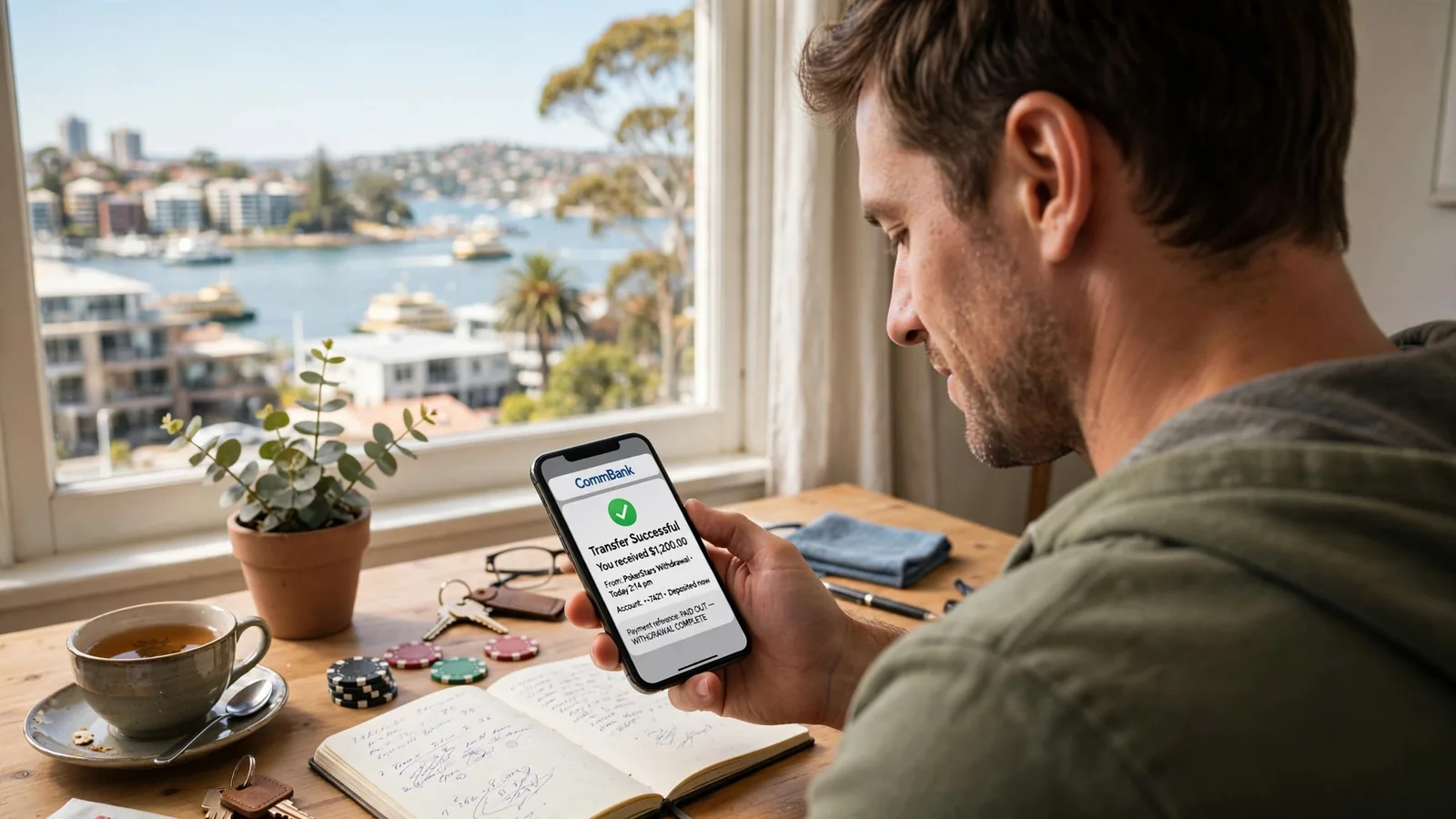
PayID casino withdrawals typically arrive in a bank account within minutes. Some operators approve PayID withdrawals in under ten minutes after internal approval, according to a single specialist review; that is an operator-specific report, not a market-wide service standard. The distinction is important because internal approval comes before the bank transfer. A casino can receive a withdrawal request quickly without releasing it immediately.
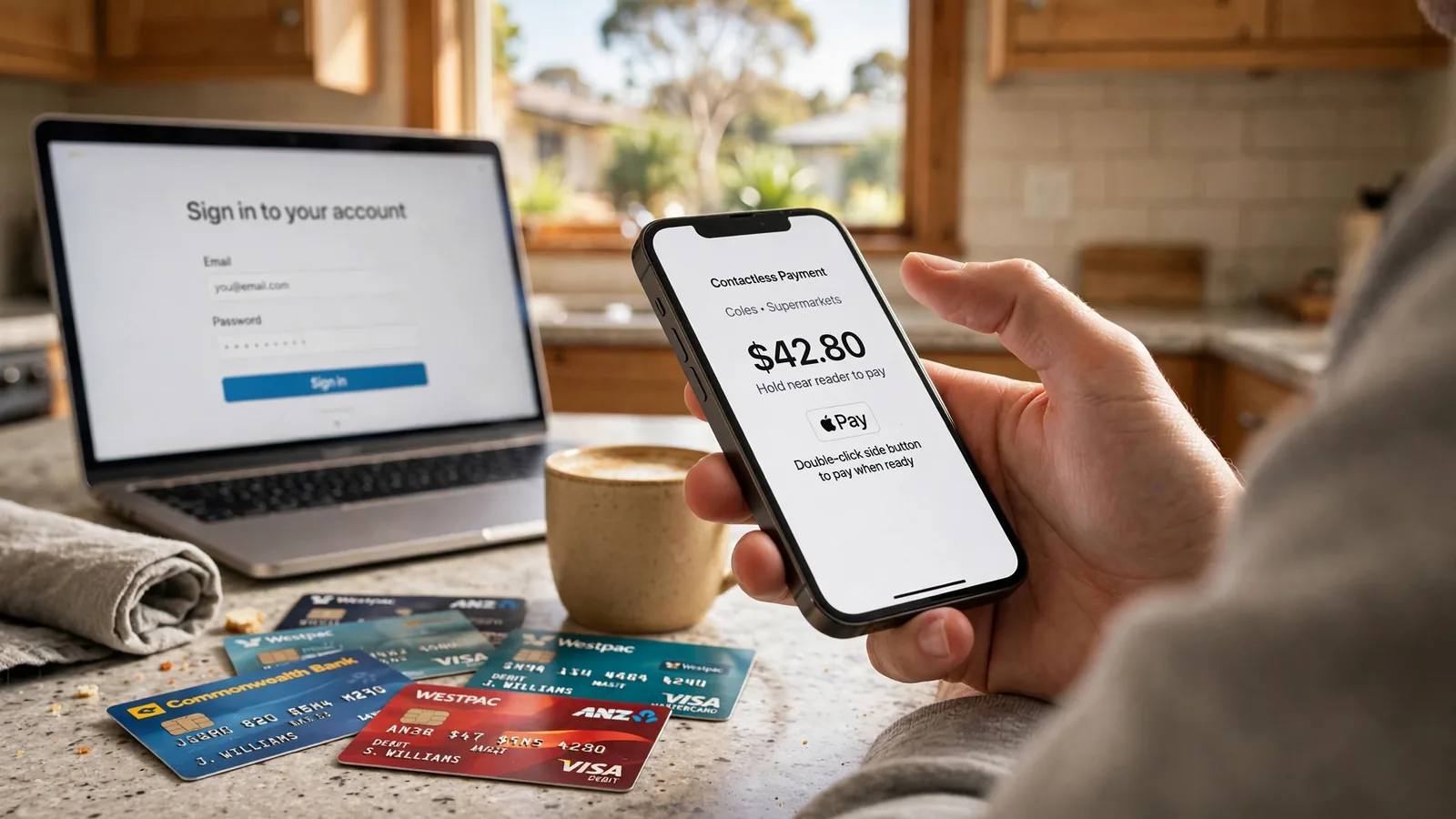
The withdrawal page may ask for a PayID identifier rather than traditional account numbers. The identifier can be a phone number, email address, or ABN, but it must point to the intended bank account. A typo is not an elegant inconvenience. It is a payment problem.
Most casinos require the withdrawal method to match the deposit source. That rule can affect a player who deposits with PayID and later tries to select a different route for the cashout. The available options depend on the operator’s cashier and its verification process, so PayID should not be treated as a guaranteed withdrawal route merely because it was accepted for the deposit.
What to check before confirming
The useful checks are procedural rather than glamorous:
- Confirm that the casino displays PayID as an available deposit method.
- Match the PayID identifier to the operator’s instructions.
- Enter the required reference number exactly.
- Check the amount before confirming the banking payment.
- Save the transaction reference until the deposit is credited.
- Confirm that PayID is available for withdrawals if a phone-linked cashout is important.
If a deposit has not appeared after 30 minutes, the casino’s live chat support team should be contacted with the transaction reference number. That reference is the thread connecting the bank transfer to the casino account; without it, support is left searching through incoming payments with less to work from.
PayID makes the phrase “pay by phone” sound more dramatic than the underlying mechanism really is. The phone number is an address, not a purse. The money still moves from a bank account, through a banking system, to the casino’s nominated account. In a market where online casino games are prohibited for Australian customers under the Interactive Gambling Act 2001, payment convenience does not alter the operator’s legal position. Speed is not permission.
Payment Methods for Australian Casino Players
The Australian casino payment landscape is broader than the phrase “pay by phone” suggests. A phone may be the screen used to open a banking app, approve a wallet payment, or enter a voucher code. That does not make every transaction a mobile-phone charge. The useful distinction is between the device and the funding method.
For casino transactions, Australian players need access to Visa, Mastercard, POLi, cryptocurrency wallets, and bank transfers. Each route places the practical burden somewhere different: cards rely on the casino cashier and card issuer, POLi connects with online banking, wallets sit between the bank and the operator, while crypto transfers depend on the accuracy of the wallet details. The phone is often merely the stage.
Straightforward options where deposits are typically instant at Australian-friendly casinos.
A widely accepted service designed for the local AUD banking environment with almost instant deposits.
Services like Skrill and Neteller that place a separate balance between your bank and the casino.
Fast and often instant transfers that depend on the absolute accuracy of your wallet details.
Cards: familiar, fast deposits
Visa and Mastercard remain straightforward options where the casino cashier lists them. Deposits are typically instant at Australian-friendly casinos, so the balance can be credited without waiting for a bank transfer to settle.
Cards are also easy to recognise in a cashier: the familiar logos, a deposit form, and an approval step through the card provider. Their simplicity is partly cultural. Plastic cards were built for a world in which payment was a separate act from communication; the smartphone has since placed both in the same pocket, but it has not merged the underlying systems.
A card deposit therefore belongs in the mobile-payment conversation only when the transaction is completed on a phone. It is not carrier billing, and it does not mean the amount is added to a mobile account.
POLi and AUD banking
POLi is widely accepted at Australian online casinos, and deposits are almost instant. The service uses the existing online-banking relationship rather than requiring a separate casino wallet. On a phone, that can make the process feel like a direct bank payment, although the method remains distinct from a mobile-phone bill charge.
POLi is particularly relevant to AUD banking because it is designed around the local banking environment. Its appeal is less theatrical than a branded e-wallet: money leaves the bank account, reaches the casino cashier, and the balance is updated. A practical arrangement, which is often the least glamorous kind of useful.
Where PayID is treated as its own bank-linked route, POLi should not be folded into the same label. Both may be operated through a phone, but the payment path and cashier instructions differ.
E-wallets: a separate balance between bank and casino
Skrill and Neteller place an additional account between the bank and the casino. That separation can be useful for players who prefer not to enter card details at every operator, but the wallet itself must be funded and accepted by the casino.
Their clearest confirmed advantage in the available Australian payment landscape concerns withdrawals: Skrill and Neteller withdrawals typically process within hours at Australian casinos. This makes them more than a deposit button, although availability remains an operator-specific matter.
A phone can handle the wallet login, authentication, and payment approval. Again, the device does not define the method. The e-wallet does.
Cryptocurrency: fast, exact, unforgiving
Cryptocurrency wallets are another established route for casino transactions. Deposits and withdrawals can be instant and have no currency conversion fees at Australian casinos. Expected cryptocurrency withdrawal time is under one hour.
That speed comes with a less forgiving relationship to human error. A wallet transfer follows the address and network supplied, not the intention behind it. A mistyped wallet address is irreversible, and Tether sent as an ERC-20 token to a TRC-20 address may be unrecoverable. The phone makes copying an address easier; it does not make a mistaken address harmless.
Cryptocurrency also changes the emotional character of a payment. A card payment can feel reversible because a bank or issuer stands visibly behind it. A wallet transfer feels closer to sending a sealed envelope into a machine. Efficient, perhaps. Sentimental, no.
Bank transfers and alternative routes
Bank transfers remain part of the basic payment set available to Australian players. They can be useful when a casino supports them for deposits, or when a different route is needed for moving funds out later. The important point is that a phone-based deposit does not establish a phone-based withdrawal route.
Withdrawal methods are not always identical to deposit methods. Most casinos require the withdrawal route to match the original deposit source.
The cashier should state which methods are available for deposits and which are available for withdrawals. Those are not automatically the same list. Most casinos require the withdrawal method to match the deposit source, while vouchers are generally deposit-only and require a separate withdrawal route from day one.
Neosurf prepaid vouchers
Neosurf prepaid vouchers offer a cash-like alternative without linking a card or bank account directly to the casino cashier. They are available in denominations from AUD 10 to AUD 250 and use a unique 10-digit PIN code. Once the code is entered, the deposit appears in the casino account within seconds.
This method can be used on a phone, but the phone is only the interface for entering the voucher details. The voucher is not a mobile-phone charge, and it cannot be used for casino withdrawals. That makes the exit route important before any deposit is made.
The cashier must explicitly list Neosurf as a qualifying deposit method. Voucher acceptance cannot be inferred from the presence of a mobile site or from a general claim about “pay by phone”.
Choosing the route without confusing the label
For a mobile user, the practical comparison is simple:
- Visa and Mastercard: typically instant deposits.
- POLi: almost instant deposits and wide acceptance at Australian online casinos.
- Skrill and Neteller: withdrawals typically process within hours.
- Cryptocurrency: deposits and withdrawals can be instant, with no currency conversion fees.
- Bank transfer: a separate AUD banking route whose availability depends on the cashier.
- Neosurf prepaid vouchers: deposits appear within seconds after the voucher code is entered, but the voucher is deposit-only.
An online casino that appears to accept payment by phone may therefore accept a card, POLi, a wallet, crypto, or a voucher through a mobile interface. Those are materially different arrangements. The sensible question is not whether the casino works on a phone. It is which payment method is actually being used, where the money comes from, and how the balance can later leave the account.
Can a Casino Charge the Mobile Phone Bill?
A mobile casino and a mobile phone bill are two different things. The first describes where the games are played: a browser or app on a smartphone. The second describes how a deposit might be collected: by adding the charge to a telecommunications account. Confusing the two produces a tidy phrase and a rather untidy financial assumption.
A search for a mobile casino that lets players pay by phone bill may therefore refer to several arrangements:
- playing casino games on a mobile device;
- using a bank or wallet app on that device;
- paying through a carrier-billing service;
- linking a payment to a telephone number, as with PayID.
Only the carrier-billing option means that the deposit is charged to the mobile account itself. A casino page optimised for smartphones does not prove that such a facility exists.
What carrier billing would mean
With genuine carrier billing, the mobile network acts as the collection point. A player selects the option at the casino cashier, confirms the transaction through the carrier or its payment partner, and the amount is placed on a prepaid balance or added to a postpaid phone account. The telephone bill, rather than a debit card or bank account, becomes the immediate source of the deposit.
That is the narrow meaning behind phrases such as “pay by phone bill casino” and “online casino pay by phone bill”. It is not the same as entering card details on a phone, authorising a bank payment from a handset, or using a phone number as a payment identifier.
Carrier billing can sound wonderfully frictionless. So can a revolving door. The important question is not whether a casino works on a phone, but whether its cashier explicitly names mobile-account billing and explains who processes it.
Legal Notice Online casino games are prohibited for Australian customers under the Interactive Gambling Act 2001. Payment convenience does not change this legal status.
Phone-linked payments are not phone-bill payments
PayID illustrates the distinction clearly. It can link a bank account to a phone number, email address, or ABN, but the funds still move through the banking system. The mobile number identifies the recipient; it does not turn the deposit into a charge from a telecommunications provider.
PayID operates within the bank’s own systems without a third party accessing banking credentials. When routed through Osko, a PayID payment settles in seconds. POLi is another bank-connected route, but its payment can take up to a business day. Neither arrangement means that the casino has charged the mobile phone bill.
This difference matters because the wording “pay by phone” is broad enough to cover both a phone-linked bank payment and a carrier charge. The financial consequences are not broad at all. One draws from a bank account; the other relies on a telecommunications account and the carrier’s approval rules.
What “mobile casino games you can pay by phone bill” should trigger
A result promising mobile slots or casino games payable by phone bill needs to be read as a payment claim, not a gaming claim. The relevant evidence should appear in the cashier, payment terms, or carrier-billing instructions. A mobile icon, a responsive website, or the words “play on your phone” establishes only device compatibility.
The following phrases describe different things:
| Wording | What it establishes |
|---|---|
| Mobile casino | The site is designed for play on a phone |
| Pay by phone | A phone may be involved, but the payment route is unclear |
| Pay by phone bill | A carrier-billed deposit is being claimed |
| PayID | A phone number may identify a bank payment |
| Mobile slots | Slot-style games can be played on a mobile device |
The distinction is particularly important for searches involving online slots payable by phone bill. “Mobile slots” concerns the screen and software. “Payable by phone bill” concerns the funding source. One does not imply the other.
The Australian legal setting
Australia adds a further complication. The Interactive Gambling Act 2001 prohibits Australian companies from offering certain forms of interactive gambling to Australian residents. Online casino games are among the prohibited services when offered to Australian customers, and no domestically licensed real-money online casino exists for that market.
The Act targets operators rather than individual Australian players. That does not transform a phone-billed casino deposit into an approved local product, nor does it create an Australian carrier-billing channel for online casino games. A payment option can be technically available while the underlying service remains subject to the law applying to the operator.
This is why a phrase such as “pay by phone bill casino Australia” should not be treated as evidence of a domestic, licensed casino service. Australia has no casino-game licence of that kind. The practical question is whether the operator’s payment statement is genuine, whether its licence information can be verified through the relevant authority, and whether the proposed billing route is actually available at the cashier.
Why the distinction protects the budget
A carrier-billed deposit can be less visible than a card transaction because it appears alongside ordinary telecommunications charges or reduces a prepaid balance. That changes the household accounting, not the legal character of the gambling service. It also makes vague promotional language especially unhelpful.
A credible payment description should make clear:
- whether the charge is taken from a prepaid mobile balance or added to a postpaid account;
- which carrier or billing partner processes it;
- whether the method is available to Australian customers;
- whether it is a deposit route only;
- how the transaction appears on the account.
If the cashier merely says “mobile-friendly”, “pay by phone”, or “instant mobile deposit”, the claim remains incomplete. A phone is only the device. A phone number is only an identifier. A phone bill is a separate funding mechanism, and it must be named as such.
Casinos That Accept Pay-by-Phone Deposits
A casino that works well on a smartphone is not automatically one of the casinos that accept pay-by-phone deposits. Acceptance belongs to the cashier, not to the size of the screen. The useful test is whether the payment page names a phone-linked method clearly and explains the route from the player’s account to the casino balance.
Check the cashier, not the advertising
Payment wording should be precise. A genuine PayID option should identify the casino’s PayID details and provide the information needed to complete the transfer. The process requires selecting the casino’s PayID identifier, entering the deposit amount and reference number in a banking app, then confirming the payment. A vague “mobile payments” badge proves very little.
- Match the PayID identifier exactly to the operator’s instructions.
- Enter the reference number carefully to avoid delays.
- Check if the method is available for both deposits and withdrawals.
- Assume “mobile-friendly” means you can charge your phone bill.
- Use a different withdrawal method than your deposit source without checking terms.
- Forget to save your transaction reference number.
The same caution applies to carrier billing. “Mobile casino”, “play on your phone” and “mobile-friendly cashier” describe access, not necessarily a charge placed on a phone account. If the cashier does not expressly name phone billing or a particular phone-linked method, the claim remains unverified.
A missing method is an answer.
Check the operator’s legal position
Australia’s legal framework makes this distinction more than a matter of website design. The Interactive Gambling Act 2001 prohibits Australian companies from offering certain forms of interactive gambling to Australian residents. It targets operators rather than individual players, but that does not turn an offshore casino into a domestically licensed Australian casino.
No public Australian casino-licence register exists because no Australian gambling licence covers casino games for local players. Any licence details displayed by an offshore operator therefore need careful checking with the issuing authority, such as the Malta Gaming Authority or Curaçao regulator. A site unable to show verifiable licensing information should not be treated as a credible payment destination.
Read the exact payment conditions
Before a deposit, the cashier should make three points clear:
- whether the method is available to Australian accounts;
- whether it is a deposit route rather than merely a mobile access feature;
- what reference, account or identity details must accompany the payment.
For PayID, an omitted or incorrect reference can delay allocation of the deposit. The method should also be checked against the casino’s own terms, since a logo on a landing page may outlive the payment arrangement behind it.
The sensible standard is narrow: named method, visible instructions, verifiable operator information. Everything else is decorative mobile scenery.
Pay-by-Phone Slots, from Mobile Play to Mobile Payment
A phone can be the screen, the banking tool, or the alleged source of the deposit. Those are three different roles, though casino marketing often folds them into one neat phrase. A mobile casino may simply be a site that adapts to a smartphone browser. That says nothing about whether the casino can charge a mobile account or accept a carrier-billed payment.
For Australian players, the first distinction is therefore practical:
- Mobile play: pokies and other casino games load on a phone.
- Mobile banking: a phone is used to approve a Visa, Mastercard, POLi, or other deposit.
- Phone billing: the deposit is charged to a mobile account, where that route is genuinely offered.
Only the third meaning is true carrier billing. The rest is mobile access or phone-assisted banking.
Playing pokies on a phone
A title such as Book of Dead can be played through a compatible mobile casino interface when the operator provides the game for mobile browsers or devices. The phone changes the format of play, not the legal character of the product. Online pokies remain online casino games, and the Interactive Gambling Act 2001 prohibits operators from offering such services to Australian customers. There is no Australian casino licence for real-money online pokies.
That makes the phrase “best pay-by-phone casino” especially slippery. It may describe a mobile-friendly lobby, a deposit page that opens neatly on a handset, or a genuine phone-billing option. Those claims should not be treated as interchangeable. Nor does a reference to a NetEnt casino pay-by-phone option establish that every NetEnt title, or every operator using the software, supports the same payment route. The cashier belongs to the operator.
Important Distinction Mobile play refers to the device used, while pay-by-phone refers to the specific financial funding mechanism.
Funding mobile play
When a casino lists ordinary banking methods, a phone can still be the device used to complete the transaction. Visa and Mastercard deposits are typically instant at Australian-friendly casinos. POLi deposits are almost instant and widely accepted at Australian online casinos. In these cases, the payment is made through a card or bank service, even if the entire process takes place on a mobile screen.
Neosurf works differently. A Neosurf prepaid voucher deposit appears in the casino account within seconds of entering the voucher code. It is a deposit route, not a cashout route: Neosurf cannot be used for casino withdrawals. A phone may display the voucher page, but it does not turn the voucher into a mobile-phone bill payment.
The useful test is therefore not whether the game opens on a handset. It is whether the cashier explicitly names the funding method and explains its limits. Mobile play is a technical feature. Mobile payment is a financial claim. Sometimes the two meet. Often they merely share a screen.
Bonus Checklist
- Confirm the qualifying payment method for the bonus.
- Check the minimum deposit requirement.
- Verify any wagering or playthrough requirements.
- Identify any excluded games or payment methods.
- Check the expiry period of the promotional credit.
Deposits, Wagering Rules, and the Myth of “No Wagering”
A pay-by-phone casino no-deposit bonus sounds like money arriving before any payment has been made. In practice, the label may describe promotional funds rather than withdrawable cash. A phone-linked deposit method, a mobile-friendly casino, and a bonus campaign are separate things; advertising tends to fold them into one cheerful phrase.
The same caution applies to pay-by-phone slots with no wagering. “No wagering” can mean that a qualifying bonus does not carry a playthrough requirement, but it does not automatically mean that every deposit, win, or promotional credit can be withdrawn immediately. The terms decide what the headline leaves out.
Deposit, bonus, and withdrawable balance
A Neosurf prepaid voucher is a deposit instrument, not a bonus. Available denominations run from AUD 10 to AUD 250, and the deposit can appear in the casino account within seconds of entering the voucher code. That speed says something about processing, not about the conditions attached to subsequent play.
A bonus may instead require:
- a qualifying deposit;
- a particular payment method;
- activation before the deposit;
- eligible games or stakes;
- a minimum balance or other withdrawal condition;
- identity checks before any cashout.
Only the written promotion can establish which of these applies. “No deposit” does not mean “no conditions”, and “no wagering” does not mean “no verification”.
The cost of obtaining the payment instrument also deserves attention. A profiled payment-method review has reported a retail service fee of 3%–5% of the voucher value for Neosurf purchases. That is a source-specific observation, not a universal market rule, so the purchase channel and final amount should be checked before funding an account.
What the wording should prove
The useful distinction is simple:
- No deposit: promotional funds are offered without a qualifying deposit, subject to the stated terms.
- No wagering: the promotion claims not to impose a playthrough requirement, subject to the stated terms.
- No-deposit casino: a marketing description, not proof that withdrawals are unrestricted.
- Pay by phone on casino online: a description of access or payment context, not evidence that a mobile bill can be charged.
For an offer found under a phone-number casino search, the decisive text is the bonus section, not the banner. It should explain whether the money is cash or bonus credit, which games qualify, whether winnings are restricted, and what happens if the payment method is not eligible.
A deposit can be instant. The conditions are still contractual. Read the small print.
Withdrawal Routes When the Phone Is Only the Deposit Tool
A phone-based deposit says very little about the route a payout will take. A mobile number may identify the funding account, or a carrier service may appear in the cashier, yet winnings still have to leave through a method the operator can verify. The phone is sometimes the key to the front door, not the road home.
Why the cashout method can change
Casinos commonly require the withdrawal method to match the deposit source. That rule is designed to reduce payment fraud and prevent an account from becoming a convenient transit point for someone else’s money. It also explains why a deposit made through a phone-linked service may not return to the mobile account.
Where the original method cannot receive payouts, the cashier may offer an alternative such as:
- a bank transfer;
- an e-wallet such as Skrill or Neteller;
- a cryptocurrency wallet;
- a debit or credit card, where the operator supports card withdrawals.
The available route depends on the cashier and the account verification process. A phone-friendly interface does not turn every payment channel into a two-way channel.
Verification comes before the first cashout
Any regulated operator will ask for documents before a first cashout. A claim that a casino offers withdrawal with no identity verification usually means that the check has been deferred, not removed. Offshore operators may use different licensing arrangements, but a request for identity or payment documents remains part of the practical exit route.
This is also where a mistyped cryptocurrency address becomes especially unforgiving: the transfer cannot be reversed. A wallet route therefore needs more than a fast-looking button. The address, network and account ownership must align before the payment is confirmed.
Timing by withdrawal route
The published expectation varies significantly by method:
| Withdrawal method | Expected processing time |
|---|---|
| Cryptocurrency | Under one hour |
| Skrill or Neteller | 2–24 hours |
| Debit or credit card | 1–5 business days |
Skrill and Neteller withdrawals typically process within hours at Australian casinos, while cryptocurrency withdrawals are expected to take under one hour. Card withdrawals are slower, with an expected window of 1–5 business days. These are processing expectations, not a promise that every account will move through verification at the same pace.
That distinction matters for searches describing real-money phone-bill casinos, mobile deposits, or services outside Boku. The payment label does not settle the withdrawal question. Only the cashier does.
Before depositing, the withdrawal route should therefore be visible and usable in principle, not discovered after a win. A phone-only funding option may be acceptable for the initial transaction, but it is a poor substitute for a defined cashout path. Fast in. Unclear out.
Pay-by-Phone Casino Bonuses: Read the Small Print
A pay-by-phone casino deposit bonus can sound more generous than it is. The word “bonus” does not explain whether the offer applies to a phone-linked payment, a prepaid method, or only a particular deposit route. Nor does it say whether the promotional balance can be withdrawn. The attractive part is usually printed large. The conditions are where the money changes character.
Before depositing, the offer should be checked for:
- the qualifying payment method;
- the minimum deposit, if one is stated;
- the expiry period;
- any wagering requirement;
- excluded games or payment methods;
- whether the bonus itself, winnings from it, or both are restricted;
- the identity and licence information of the operator.
That last point matters in Australia. Online casino games are prohibited services under the Interactive Gambling Act 2001, and no domestically licensed real-money online casino exists for Australian players. An offshore site may display a pay-by-phone promotion, but its licence should be verifiable through the relevant authority’s public register. A polished bonus banner is not a substitute for that check.
Where Neosurf Fits
A Neosurf prepaid voucher is a payment instrument, not proof that every promotion applies to it. A casino must explicitly list Neosurf among the qualifying deposit methods before the offer can reasonably be treated as valid for that payment route.
The voucher uses a unique 10-digit PIN and is available in denominations from AUD 10 to AUD 250. It remains valid for up to 18 months. Those are properties of the voucher, not of a casino bonus. The promotion may impose separate conditions, and the two sets of terms should not be blended together.
Can I pay with my mobile phone bill?
Only if the casino explicitly offers carrier-billing. Most “pay by phone” options actually use banking apps or mobile wallets.
Are PayID deposits instant?
Yes, PayID transfers via Osko typically settle in seconds, though the casino’s internal crediting process may vary.
Can I use Neosurf for withdrawals?
No, Neosurf is a deposit-only method and cannot be used to cash out winnings.
The distinction is easy to miss: a deposit may be accepted while the bonus is excluded. In that case, the payment works, but the advertised promotion does not attach to it. Marketing, meet paperwork.
Terms should also be read before entering the PIN, since a completed deposit may activate the offer immediately. A claim about the “best” pay-by-phone online casino sites is therefore less useful than a clear statement of qualifying methods, restrictions, and licence details. German-language pages using Pay-by-Phone Casino Deutschland terminology do not establish availability for Australia; local conditions must be checked separately.
Boku, Europe, and Payment Methods That Do Not Define Australia
Boku belongs to the vocabulary of mobile billing more strongly associated with European markets than with Australia. That distinction matters. A page describing a European pay-by-phone casino may present Boku as a familiar route for charging a deposit to a mobile account, but the same label does not establish availability for an Australian player.
The phrase “pay by phone casino Europe” therefore describes a regional payment context, not a product automatically transferable across borders. Carrier arrangements, banking access, operator policies and gambling law all sit behind the payment button. A method can be well known in one country and absent from the cashier in another. Digital services are remarkably good at making geography look optional.
The same caution applies to searches for a “pay by phone casino with Boku”. Boku’s presence on an international website is not evidence that it supports Australian customers, Australian currency or the specific deposit route being advertised. The cashier must state the method clearly, and the operator must provide verifiable licence information before any deposit is considered.
Australia’s legal position adds a separate boundary. The Interactive Gambling Act 2001 prohibits Australian companies from offering certain forms of interactive gambling to Australian residents. It targets operators, not individual Australian players. That does not turn every offshore payment arrangement into an Australian casino service, nor does a European payment brand supply the missing local authorisation.
Boku and European carrier billing can explain the language used around international casino payments. They do not define the Australian market. For an Australian-facing decision, the relevant questions are narrower: is the method actually available, does the cashier identify it without ambiguity, and can the operator’s licence be verified? If any answer is unclear, the payment label is doing more work than the evidence.
Prepared by the Casino Info Au editorial staff.