Best Pokies in Melbourne: Casino Culture Explained
 Available in US
A clear guide to casino venues, local searches, online legal distinctions, RTP, and the everyday meaning of pokies in Melbourne.
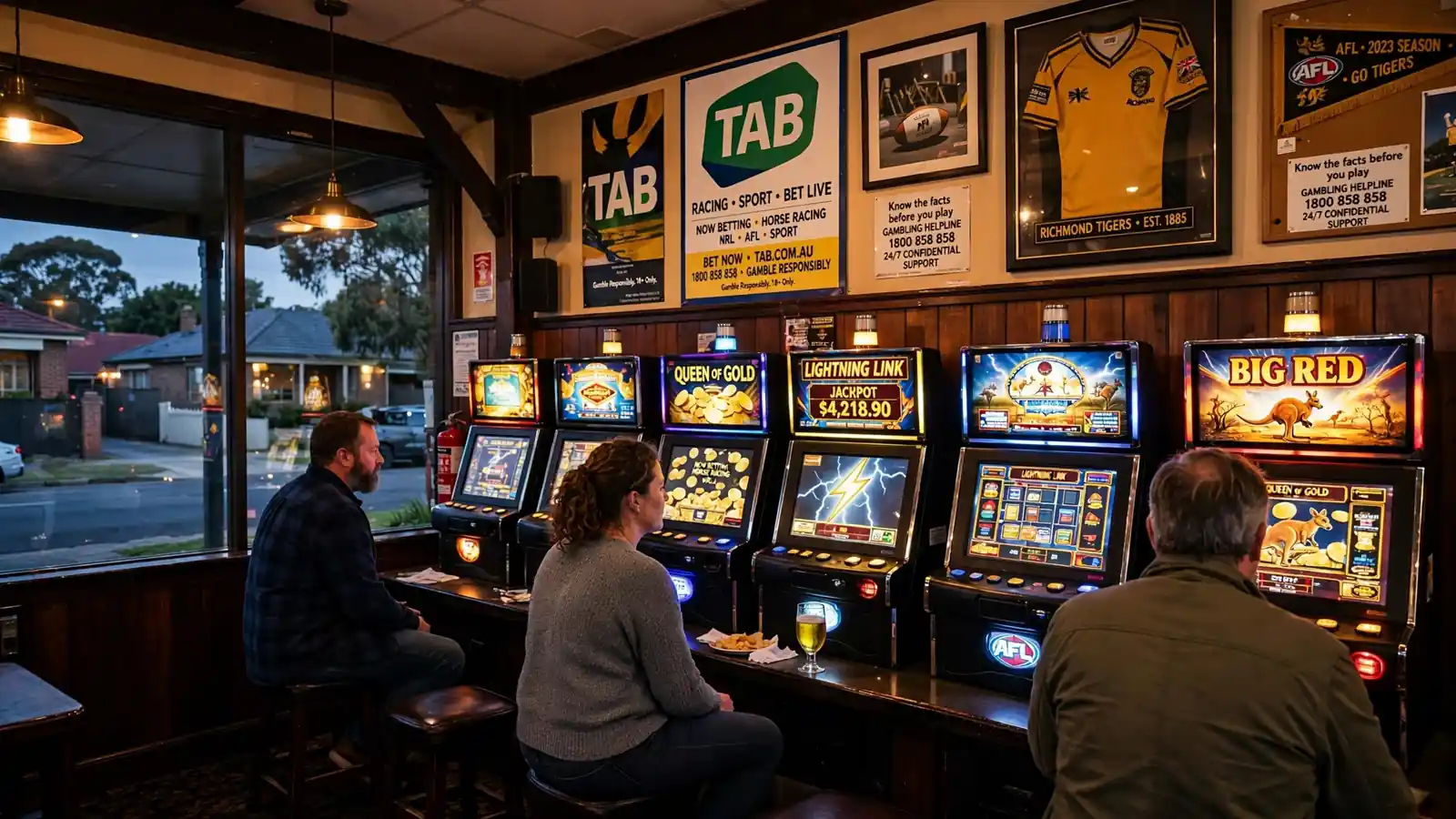
- What “Pokies” Means in Melbourne’s Casino Culture
- Melbourne Casino Pokies: What Crown Actually Represents
- The Online Crown Question: Why Melbourne Players Need the Legal Distinction
- Pokies Near Melbourne Airport and Melbourne Central
- What “Open Now” Means for Melbourne Pokies Venues
- Melbourne Pokies Payout Percentage: RTP Without the Mythology
- Pokies in Melbourne’s Western Suburbs
- Pokies in South-East Melbourne: A Local Search, Not a Licence
- Max-Bet Pokies in Melbourne and the Cost of Chasing Scale
- Online Pokies Near Melbourne: The Geography That Stops at the Screen
What “Pokies” Means in Melbourne’s Casino Culture
In Melbourne, the word pokies does more than describe a machine. It places a familiar form of gambling inside an Australian setting: clubs, pubs, casinos, suburban routines, and the unshowy language of a punt. In other countries, the same machines are more likely to be called slots or slot machines. Those terms are understandable, but they sound imported. Pokies belongs here.
The word is especially useful because it points to a social culture rather than a particular design. A pokie may have bright symbols, themed reels, bonus features, or a familiar title from an international provider. Its local identity comes from where it sits and how people talk about it. Melbourne’s casino culture has room for ceremony and spectacle, but pokies are often encountered more casually: alongside a meal, during an evening out, or as part of a venue whose main identity is not gambling at all.
That ordinariness is part of the story. Gambling does not always arrive with velvet ropes and dramatic music. Sometimes it is built into the architecture of an ordinary Australian night.
This page brings together notable pokies options for Melbourne players in 2026, with key licensing, bonus, deposit, and payout details highlighted where available. Use the overview to identify which operators match your preferred playing and payment requirements.
License: Curacao eGaming Licence · Min. deposit: A$10 Rocket Play holds a Curacao eGaming Licence and accepts minimum deposits from A$10. It is a straightforward option for players looking for a low starting deposit.
License: Tobique Gaming Commission · Bonus: up to A$8,000 + 400 free spins across 4 deposits · Payout speed: crypto ~10-15 minutes, fiat 1-5 days · Min. deposit: A$30 SkyCrown offers up to A$8,000 plus 400 free spins across four deposits. Crypto payouts are listed at around 10–15 minutes, while fiat payouts take 1–5 days; the minimum deposit is A$30.
License: Curacao eGaming Licence · Min. deposit: A$10 PlayWest operates under a Curacao eGaming Licence and has a minimum deposit of A$10. Its low entry requirement is the main documented feature.
License: Curacao eGaming (Dama N.V.) · Bonus: up to A$10,000 + 180 free spins, 40x wagering JeetCity Casino is licensed by Curacao eGaming through Dama N.V. Its welcome offer includes up to A$10,000 and 180 free spins, with 40x wagering.
License: Curacao, operated by Dama N.V. · Bonus: 325% up to 5.25 BTC + 250 free spins across 4 deposits 7Bit Casino is operated by Dama N.V. under a Curacao licence. Its promotion provides 325% up to 5.25 BTC plus 250 free spins across four deposits.
License: international iGaming licence – jurisdiction not named in the source · Bonus: 100% up to A$1,000 + 100 free spins, 35x wagering · Payout speed: PayID 1-24 hours · Min. deposit: A$30 (PayID from A$10) House of Pokies lists an international iGaming licence, although the source does not name the jurisdiction. It offers 100% up to A$1,000 plus 100 free spins with 35x wagering, and PayID payouts are stated as taking 1–24 hours.
License: Curacao · Bonus: 100% up to A$500 + 200 free spins, 10x wagering · Payout speed: crypto 30-60 minutes, fiat 1-5 days · Min. deposit: A$10 Wild Tokyo holds a Curacao licence and offers 100% up to A$500 plus 200 free spins with 10x wagering. Crypto payouts are listed at 30–60 minutes, fiat payouts at 1–5 days, and the minimum deposit is A$10.
Bonus: up to A$750 + 50 jackpot spins, 35x wagering · Payout speed: crypto ~90 minutes, fiat 1-5 days · Min. deposit: A$30 Kingmaker offers up to A$750 plus 50 jackpot spins with 35x wagering. Crypto payouts are listed at around 90 minutes, fiat payouts at 1–5 days, and the minimum deposit is A$30.
Bonus: up to A$6,600 + up to 250 free spins across 4 deposits DragonSlots Casino features a promotion of up to A$6,600 plus up to 250 free spins across four deposits. The documented information focuses on this multi-deposit offer.
License: Curacao · Bonus: up to A$10,000 multi-stage + 500 free spins · Min. deposit: A$20 (POLi) Lucky Dreams holds a Curacao licence and offers up to A$10,000 through a multi-stage promotion plus 500 free spins. The minimum deposit is A$20 when using POLi.
What a pokie actually does
At its simplest, a pokie is a game of chance operated through reels, symbols, and a chosen stake. A punter selects a bet, starts a spin, and waits for the result. Winning combinations are determined by the game’s rules, while bonus rounds and special symbols may add different ways for the result to be calculated.
The visual surface can be elaborate, but the underlying action remains compact: stake, spin, outcome. The machine does not remember a player’s previous result in the way a person might. Each spin is independent, and the result that came before has no bearing on the next one. A run of losses does not make a win “due”; a recent win does not make another win less likely. The machine has no sense of rhythm, revenge, or occasion.
That point matters because pokies invite storytelling. A punter may describe a machine as “cold”, “ready”, or “due for a feature”. Such language is part of the culture surrounding the game, not a description of how its random outcomes work. The machine offers repetition, while the human mind supplies a plot.
RTP is not a promise
Pokies are also described through RTP, or Return to Player. RTP is a long-term theoretical average showing how a game is designed to return money over a very large number of plays. It is not a forecast for one visit, one evening, or one sequence of spins.
A game with a stated RTP does not owe that result to an individual session. Short-term outcomes can sit far above or below the theoretical figure. This is why a payout percentage cannot tell the whole story of a Melbourne pokie, and why the language of “getting money back” can be misleading when applied to a single experience. The number belongs to the mathematics of the game over time, not to a personal promise.
Volatility adds another layer. High-variance pokies tend to pay less frequently, with larger amounts when winning outcomes occur. Low-variance pokies tend to produce wins more often, but in smaller amounts. Neither label transforms chance into control. They describe the pattern of possible results, not a reliable route to profit.
The distinction is easy to lose amid lights, sounds, and near-misses. Pokies are designed to make each spin feel like an event, even though the underlying outcomes remain independent. Entertainment borrows the costume of suspense.
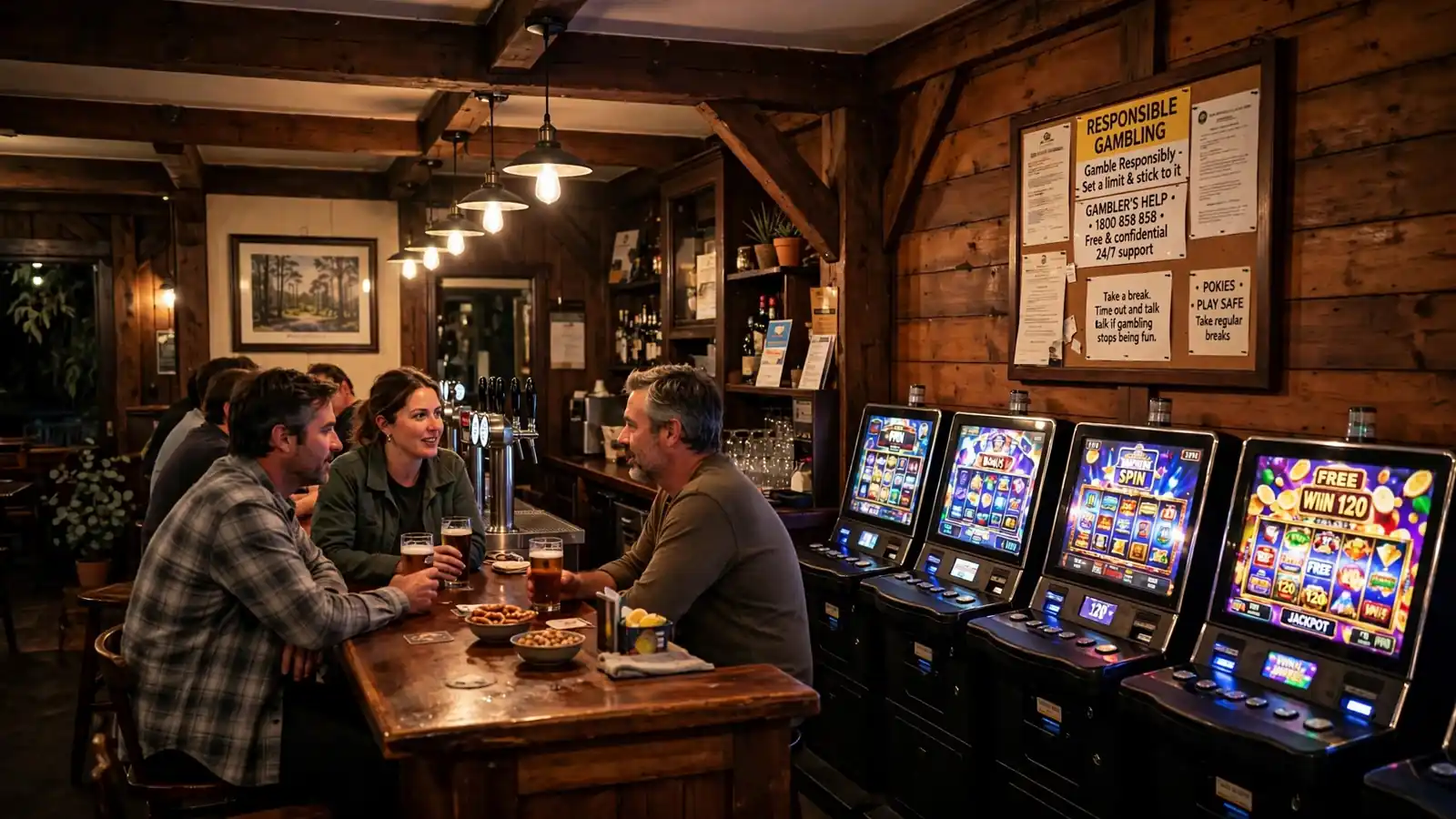
Why Melbourne says “pokies”
The Australian preference for pokies reflects more than slang. It signals a national vocabulary shaped by the places where gambling machines became part of public life. In Melbourne, the term can refer broadly to electronic gaming machines without requiring a grand casino setting. It is a word heard in everyday venue descriptions, local conversations, and practical questions about where such machines are available.
That is why a phrase such as “pokies near Melbourne Airport” carries a different tone from an international search for slot machines. It suggests location, routine, and a physical venue. The same applies to references to North Melbourne, South Melbourne, Port Melbourne, East Melbourne, St Kilda, or Sunshine. The suburb supplies the map; pokies supplies the local cultural frame.
The wording can also carry an assumption of accessibility: whether a venue is open, how late it operates, and whether the machines form part of a broader hospitality setting. Those are questions about place and time, not evidence that a particular game is better. A familiar local term can make a venue feel known before its practical details have been examined. Language is often the first form of marketing.
The small ritual of a spin
A pokie’s appeal lies partly in its low threshold of participation. The rules are usually presented on the screen, the outcome arrives quickly, and the player does not need to negotiate with another person. That privacy can be attractive in a crowded venue. It can also make time pass quietly.
The ritual is repetitive but not entirely empty. Sounds mark wins, symbols create anticipation, and bonus features interrupt the steady pace of ordinary spins. A machine turns arithmetic into theatre. The theatre is modest, but it is persistent.
This helps explain why pokies remains more natural in Melbourne than the technically broader word slots. The Australian term carries the room around the machine: the venue, the local accent, the social habits, and the complicated normality of gambling as entertainment. It does not prove that a game is fair, that a venue is licensed, or that a result will be favourable. It simply tells the reader which culture is speaking.
That is enough for an introduction. The machine is mechanical. The setting is not.
Melbourne Casino Pokies: What Crown Actually Represents
Crown Melbourne is the city’s most recognisable land-based casino environment, and that matters when people refer to Melbourne casino pokies. The phrase does not describe a single machine, a special payout category, or an online product. It points to a physical gambling setting on the Yarra, where electronic gaming machines sit within a much larger hospitality and entertainment complex.
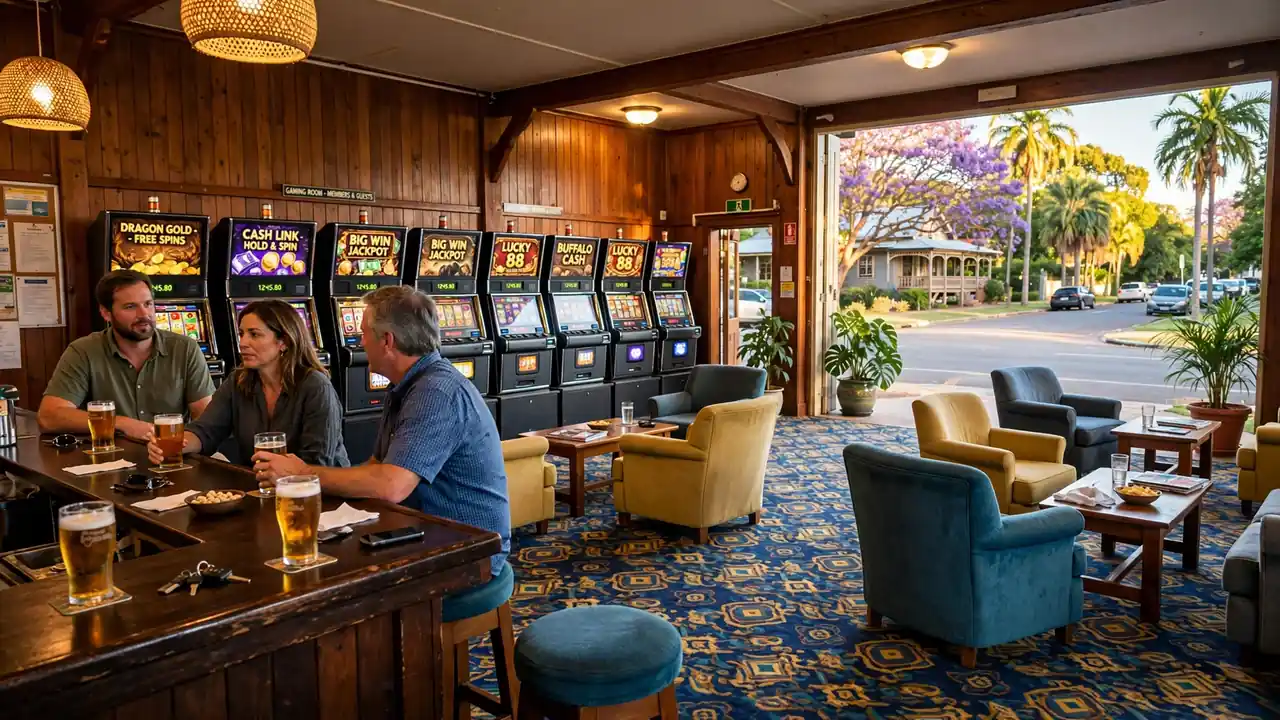
That distinction is useful because a casino name can carry more social meaning than technical meaning. Crown Melbourne represents access to a licensed land-based casino. It does not, by itself, prove that every game pays better, that a particular machine is “the best paying” option, or that the same brand is legally available online to Australians. A glamorous building remains a building. The reels are less impressed.
Crown Melbourne as a land-based option
For Australian punters, land-based casinos are among the legal ways to play real-money pokies. Other lawful gambling products include licensed bookies and lotteries, but they belong to different parts of the wagering landscape. Crown Melbourne is therefore best understood through its location and licence context: a physical casino venue rather than a general label for all pokies in Melbourne.
That is also why searches for Crown Melbourne pokies can become muddled. A person may be looking for the casino floor, for information about the machines installed there, or simply for a familiar name associated with Melbourne gambling. Those are related intentions, but they are not identical. A venue can offer access to EGMs without turning every machine into a separate product with a guaranteed advantage.
The same principle applies to searches mentioning Melbourne clubs pokies, hotel pokies, or north Melbourne pokies. Clubs and hotels are different venue categories from Crown Melbourne. They may provide local access to pokies, but their names, operating arrangements, atmosphere, and available machines are not interchangeable with a casino complex. Geography is not a licence, and a familiar word is not a performance claim.
What cashless play changes
The expression Melbourne cashless pokies refers to a different way of handling play: the machine is connected with a player account or approved cashless system rather than relying solely on physical notes or coins. In practical terms, cashless play can record deposits, withdrawals, and activity digitally. It may also be associated with identity checks and player-card systems.
This is not the same as playing online. The machine remains inside a physical casino, and the gambling activity takes place at the venue. “Cashless” describes the payment and account interface, not the location of the game. A screen in a casino does not become an online casino merely because money is transferred electronically.
Carded play also changes the relationship between the punter and the venue. Instead of remaining anonymous to the system, activity can be linked to an account. That may support record-keeping, access controls, and responsible-gambling measures, while also making the casino experience feel more administratively organised. The old image of loose change disappearing into a machine has been given an account number.
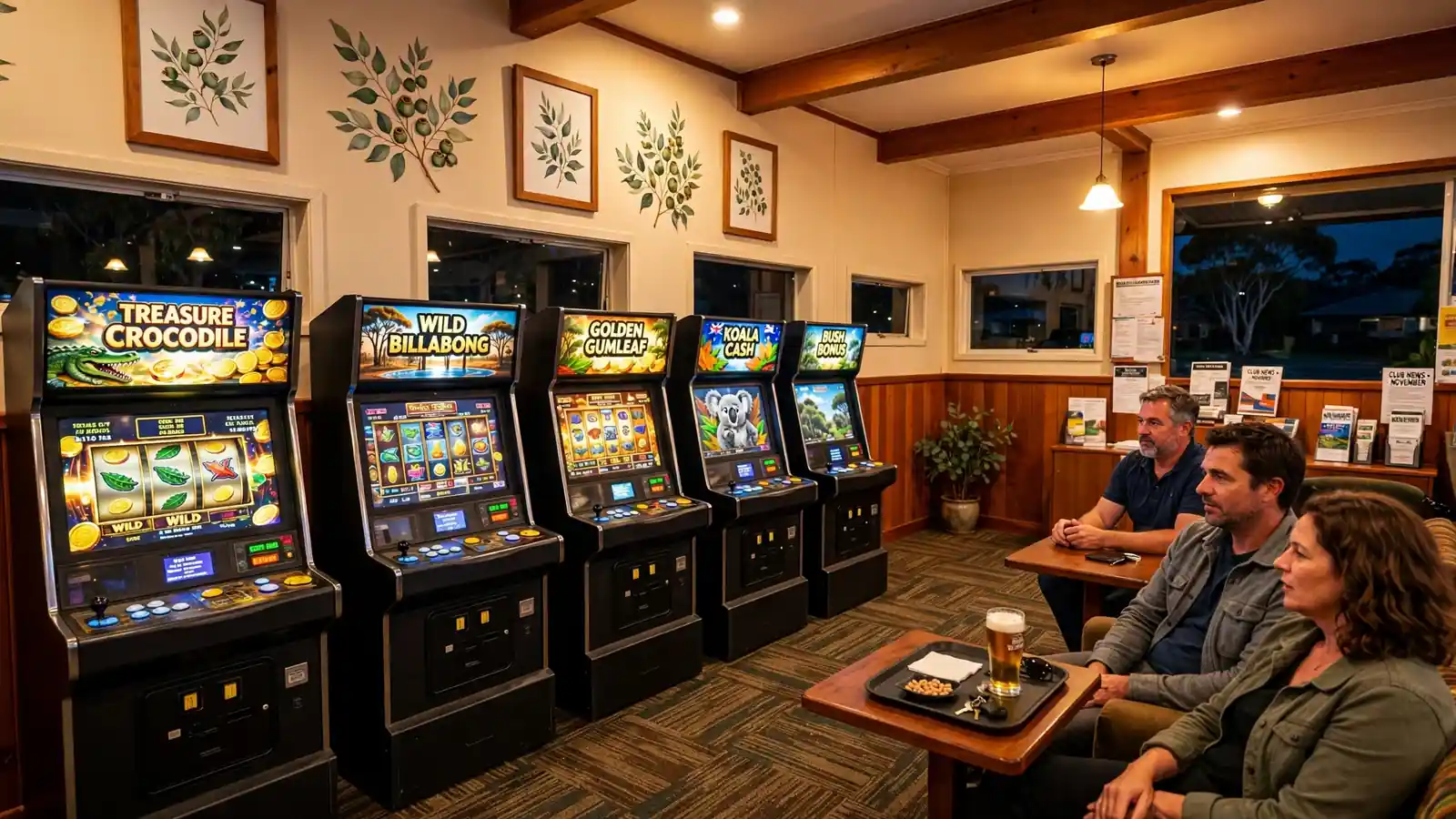
Cashless systems should not be treated as evidence that a machine has better odds. They do not establish a higher RTP, lower volatility, or a more favourable outcome on an individual session. The payment method and the mathematics of the game are separate matters.
Reading claims about Crown pokies
Descriptions such as Crown Casino Melbourne pokies or casino Melbourne pokies often blur three things: the venue, the machine selection, and the expectation of winning. Only the first is safely established by the name itself. A Crown-branded search may identify a place where pokies are available; it does not identify a particular game’s theoretical RTP or volatility.
Nor does maximum betting guarantee a jackpot. A larger stake changes the amount exposed on each spin, not the basic independence of outcomes. Each spin stands alone, and the previous result has no bearing on the next one. That is an unromantic rule, but casinos have never depended on romance.
The same caution applies to the phrase best paying pokies Melbourne. Without a verified game specification, it is not a meaningful ranking. A machine’s return is a long-term theoretical measure, while a single visit can produce results far above or below that expectation. A venue name cannot fill in missing mathematics.
Why the physical setting still matters
Crown Melbourne’s importance is partly practical and partly cultural. It is a concentrated, visible place where casino gambling is presented alongside restaurants, hotels, entertainment, and nightlife. That makes the experience different from visiting a suburban club or hotel venue, even when the central activity is still pressing a button and watching symbols settle.
For some punters, the attraction is the scale and ceremony of the environment. For others, a local venue may be more convenient, less imposing, or more closely tied to ordinary neighbourhood life. Hotel pokies Melbourne and Melbourne clubs pokies therefore belong to the same broad land-based culture without being substitutes for Crown Melbourne in every respect.
The cleanest way to understand Crown pokies is simple: they are pokies encountered within a named physical casino, with the venue’s systems, policies, and cashless-play arrangements shaping the experience. The Crown name may explain where the machines are. It cannot promise what the next spin will do.
The Online Crown Question: Why Melbourne Players Need the Legal Distinction
“Crown” is a powerful word in Melbourne gambling culture. It points to a named land-based casino environment, not to a general permission slip for whatever appears beside it online. That distinction matters when phrases such as Melbourne casino online pokies or Crown Casino Melbourne pokies blur a physical venue, a brand, and a prohibited internet product into one convenient sentence.
Legal Risk Real-money online casinos are prohibited from offering pokies to customers in Australia under the Interactive Gambling Act 2001.
Crown Melbourne is a real casino property. An online casino using Crown in a page title, domain name, advertisement, or game description is a different matter entirely. The name does not transfer a venue’s identity to the internet, and it does not create an Australian licence for online pokies. Branding is not regulation. A crown remains a crown, even when it is printed on a page that has no lawful Australian casino authority behind it.
What Australian law actually prohibits
The Interactive Gambling Act 2001 is the main federal law governing online gambling in Australia. Under it, online casino games offered to Australian customers are prohibited interactive gambling services. That category includes online pokies, roulette, blackjack, and live dealer tables.
The practical consequence is exact: real-money online casinos cannot legally offer pokies to people in Australia. There is no Australian licence for online pokies, and none has ever existed. A platform cannot become locally licensed by describing itself as “Australian-facing”, accepting Australian dollars, or placing Melbourne in its marketing copy.
This is where the language around “online pokies Melbourne real money” becomes misleading. It may describe what a foreign provider advertises to Australians, but it does not describe a product licensed in Melbourne. Nor does “online pokies Melbourne no deposit” alter the legal position. A promotion can change the price of entry; it cannot change the nature of the service being offered.
The law targets the provider rather than the individual punter. Australian players are not prosecuted under the Interactive Gambling Act for using an offshore site. That does not turn an offshore casino into a domestic operator, nor does it provide the consumer protections associated with a locally licensed casino product. Responsibility and risk sit in different places. A tidy arrangement, except for the person trying to recover money from it.
Why a Crown-branded page proves little
Searches for Crown Melbourne casino pokies or Crown Casino Melbourne pokies often begin with a reasonable physical-world intention: finding information about the Crown venue. Online pages can then present a second meaning, suggesting that Crown-branded pokies are available remotely to Melbourne residents.
Those meanings must be kept apart:
- A Crown name may identify a land-based casino brand.
- It does not establish that an online operator is affiliated with Crown.
- It does not prove that the operator holds an Australian casino licence.
- It does not make online real-money pokies lawful in Australia.
- It does not guarantee Australian consumer protection, dispute handling, or local oversight.
The same caution applies to searches for “high limit pokies Melbourne” and “maximum cash payout pokies Melbourne”. A page may use those phrases to evoke the scale or atmosphere of a physical casino, yet the wording alone says nothing about the provider’s authority. Maximum betting language is particularly theatrical: it describes an imagined size of play, not a legal status or a guaranteed return.
What can be licensed online
Australia does permit particular forms of online gambling. Pre-event sports and racing wagering, lotteries, and keno are among the products that can be licensed for Australians. Online casino games are not in that permitted group.
That difference explains why a regulated wagering platform cannot simply add pokies to its menu. The existence of an Australian licence for one gambling product does not authorise every other product. A licence is product-specific and jurisdiction-specific, not a decorative badge that follows a company around the internet.
Understanding the Distinction
- A Crown name may identify a land-based casino brand, but does not guarantee an online operator is affiliated with it.
- Online operators do not automatically hold an Australian casino licence.
- Using Melbourne branding does not establish Australian consumer protection or local oversight.
- Online real-money pokies remain unlawful in Australia regardless of marketing language.
Where an Australian-facing platform is licensed for a permitted gambling product, its games must use independently audited random number generators where that requirement applies to the platform’s gaming operation. The existence of audited technology, however, cannot legalise online pokies. Fair randomness and lawful availability are separate questions.
Bonuses and self-exclusion need careful reading
The phrase “online pokies Melbourne no deposit bonus” belongs to promotional language, not to an Australian licensing category. “No deposit” may suggest that funds are not required at the start, while “real money” signals the possibility of monetary play or withdrawal. Neither phrase supplies an Australian licence, and neither should be read as evidence that the service is approved for Melbourne residents.
Self-exclusion creates another trap. A self-exclusion facility offered by an offshore online casino is not automatically connected to Australian land-based systems or national registers. A page promising “self exclusion pokies Melbourne” may therefore be describing a provider’s own controls rather than a city-wide protection that follows the punter from one gambling environment to another.
The legal distinction is less glamorous than the brand language, but considerably more useful. Crown Melbourne can refer to a physical casino. Online pokies offered to Australians remain prohibited, whether the page calls them Crown pokies, Melbourne pokies, high-limit games, or a bonus with no deposit. A familiar name is not a local licence. A glossy interface is not local oversight. And a search result is not a regulator.
Pokies Near Melbourne Airport and Melbourne Central
Location changes the practical question. A traveller searching for pokies near Melbourne Airport is not asking about the same surroundings as someone looking for a venue near Melbourne Central. One search begins with a terminal, luggage and a departure board; the other begins in the dense inner city, where hotels, offices, trams and entertainment venues overlap. The machines may be similar. The circumstances are not.
The first distinction is between a physical venue and an online service. Land-based casinos and other licensed gambling venues are legal options for Australians. A website using Melbourne landmarks in its wording is not thereby a local venue, an Australian licence-holder, or a safer substitute. Geography is a useful way to narrow a journey. It is a poor way to establish protection.
Around Melbourne Airport
Melbourne Airport sits outside the central urban pattern. A venue described as being “near” the airport may still require a separate trip, depending on the starting point, traffic and transport arrangements. That makes the phrase more elastic than it sounds. Near an airport can mean convenient for a short stop, convenient only by car, or merely located in the wider metropolitan area.
For that reason, a sensible land-based search begins with the venue itself rather than the machine catalogue. Opening arrangements, transport access, entry conditions and the distance from the terminal matter more to a traveller than a promotional claim about being close by. Airport proximity is not a quality mark. Neither is a familiar brand name.
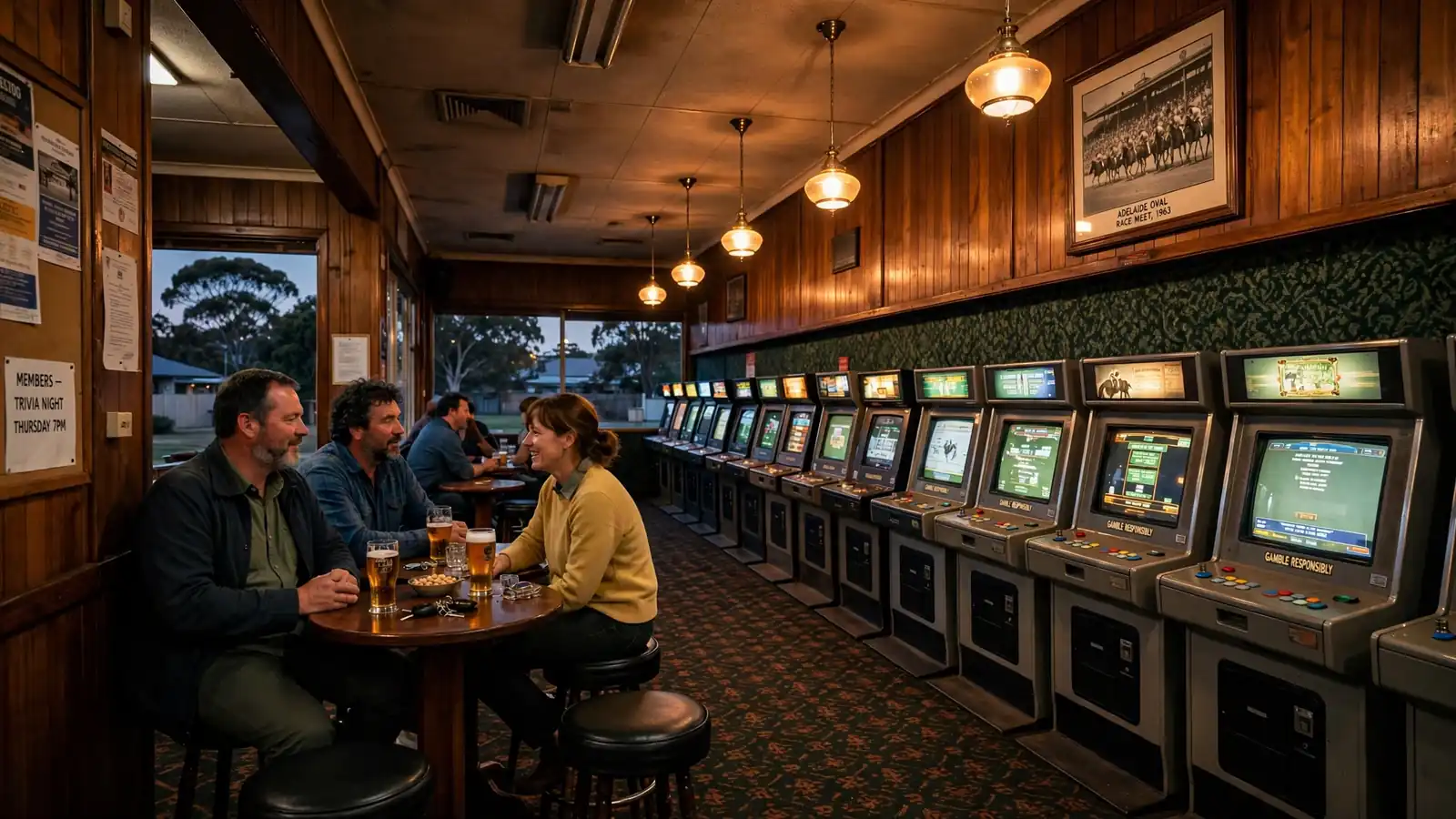
The surrounding purpose also affects the character of the visit. A person waiting for a flight may treat a venue as an interruption in a journey; a local punter may treat it as a regular destination. Those are different patterns of use, even when both involve the same kind of electronic gaming machine. The airport does not turn casual gambling into a travel amenity. It only changes the map.
Around Melbourne Central
Melbourne Central belongs to a different urban rhythm. The area is integrated into the city’s public transport, retail and nightlife network, so a venue in the inner city can be part of a longer evening rather than a destination chosen solely for pokies. That convenience can make distance feel harmless. It is not.
A central location may reduce travel friction while increasing the number of surrounding distractions: dining, shopping, entertainment and the ordinary momentum of the city. The result is a setting in which a short visit can become less clearly bounded. Location does not determine spending, but it can make spending easier to continue. The architecture is doing some of the work.
A venue near Melbourne Central should therefore be assessed as a land-based gambling establishment, not as an extension of the shopping precinct. Its location says where it is. It does not disclose the game’s RTP, volatility, operating conditions or the level of consumer protection attached to the licence.
What proximity can—and cannot—tell
A map can answer a narrow question: how far a venue is from Melbourne Airport or Melbourne Central. It cannot answer whether a particular pokie is generous in the short term, whether a session will end positively, or whether a venue suits a particular budget. Each spin is independent, and an earlier result has no bearing on the next one. Distance has no influence over the reels either.
RTP is equally resistant to local mythology. It is a long-term theoretical average, not a promise about one visit. A venue beside a major transport hub does not have a special airport RTP; a machine in the city centre does not benefit from central-city luck. The machine’s published information, where available, is more relevant than the postcode, but even that information cannot forecast an individual session.
For licensed Australian-facing gambling platforms, random number generators are independently audited. That is a statement about the technical integrity of the game system, not a guarantee of a win. The distinction is unglamorous and important.
So the practical comparison is straightforward:
- Near Melbourne Airport: prioritise the actual travel distance, transport, entry arrangements and whether the stop fits the journey.
- Near Melbourne Central: consider city access, the surrounding environment and whether convenience is encouraging a longer visit.
- At either location: treat proximity as a logistical fact, not evidence of better payouts, superior games or stronger protection.
A landmark can locate a venue. It cannot certify it.
What “Open Now” Means for Melbourne Pokies Venues
“Open now” is a narrow promise. It says something about the doors, not about the machines behind them. A venue may advertise late trading or round-the-clock access while offering no meaningful clue about which pokies are available, how they play, or whether a particular bank of machines is operating at that moment.
That distinction matters in Melbourne, where the phrase “24-hour pokies” can sound like a description of a gambling product rather than a timetable. It is not. It describes access to a physical venue, subject to its published hours, local operating conditions and any changes made after the listing was created. A venue open at midnight is still only a venue open at midnight.
Opening hours are not game information
Pokies do not become more generous because the room is open late. Each spin is independent, and the previous result has no bearing on the next outcome. A quiet session in the early hours does not make a machine “due”, just as a busy afternoon does not make it luckier.
The practical separation is simple:
- opening hours describe when entry may be possible;
- machine availability describes what is operating inside;
- game characteristics describe how a pokie is designed to behave.
Confusing these categories is one of gambling’s oldest small clerical errors. It turns a timetable into a theory of luck.
A venue promoted as open now may also have temporary restrictions, altered trading arrangements or areas that are unavailable despite the building remaining accessible. Current information therefore has a limited use: it can help establish whether a land-based option may be open, but it cannot establish payout quality, volatility or a favourable result.
What an open venue can and cannot tell
For Australians, land-based casinos remain among the legal places to play pokies, alongside licensed bookies and lotteries as separate gambling products. The legality of the venue does not turn its opening hours into a promise about outcomes. Nor does a late-night setting change the mathematics of a pokie.
The sensible reading of “open now” is therefore modest: access may be available. Nothing more should be smuggled into the phrase. It does not mean better odds, a special late-session pattern or a machine selected by fortune. The sign may be lit. The reels remain indifferent.
Melbourne Pokies Payout Percentage: RTP Without the Mythology
A Melbourne pokies payout percentage is best understood through RTP, or Return to Player. It is a long-term theoretical average describing how a game is designed to return money across a very large number of spins. It is not a promise attached to the next spin, the next hour, or a particular visit to a venue.
That distinction matters because percentage language looks more precise than it is in ordinary play. A published RTP can describe the mathematical behaviour of a pokie over time, but it cannot forecast the result of one session. A punter may experience a sequence of losses, a brief run of wins, or a mixture of both without contradicting the stated figure.
What RTP does — and does not — measure
RTP concerns the theoretical return built into the game. It does not mean that a machine observes an individual balance and adjusts its results to reach the advertised percentage. Nor does it mean that losses accumulate until a payout becomes “due”. The calculation belongs to the game’s long-run mathematics, not to a timetable.
Each spin is independent. The previous result has no bearing on the next outcome. A large win does not make another win less likely, and a long losing sequence does not make a payout imminent. That is the part of pokies mythology that survives because human memory prefers patterns to randomness.
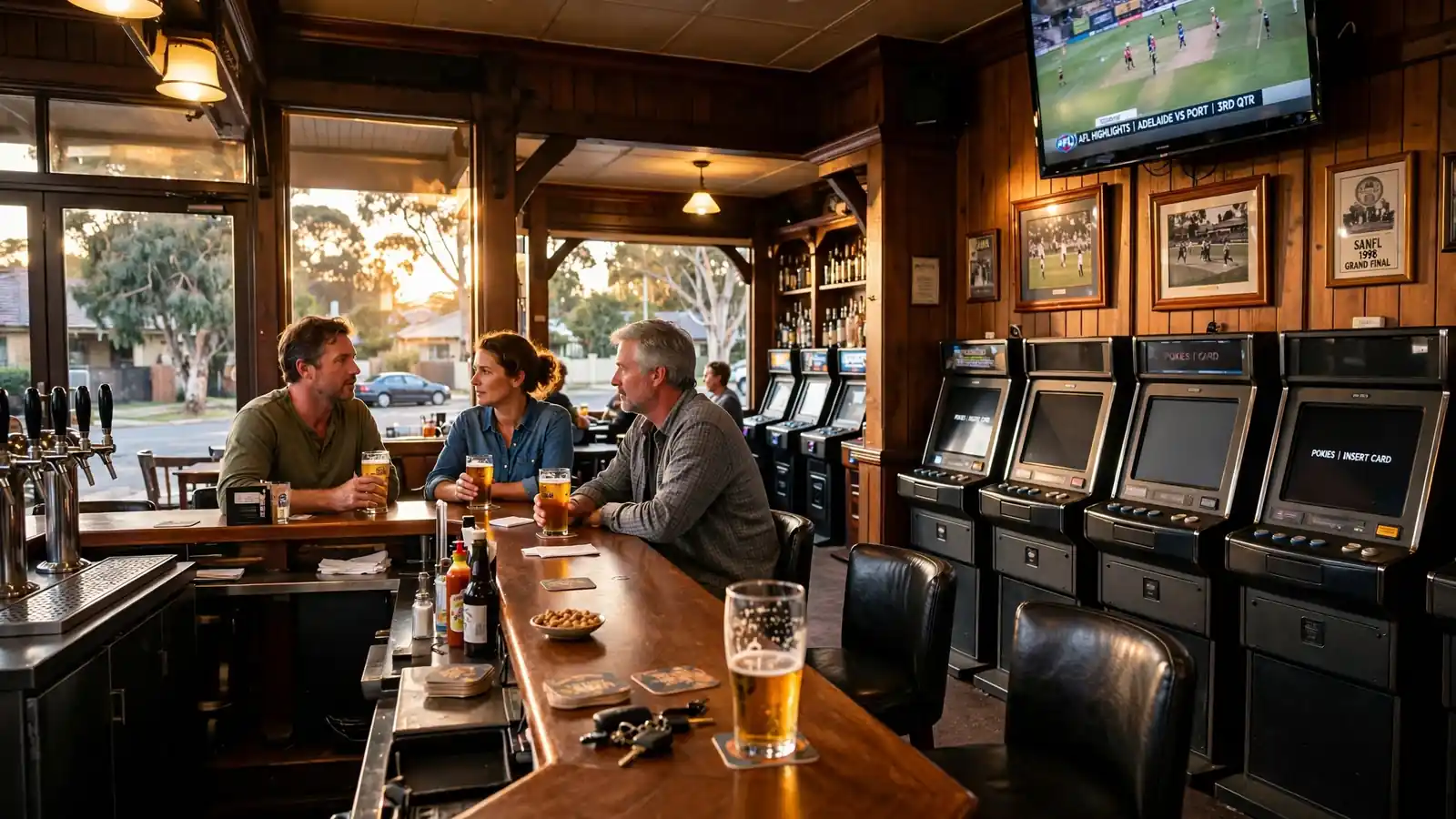
RTP also should not be confused with the frequency or size of payouts. A game may produce frequent smaller wins, while another may pay less often but in larger amounts. The percentage alone does not describe that rhythm. It is one statistical measure, not a portrait of the whole playing experience.
For Melbourne venues, the sensible reading of payout information is therefore modest: RTP explains long-term theoretical return, while an individual session remains uncertain. No percentage turns a random result into a scheduled one.
Pokies in Melbourne’s Western Suburbs
The western suburbs give Melbourne’s pokies culture a different shape from the casino precinct. Here, the relevant venue is more likely to be part of an established local hospitality business than a destination attached to the city skyline. The setting matters: suburban gambling is woven into ordinary geography, alongside dining, sport, transport routes and community routines. Nothing glamorous is required. Familiarity does the work.
For a punter comparing venues across the western suburbs, location is the first filter, not proof of quality. A nearby gaming room may be convenient, but distance says nothing about its rules, machine selection, or player protections. The suburb on the sign is not a licence. Nor does the word “pokies” imply better odds, fairer play, or any special status.
The legal distinction is therefore straightforward but easily blurred by local language. Australians may legally play in land-based casinos and other permitted physical venues, while licensed bookies and lotteries form separate legal gambling options. Real-money online casino games are a different matter: the Interactive Gambling Act 2001 prohibits providers from offering online pokies to Australian customers. A western-suburb venue is not an online casino merely because its machines are electronic. Geography still has consequences.
The practical comparison is less about discovering a magical machine than understanding the venue itself. Published opening information may establish when a premises trades, but it cannot establish how a particular session will end. Each spin remains independent; a previous result has no bearing on the next one. The machine does not remember an unlucky afternoon. Conveniently, neither does the marketing.
Local knowledge can explain why one venue is familiar and another is ignored, but familiarity should not be mistaken for consumer protection. The sensible boundary is plain: assess a physical venue as a physical venue, and do not let suburban identity manufacture a promise that the law or the games never made.
Pokies in South-East Melbourne: A Local Search, Not a Licence
South-East Melbourne is a useful way to narrow a venue hunt, but it is not a regulatory category. A suburb can locate a club, hotel or casino-style gaming room; it cannot certify what happens inside. Geography is a map, not a licence.
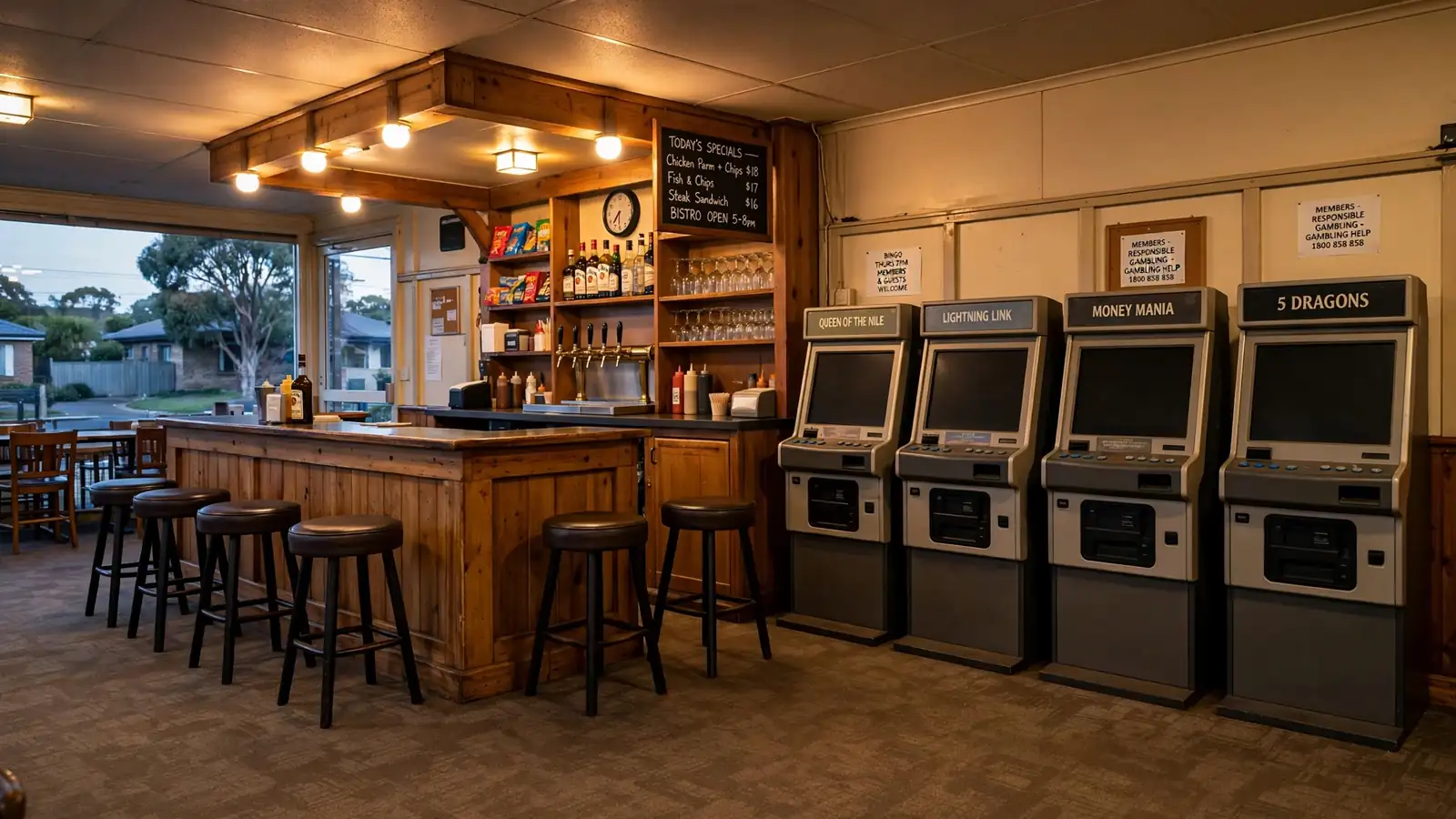
For local punters, the appeal is practical. A venue in the south-east may be easier to reach than the city centre, more familiar than a destination casino, and woven into the ordinary life of a neighbourhood. Pokies sit there beside meals, drinks and community routines, which is part of their Australian character. Gambling is rarely presented as an isolated ceremony. It is made to look like another amenity.
That familiarity can also blur important distinctions. The name of a suburb says nothing about a machine’s RTP, its volatility, or the quality of the venue’s player-protection measures. It does not establish that a particular game is fairer than one elsewhere. Nor does a polished room, a membership card or a local reputation turn a gambling product into a safer one by itself.
The lawful distinction is narrower and less glamorous: Australians may play at land-based casinos, use licensed bookies for permitted wagering, and enter lotteries. A South-East Melbourne venue belongs to that land-based world only if it is operating under the relevant local arrangements. The postcode supplies no shortcut.
This matters when comparing nearby venues. Location can answer the question of where a pokie room is. It cannot answer how the games operate, what information is displayed, or what protections apply. Those are separate matters, and hospitality branding is not evidence.
A sensible local comparison therefore begins with the venue itself rather than the suburb label: its physical status, its published rules, and the conditions attached to play. South-east is a direction. Nothing more.
Max-Bet Pokies in Melbourne and the Cost of Chasing Scale
Maximum-bet play is the upper end of a pokie’s permitted stake range. It is not a special class of machine, and it does not turn an ordinary spin into a more favourable one. Some online pokies accept wagers from a few cents to hundreds of dollars per spin, so “max bet” describes the selected stake rather than a guaranteed feature, prize, or outcome.
That distinction matters when comparing max-bet pokies with land-based options around Melbourne. A larger stake increases the amount exposed on each independent spin. It does not make the reels more cooperative, improve the game’s underlying mathematics, or ensure access to a jackpot. Scale is visible. Advantage is not.
Stake Size Is Not Volatility
Volatility describes the pattern of returns, not the size of the chosen wager. High-volatility pokies tend to pay less frequently but in larger amounts. Low-volatility pokies tend to produce smaller wins more often. Either type can be played at a maximum stake, and neither becomes safer or more generous merely because the bet is increased.
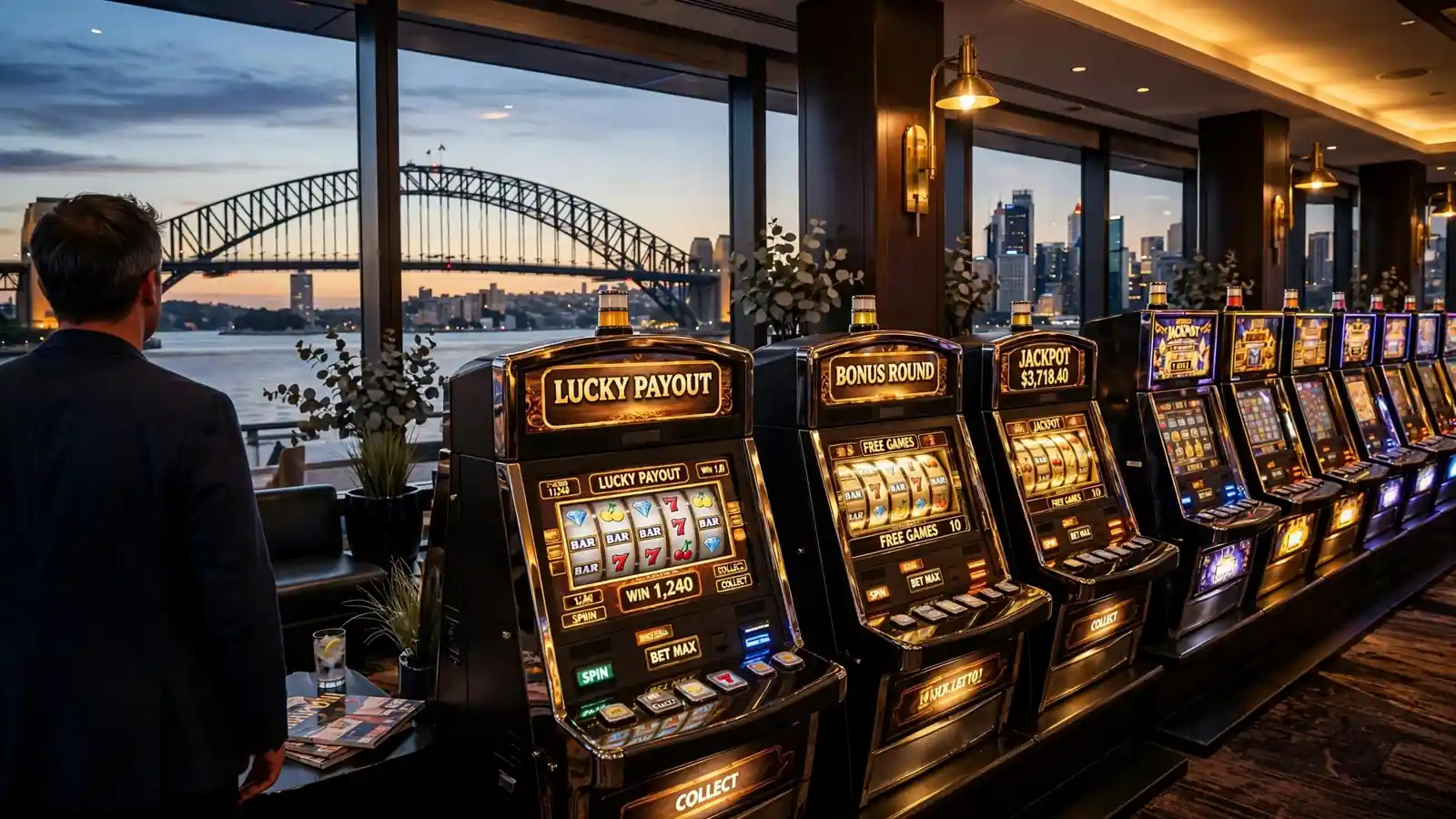
A max bet on a low-volatility game remains low volatility. A small stake on a high-volatility game remains high volatility. The two settings answer different questions: one concerns how much is placed on a spin; the other concerns how returns are distributed over time.
The difference is easy to miss because a large wager makes every result feel more consequential. A losing spin is larger, while a winning spin may appear to justify the decision after the fact. That emotional arithmetic is not the same as a change in expected return.
Why “Maximum” Sounds Like a Promise
The label carries a faint suggestion of seriousness: maximum stake, maximum chance, maximum prize. Only the first of those is established by selecting it. Betting more may increase the monetary value of a win calculated from the stake, but it also increases the cost of each loss. It cannot guarantee a jackpot.
For Melbourne punters considering high-stake play, the sensible comparison is therefore between the amount risked per spin and the game’s volatility—not between “max bet” and some imagined premium version of the pokie. Bigger numbers are still just bigger numbers.
Online Pokies Near Melbourne: The Geography That Stops at the Screen
The phrase “online pokies near Melbourne” sounds local, but the adjective does most of the misleading work. A physical venue can be near a railway station, suburb, airport, or shopping precinct. An online platform is not near any of them. It is accessed through a screen, while its operator may be based in another jurisdiction entirely.
That distinction matters because the familiar appearance of the games can disguise a very different legal setting. Online pokies and land-based electronic gaming machines use the same basic reels, RTP, and volatility. The terminology changes with the market: Australians say pokies, while international operators more often say slots. The mathematics does not acquire a Melbourne postcode.
Nor does a Melbourne-facing page turn an offshore product into a local casino. Under the Interactive Gambling Act 2001, real-money online casinos offering pokies to Australians are banned. No Australian casino licence exists for that product. The word “near” cannot repair the gap between a local audience and a prohibited service.
This is where the geography stops: at the screen. A physical venue belongs to a state-based gambling environment, with premises, operating conditions, and local oversight. An online casino belongs to the jurisdiction in which its operator claims to be licensed, if it holds such a licence at all. Melbourne branding, Australian currency, or a familiar payment reference does not establish Australian authorisation or consumer protection.
The games may look identical. The surrounding obligations are not. A reel animation can travel effortlessly across borders; a legal permission cannot. That is the unglamorous boundary behind the attractive language of proximity.
Written by the editors at Casino Info Au.