Safe Online Pokies in Australia: Legal Facts
 Available in US
Understand the legal limits, payment risks, and safer alternatives surrounding Australian-facing pokies.
- The Legal Line: Why Real-Money Online Pokies Are Not Available in Australia
- What Makes Australian-Facing Pokies Safe in Theory—and Where That Theory Stops
- Secure Play Starts with the Game, Not the Sales Pitch
- Free Spins, Demo Modes, and the Safer Kind of Fun
- PayID and the Limits of a Secure Payment Method
- A Casino Is Not Made Legal by Putting Pokies Online
- The Best Pokies in Australia Are Shaped by Local Rules
- What Safe Choice Looks Like Across Australian Venues
- Paying for Legal Gambling Without Turning Credit into a Trap
- Safe AU Pokies Means Reading the Fine Print of the State
The Legal Line: Why Real-Money Online Pokies Are Not Available in Australia
The phrase “safe online pokies in Australia” sounds as though the main task were to separate reputable websites from reckless ones. In 2026, that is the wrong starting point. The first question is not whether an online pokie site looks secure, pays promptly, or displays a foreign licence. It is whether the service is allowed to offer real-money casino games to people in Australia at all.
Under the Interactive Gambling Act 2001, online casinos offering real-money pokies to Australians are prohibited. Pokies are treated as online casino games, alongside roulette, blackjack, and live dealer tables, when supplied to an Australian customer. That places them inside the category of prohibited interactive gambling services. A polished interface does not alter the category. Neither does an attractive brand name, a mobile app, or a payment method familiar to Australian users.
This is the legal line that many “safe pokies” discussions step over before they have properly noticed it.
Safety and legality are different questions
A website can appear technically competent without being authorised to provide the gambling product. Secure connections, account checks, game certificates, and responsible-gambling language may speak to how a site operates. They do not create an Australian casino licence, because no Australian gambling licence exists for casino games offered online to Australian residents.

Australia has no single overarching gambling statute or gambling authority. Regulation is divided between federal and state or territory systems. That arrangement can make the landscape look more permissive than it is: different gambling products are handled through different legal channels, and “licensed gambling” is not one universal permission covering every format.
The distinction matters. Online sports betting is legal and licensed at state and territory level. Lotteries are also licensed. Land-based casinos remain legal options, as do licensed bookmakers and lotteries. None of those permissions extends to online pokies. A licence for one gambling product cannot be stretched into permission for another simply because both involve money, odds, or a familiar logo.
The result is plain, if less exciting than a casino banner: no domestically licensed real-money online casino exists for Australian players.
What an overseas licence does not do
Offshore operators may hold licences from jurisdictions such as Malta or Curaçao. Those licences may regulate the operator under foreign law, but they do not authorise the operator to serve Australian customers. A foreign licence is not an Australian casino licence by another name. It is a different legal instrument, issued by a different jurisdiction, for a different regulatory purpose.
That distinction is often blurred by commercial language. A page may describe an offshore casino as “licensed”, then allow the word to do far more work than it can legally carry. The reader is left with the impression that licensing somewhere means approval everywhere. It does not.
Nor is the absence of a domestic casino register a missing administrative convenience. There is no public Australian register of online casino licensees because there is no Australian casino licence for this product. ACMA does publish a register of Australian-licensed interactive wagering service providers, but that concerns lawful wagering services rather than online casino games. A register for bookmakers cannot validate an online pokie casino.
Small print cannot reverse that structure. Neither can a foreign certificate framed as proof of fairness.
Who faces enforcement
The Interactive Gambling Act targets the provider rather than the player. Australians are not committing a crime merely by placing bets at offshore sites. That point is important because legal warnings often become so broad that they make the customer sound like the principal offender. The law’s central prohibition concerns the supply of the prohibited service to Australians.
Enforcement sits with the Australian Communications and Media Authority, or ACMA. Based on a regulatory overview, ACMA can act against illegal offshore gambling activity by seeking the blocking of dodgy sites and warning influencers about questionable promotions. The mechanism is directed at access and promotion: a site may become unavailable, and advertising or endorsement may attract attention even when it is dressed up as a review.
That creates practical uncertainty for anyone looking for supposedly safe online pokies. A service may open one day and disappear the next. Its foreign licence may remain genuine while its Australian access is restricted. Its marketing may promise convenience while offering no domestic legal protection. Reliability in presentation is not the same thing as lawful availability.
Legal Prohibition Under the Interactive Gambling Act 2001, online casinos offering real-money pokies to Australians are prohibited.
The lawful boundary
The safer legal conclusion is therefore narrower than the advertising vocabulary. Australians can engage in gambling through land-based casinos, licensed bookmakers, and lotteries. Online casino games, including real-money pokies, are not part of the licensed Australian offering.
This does not settle every question about game design, player protection, or financial risk; those belong elsewhere. It settles the question that must come first: whether an online casino may legally provide pokies to Australian customers. Under the Interactive Gambling Act 2001, the answer is no.
The boundary is not hidden in the footer. It is the whole point.
What Makes Australian-Facing Pokies Safe in Theory—and Where That Theory Stops
Safety in pokie mechanics is a narrower idea than the word first suggests. It can describe whether the game follows its stated rules, whether its outcomes are generated independently, and whether its long-run mathematics are disclosed honestly. It cannot, by itself, turn a prohibited online casino into a lawful one. A machine may behave cleanly and still be offered through a service that has no permission to provide online casino games to Australians.
That distinction matters because the language of safety often borrows authority from technical details. An independently audited random number generator sounds reassuring, and it should be: predictable or manipulated outcomes would destroy the basic integrity of the game. But technical integrity is only one layer. It says something about how results are produced, not whether the product may legally be supplied.
Independence means no memory
Each online pokie spin is independent. The result of the previous spin has no bearing on the next outcome. A run of losses does not make a win “due”, and a recent win does not make another win less likely merely because it has just occurred.
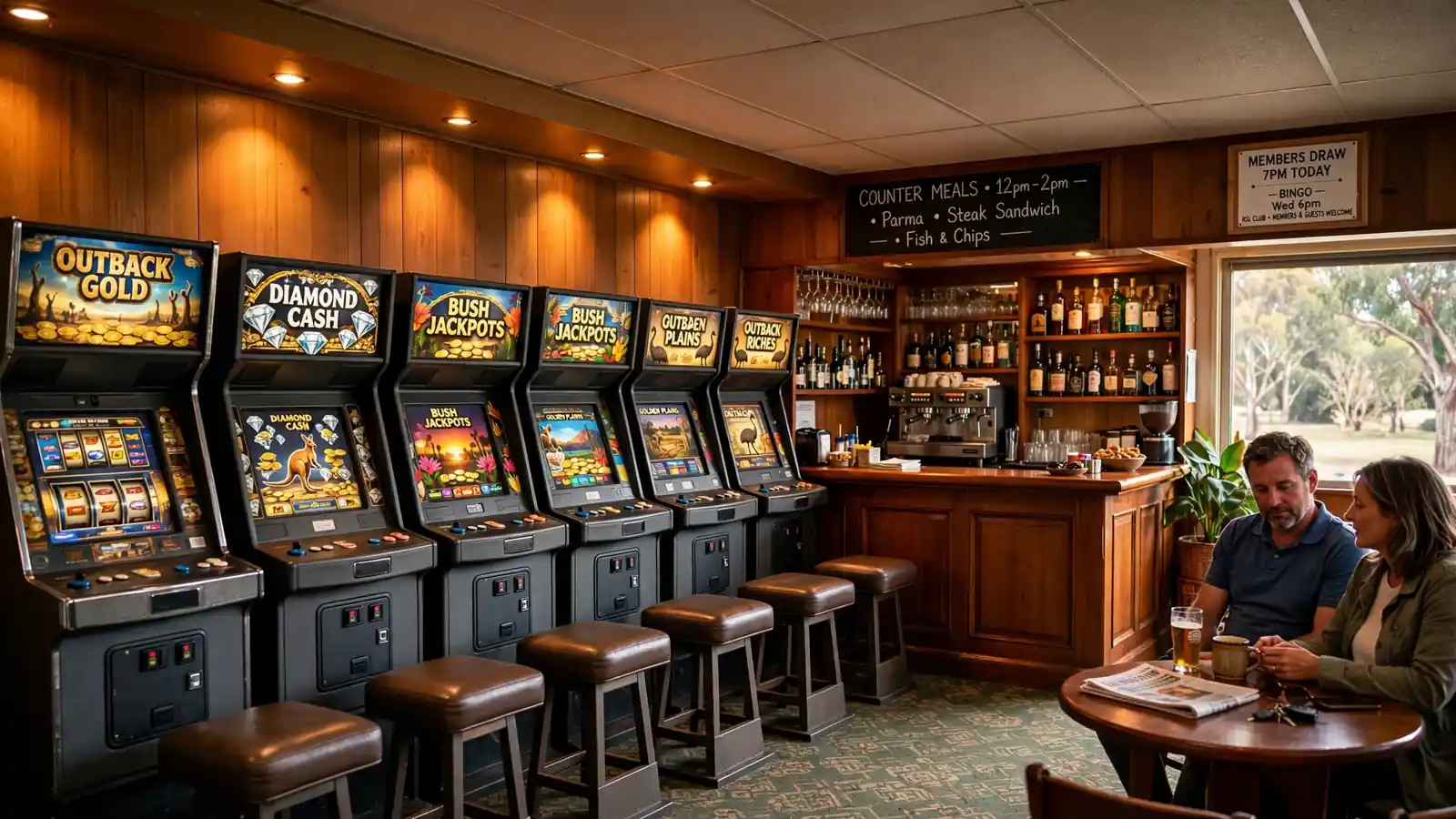
This is the part of gambling folklore that refuses to retire. The machine is imagined as keeping a private ledger: taking enough before paying back, warming up after a dry spell, or remembering a player who has been especially persistent. None of those stories describes independent spins. They give intention to a system that has none.
Independence also limits what can be inferred from a short sequence. A cluster of losing results is not evidence that the next spin must improve. A cluster of wins is not evidence that the game has become generous. Each outcome belongs to its own draw, even when the human mind insists on arranging unrelated events into a plot.
The practical consequence is modest but important: past results cannot provide a reliable prediction of the next result. There is no mechanical debt to collect and no hidden reward for endurance. The machine does not become more favourable because a player has been waiting.
RNG is the engine, not a promise
The Random Number Generator, or RNG, is the mechanism that produces the game’s outcomes. It operates independently of time, player traffic, and other external factors. A busy platform does not make a result more likely, and a quiet period does not make it less likely. The clock is not a betting signal. Neither is the number of people playing.
For licensed Australian-facing online platforms, RNGs are required to be independently audited. That requirement addresses a precise concern: whether the system generates results in the manner it claims to generate them. An external audit is therefore a technical safeguard, not a prediction of individual success.
Technical Integrity An independent audit of a Random Number Generator (RNG) verifies the mathematical process, but it does not guarantee a winning session or legal availability.
The difference is easily blurred. “Audited” can sound like “safe to win from”, but those are unrelated claims. An audit does not promise a favourable session, a regular return, or protection from losing money. It supports confidence that the game’s random process has been examined independently. The arithmetic remains the arithmetic.
Nor does an RNG remove the human element from gambling. It cannot correct chasing losses, extended play, or the belief that one more spin will repair the previous ones. A fair mechanism can still be used in an unhealthy pattern. Clean machinery is not the same thing as a clean outcome.
RTP belongs to the long run
RTP, or Return to Player, is a long-run statistical figure. It describes the proportion a game is designed to return over a large number of plays, not what a particular session will deliver. Short sessions can finish substantially above or below the published RTP.
That makes RTP useful for understanding a game, but useless as a personal forecast. It is not a balance that the machine owes after a losing afternoon. Nor is it a minimum return attached to every sequence of spins. Treating it as either would turn a statistical measure into a promise it never made.
The scale is the point. A long-run figure becomes meaningful across extensive play, while an individual session is a small and noisy fragment of that larger pattern. A player may finish well above the published figure or substantially below it. Both outcomes can occur without contradicting the game’s stated mathematics.

RTP also does not describe the shape of the journey. Two games could be discussed through long-run returns while producing very different experiences between one result and the next. One may pay less frequently with larger amounts; another may pay more frequently with smaller amounts. The headline number does not tell the whole story.
Variance changes the rhythm
Variance describes that rhythm. High-variance pokies pay out less frequently but in larger amounts. Low-variance pokies pay out more frequently but in smaller amounts. Neither pattern is a guarantee of profit, and neither transforms chance into control.
A high-variance game can produce a long stretch without a substantial return, followed by a larger hit. A low-variance game can create more frequent winning events, but those events may be smaller. The emotional texture differs: one feels sparse and dramatic, the other steadier and less theatrical. The bank balance, unfortunately, is not obliged to respect the mood.
This is why a game’s mechanics should be separated from sales language. “Safe” cannot mean that variance has been softened into certainty. It can mean only that the player has a clearer account of what the game is designed to do: independent outcomes, a long-run RTP measure, and a particular pattern of payouts.
Where the theory stops
These safeguards describe game behaviour. They do not authorise the service carrying the game. No combination of independent spins, published RTP, variance information, or audited RNG creates a domestic licence for real-money online pokies in Australia.
That boundary is deliberately plain. A technically credible game remains a prohibited online casino product when it is offered to Australian customers through an online casino. Safety in theory can explain whether the machine is mathematically and technically coherent. It cannot answer the legal question. Different questions. Different answers.
The Legal Reality Technical game integrity does not grant an offshore operator the right to serve Australian customers.
Secure Play Starts with the Game, Not the Sales Pitch
A persuasive description can make almost any pokie sound reassuring. “Exciting,” “generous,” and “player-friendly” are sales language, not evidence about how a game behaves. A safer way to read the machine is to separate its presentation from its mathematics: variance, RTP, and the independence of each spin.
Variance describes the shape of results, not whether a pokie is lawful, profitable, or suitable for a particular person. A high-variance game may produce longer stretches without a meaningful return, interrupted by less frequent but larger hits. A lower-variance game tends towards more frequent, smaller returns across a session. Neither pattern changes the basic fact that every spin stands alone.
That distinction matters because human beings are excellent at inventing narratives after the event. A quiet run feels as though a win must be approaching; a recent bonus seems to make another one less likely. The machine has no such memory. Its RNG operates independently of time, player traffic, and previous outcomes. The last result is not a clue. It is merely the last result.
Two games, two different expectations
Buffalo Power by Playson illustrates the high-variance end of the comparison. A profile review describes it as a high-variance pokie, with infrequent but larger hit patterns. That description does not promise larger overall returns. It tells more modestly—and more usefully—what the session may feel like: fewer noticeable wins, with greater separation between them when the game does produce a substantial hit.
Dolphin Treasure by Aristocrat is described differently in a profile review: as a lower-variance pokie with steadier, smaller returns across a session. “Steadier” should not be mistaken for reliable income. Lower variance changes the distribution of outcomes; it does not remove chance, create a favourable result, or protect a balance from loss.
The contrast can be read plainly:
- Buffalo Power: a high-variance profile, associated in the cited review with infrequent but larger hits.
- Dolphin Treasure: a lower-variance profile, associated in the cited review with steadier, smaller returns.
These are descriptions of game behaviour, not rankings. One is not automatically safer because it produces more frequent small returns, and the other is not automatically better because its occasional hits may be larger. A person who dislikes long periods of little apparent action may find high variance uncomfortable. Someone seeking the possibility of a larger single hit may accept that uneven rhythm. Preference is not proof.
RTP belongs in the same conversation
RTP, or Return to Player, is a long-run statistical figure. It describes how a game is expected to perform across a very large number of spins, not what a short session will deliver. A session can finish substantially above or below the published RTP. The figure is therefore useful for comparing game mathematics, but useless as a promise about the next sequence of results.
That is where sales language tends to smuggle in certainty. A high RTP does not mean that the machine is “due” to pay, nor that losses will be corrected during an evening. Variance and RTP answer different questions: variance concerns the distribution of wins, while RTP concerns the long-run statistical return. Neither predicts an individual spin.
A high-variance profile associated with infrequent but larger hits.
A lower-variance profile associated with steadier, smaller returns.
The word safe also needs restraint. A well-described game may be easier to understand, but technical clarity cannot make a prohibited online casino lawful in Australia. Buffalo Power and Dolphin Treasure are concrete examples for discussing variance; they are not endorsements of real-money online play or legal Australian online options. Secure play begins with knowing what the game can and cannot tell anyone. The sales pitch knows less than it claims.
Free Spins, Demo Modes, and the Safer Kind of Fun
A free spin has one virtue that real-money play cannot offer: it ends without turning the result into a financial event. Demo mode lets players become familiar with a machine’s layout, symbols, bonus features, and rhythm before any money is involved. That makes it useful for orientation, not prediction.
The distinction matters. A demo result does not forecast what the same machine will do later. Each spin remains independent, and earlier outcomes have no influence on the next one. A cheerful run of simulated wins is therefore entertainment, not evidence that money play is about to improve. The machine has no memory. It is not keeping score in the human sense.
What Demo Play Can Actually Show
Free pokies can make the mechanics less opaque. A player can see how paylines are arranged, what triggers a feature, how quickly the reels move, and whether the visual noise is enjoyable or merely exhausting. These are modest discoveries, but useful ones. Familiarity can replace the first rush of confusion, which is often mistaken for excitement.
Demo play can also reveal personal preferences. Some people like frequent small events; others prefer a quieter game with occasional dramatic features. That preference is separate from the mathematical behaviour of the machine. In particular, a demo session cannot turn a high-variance pokie into a low-risk one, nor can it make published RTP relevant to a short individual session.
This is the safer kind of fun: learning the shape of a game without paying for the lesson. No deposit is required, no withdrawal is promised, and no sales language needs to be treated as a technical explanation.
Entertainment, Not a Back Door
Free play should remain separate from real-money gambling. A demo button is not proof that a real-money service is authorised, safe, or suitable for Australian players. Nor does the presence of familiar games change the legal status of an online casino product.
That boundary is easy to blur because the screen looks the same in both modes. The difference is not decorative. In demo mode, the outcome is a fictional event in an entertainment interface; with money attached, the same spin becomes a gambling transaction with consequences beyond the screen.
A sensible stopping point is therefore built into the activity: try the machine, learn its mechanics, and leave the result where it belongs. On the screen.
PayID and the Limits of a Secure Payment Method
PayID is a payment method, not a gambling licence. That distinction becomes especially important when an online pokie service presents a familiar Australian payment label as evidence of safety. A recognisable way to move money may reduce friction in a transaction, but it does not change what is being purchased or whether the provider may legally offer it.
Payment Security Attention PayID is a practical payment tool, but its use does not validate the legality of an offshore gambling service.
Under the Interactive Gambling Act 2001, online casinos offering real-money pokies to Australians are banned. The rule concerns the gambling service itself. It is not cancelled by the use of PayID, a bank transfer, or any other payment channel. A payment can be processed securely while the underlying online casino remains prohibited. Two separate questions are being answered, and confusing them is how tidy banking language acquires far too much moral authority.
PayID belongs to Australia’s payment infrastructure. Its role is practical: it helps identify a recipient through a payment identifier rather than requiring traditional account details. That may make a transfer easier to recognise before authorisation. It does not verify that the recipient is entitled to provide online pokies to Australian customers, nor does it turn an offshore casino into a locally licensed operator.
The word “secure” therefore needs a narrow meaning. It can describe the mechanics of sending funds, the information shown by a bank, or the protection built into a payment process. It cannot be used as shorthand for lawful gambling, fair game operation, responsible conduct, or access to Australian player protections. A secure payment to an unlawful gambling service is still a payment to that service.
This also explains why “safe PayID pokies Australia” is an unstable idea rather than a reliable category. The payment method may be familiar; the product attached to it may not be permitted. No Australian gambling licence exists for casino games because offering that product to Australians is against the law. PayID cannot supply the missing licence, and a deposit screen cannot supply the missing legal authority.
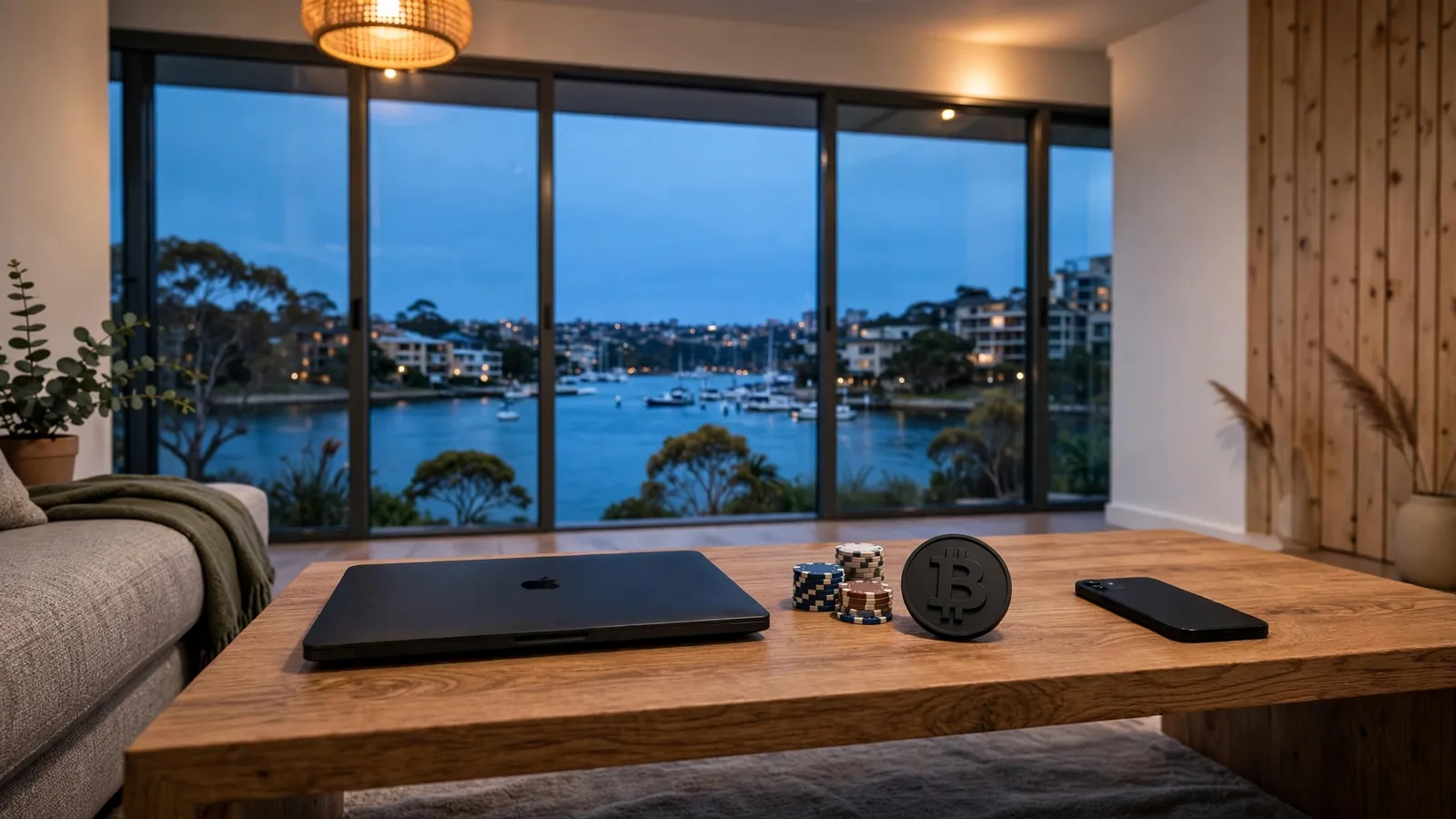
A sensible assessment keeps the order intact: identify the gambling product first, then consider how money moves. For lawful gambling, Australians have channels such as licensed sports and race wagering, land-based casinos, and lotteries. Online real-money pokies are a different matter. The label on the checkout page does not redraw that boundary.
Convenience is not authorisation.
A Casino Is Not Made Legal by Putting Pokies Online
A casino brand is not the same thing as a legal gambling product. The name above a website may suggest a familiar venue, while the service underneath offers online pokies, roulette, blackjack, or live tables. Those are separate questions: who operates the site, what it sells, and whether Australian law permits that product to be supplied to people in Australia.
The distinction matters because a polished casino identity can make an offshore service look local without changing its legal position. A logo, Australian spelling, local currency display, or customer support aimed at Australian users does not create Australian authorisation. Nor does a foreign licence. It may describe the operator’s standing in another jurisdiction, but it does not permit that operator to offer real-money online pokies to Australians.
Under the Interactive Gambling Act 2001, online casinos offering real-money pokies to Australians are banned. The prohibition concerns the service being offered, not the decorative language wrapped around it. Calling a website a casino does not make it a casino in the legal sense; calling the product a game, entertainment platform, or international service does not make the restriction disappear.
- Use only lawful, licensed gambling channels
- Use demo modes to learn game mechanics
- Keep spending tied to available cash
- Assume offshore licences grant Australian access
- Mistake sales language for technical safety
- Use credit to fund gambling activities
That is why the phrase “safe online pokies casino” can conceal two very different meanings. Safety might refer to account security, payment handling, or the honesty of a game’s presentation. Legality asks a prior question: is the gambling product authorised for Australian customers at all? A service can appear technically professional while failing that more basic test.
Foreign licensing is often treated as a reassuring seal, but it has a narrower reach. It may show that an overseas authority has issued a licence under its own rules. It does not turn the licence into an Australian casino licence, and no such domestic licence exists for real-money online casino games offered to Australian players. Geography, in this case, is not a footnote. It is the rule.
Enforcement also follows the provider and its promotion. A regulatory overview attributes ACMA’s role to blocking shady sites and warning influencers against dodgy promotions. That makes advertising language part of the problem, not merely an enthusiastic introduction to a website. A casino brand cannot borrow legitimacy from visibility.
The sensible separation is therefore plain:
- a brand identifies a business;
- a product identifies what the business supplies;
- Australian authorisation determines whether that supply is lawful.
Three different things. One label cannot do all three jobs.
The Best Pokies in Australia Are Shaped by Local Rules
This selection highlights online pokies operators for Australian players who want to assess licensing details, bonus terms, payment speed and minimum deposit requirements in the context of safer play in 2026. Use each short verdict as a starting point for checking the operator’s current conditions before registering.
License: Curacao eGaming Licence · Min. deposit: A$10 Rocket Play is listed with a Curacao eGaming Licence and a low minimum deposit of A$10. It may suit players who want to start with a modest initial payment.
License: Tobique Gaming Commission · Bonus: up to A$8,000 + 400 free spins across 4 deposits · Payout speed: crypto ~10-15 minutes, fiat 1-5 days · Min. deposit: A$30 SkyCrown stands out for a bonus of up to A$8,000 plus 400 free spins across four deposits. Crypto payouts are listed at around 10–15 minutes, while fiat payouts take 1–5 days, with a A$30 minimum deposit.
License: Curacao eGaming Licence · Min. deposit: A$10 PlayWest is listed with a Curacao eGaming Licence and a A$10 minimum deposit. These are the main verified points available for assessing its place in this selection.
License: Curacao eGaming (Dama N.V.) · Bonus: up to A$10,000 + 180 free spins, 40x wagering JeetCity Casino operates under a Curacao eGaming licence associated with Dama N.V. Its listed offer reaches A$10,000 plus 180 free spins, with 40x wagering.
License: Curacao, operated by Dama N.V. · Bonus: 325% up to 5.25 BTC + 250 free spins across 4 deposits 7Bit Casino is operated by Dama N.V. in Curacao and offers 325% up to 5.25 BTC plus 250 free spins across four deposits.
License: international iGaming licence – jurisdiction not named in the source · Bonus: 100% up to A$1,000 + 100 free spins, 35x wagering · Payout speed: PayID 1-24 hours · Min. deposit: A$30 (PayID from A$10) House of Pokies lists an international iGaming licence, although the jurisdiction is not named in the source. Its offer includes 100% up to A$1,000 plus 100 free spins with 35x wagering, while PayID payouts are listed at 1–24 hours; the minimum deposit is A$30, or A$10 with PayID.
License: Curacao · Bonus: 100% up to A$500 + 200 free spins, 10x wagering · Payout speed: crypto 30-60 minutes, fiat 1-5 days · Min. deposit: A$10 Wild Tokyo is listed with a Curacao licence and offers 100% up to A$500 plus 200 free spins with 10x wagering. Crypto payouts are listed at 30–60 minutes and fiat payouts at 1–5 days, with a A$10 minimum deposit.
Bonus: up to A$750 + 50 jackpot spins, 35x wagering · Payout speed: crypto ~90 minutes, fiat 1-5 days · Min. deposit: A$30 Kingmaker offers up to A$750 plus 50 jackpot spins with 35x wagering. Crypto payouts are listed at around 90 minutes and fiat payouts at 1–5 days, with a A$30 minimum deposit.
Bonus: up to A$6,600 + up to 250 free spins across 4 deposits DragonSlots Casino is notable for a bonus of up to A$6,600 plus up to 250 free spins across four deposits. No further verified operator details were provided in the source information.
License: Curacao · Bonus: up to A$10,000 multi-stage + 500 free spins · Min. deposit: A$20 (POLi) Lucky Dreams is listed with a Curacao licence and a multi-stage bonus of up to A$10,000 plus 500 free spins. The minimum deposit is A$20 when using POLi.
Once the online casino door is closed, the word “best” becomes less glamorous and more useful. In Australia, legal gaming machines belong to a land-based system divided among states and territories. The machine is only part of the arrangement; its venue, permitted stake, return setting and operating rules matter just as much.
That makes “safe best pokies in Australia” a misleadingly tidy phrase. There is no single national machine standard from which a universal winner can be crowned. A pokie in a club is governed by the local jurisdiction, not by the rhetoric printed on its cabinet.
The Australian Capital Territory offers a compact illustration. A specialist industry overview reports 5,200 gaming machines located in clubs and hotels, while Casino Canberra has no gaming machines. The absence is more revealing than the number. A casino name does not automatically bring every gambling product with it; venue categories and local decisions still draw the boundaries.
The ACT also imposes a five-hour gambling break and sets a maximum bet of $10 per spin. Its machines have a minimum RTP of 87%. These are not decorative details. RTP is a long-run statistical measure, not a promise about one visit, one evening or one fortunate machine. Yet the local floor tells something important about the environment in which the games operate.
A machine with an appealing theme may still be a poor fit for the rules and limits of its venue. Conversely, a less fashionable title may sit within a framework that makes the session more controlled. The difference is not a secret formula hidden in the reels. It is regulation made visible.
The ACT’s arrangement also shows why casino branding should not be mistaken for technical superiority. Clubs and hotels carry the machines in the reported local structure; Casino Canberra does not. The legal setting, rather than the prestige of a sign above the entrance, determines what is available.
That is the quiet Australian meaning of safety here: not a magical “best” pokie, but a machine operating inside known local conditions. Rules first. Reels second.
What Safe Choice Looks Like Across Australian Venues
A “safe choice” changes shape when the venue changes. Australian gaming machines are not governed by one national playbook; the conditions attached to them belong to the state or territory, and sometimes to the type of premises. The machine in a club is therefore not regulated quite like the machine in a casino. A small distinction on paper can alter the pace, price and statistical expectation of a session.
State Regulation Variations Australian gaming machines are regulated at the state or territory level, leading to different limits on bets and RTP floors depending on the venue and location.
The Northern Territory makes that split unusually visible. A specialist gambling review records 2,195 gaming machines across clubs, hotels and two casinos, Sky City and Lasseters. In clubs and hotels, the maximum stake is $5 per spin, with a minimum RTP of 85%. Casinos have no maximum bet and a minimum RTP of 88%. The venue is not decorative scenery; it is part of the rulebook.
New South Wales operates on a much larger scale. A specialist gambling review lists 100,500 gaming machines: 99,000 in clubs and hotels and 1,500 at Star Casino in Sydney. That distribution says something about the Australian habit of placing gambling inside ordinary social buildings rather than keeping it behind a single casino door. The club is the local institution; the machine sits among the furniture.
The comparison matters more than a league table of “best” games:
| Jurisdiction or venue type | Where machines are recorded | Maximum bet or RTP detail |
|---|---|---|
| Northern Territory clubs and hotels | Clubs and hotels | $5 per spin; minimum RTP 85% |
| Northern Territory casinos | Sky City and Lasseters | No maximum bet; minimum RTP 88% |
| New South Wales clubs and hotels | 99,000 machines | Part of a total of 100,500 machines |
| Star Casino, Sydney | 1,500 machines | Part of the New South Wales total |
RTP remains a long-run measure, not a promise for one visit. Yet the legal floor still frames the environment in which variance is experienced. A lower permitted stake may limit the speed at which money leaves a machine; a higher casino threshold does not make the underlying outcome predictable. Neither setting turns luck into a salary.
That is the useful test for safety in a physical venue: identify the premises, the local ceiling on a spin, and the applicable RTP floor before treating two machines as equivalent. “Pokies in Australia” is a broad label. The rules are not.
Paying for Legal Gambling Without Turning Credit into a Trap
Money changes the character of gambling. A cash balance is visible, finite and mildly inconvenient to replenish. Credit makes the same decision feel weightless: the loss arrives first as a line on a statement, detached from the moment that produced it. That distance is where “safe” can become a misleading word.
For Australians, the legal boundary matters before any payment question. Land-based casinos, licensed bookmakers and lotteries are lawful gambling channels. Online casino games, including real-money pokies, are not made lawful by the method used to fund them. A debit card, bank transfer or any other payment route cannot turn a prohibited online product into an authorised one.
That distinction is easy to lose in the language of financial technology. A payment service may be secure as a transaction while the gambling service receiving the money remains unlawful for Australian customers. Security protects the movement of funds. It does not grant permission to offer the underlying game. Two separate questions, inconveniently sharing one receipt.
Is it illegal to play at offshore sites?
Australians are not committing a crime by placing bets, but the law prohibits the provider from supplying the service to Australians.
What does RTP actually mean?
RTP is a long-run statistical figure describing the proportion a game returns over a large number of plays, not a guarantee for a single session.
Credit is not a neutral convenience
Credit-funded betting creates a different relationship with loss. The money is borrowed, repayment is postponed, and the next wager can appear to be a way of repairing the previous one. That is not a payment feature; it is a mechanism for extending exposure beyond cash already available.
Australian gambling safeguards therefore sit partly in the choice of channel. Licensed bookmakers operate within the lawful wagering market, while land-based casinos and lotteries provide other legal forms of gambling. None should be confused with online pokies offered by an offshore casino. An overseas licence does not authorise casino games for Australians, and a familiar deposit screen does not alter that fact.
A sensible payment principle is plain: gambling should not depend on borrowed money. Credit cards and cryptocurrency are banned as deposit methods for Australian online gambling, and credit-funded payment methods must not be promoted. The prohibition reflects a practical truth rather than a moral flourish. When payment is delayed, the cost of play becomes harder to feel at the moment of choice.
What “safe” can honestly mean
“Safe online pokies” cannot mean a legal Australian casino funded through a convenient account. No domestically licensed real-money online casino exists for Australian players. The safer interpretation is narrower: use only lawful gambling channels, keep spending tied to money already available, and treat payment security as separate from gambling legality.
A payment method can reduce fraud risk. It cannot reduce a prohibited service into a permitted one. That line is not decorative. It is the whole point.
Safe AU Pokies Means Reading the Fine Print of the State
Safety in Australian pokies is administered locally, not stamped across the country like a single national seal. South Australia, Tasmania and Victoria each place their own boundaries around machines, and those boundaries are more revealing than any glossy description of a game.
South Australia: Coins, Timing and a Visible Ceiling
A specialist market overview records 13,113 gaming machines in South Australia: 12,118 in clubs and hotels and 995 at Adelaide Casino. The distribution matters because the machine is not an abstract product floating above its venue. It belongs to a particular regulatory setting.
South Australian machines accept coins only; note acceptors are banned. That is an old-fashioned inconvenience with a modern purpose. Physical money makes the transaction more visible, less frictionless, and harder to confuse with an invisible stream of digital spending.
The same overview records a minimum spin rate of 3.5 seconds, a maximum bet of $10 per spin, and a minimum RTP of 87.5%. None of these figures predicts the result of an individual session. RTP remains a long-run statistical measure, while the spin interval limits how quickly decisions can accumulate.
The machine is permitted to be entertaining. It is not permitted to become instantaneous.
Tasmania: A Smaller Pace
A specialist market overview lists 3,680 gaming machines across Tasmanian hotels, clubs and two casinos: Wrest Point and Country Club. The state’s rules place a three-second minimum spin rate, a $5 maximum bet per spin, and a maximum of 30 lines on gaming machines.
Those details shape the tempo and scale of play. A line limit narrows the machine’s permitted configuration; a bet cap limits the amount attached to one spin; a minimum interval prevents the next decision from arriving before the previous one has properly disappeared.
The setting is not marketed as a lesson in probability. It is regulation doing its quieter work.
Victoria: Different Rules for Different Venues
A specialist market overview records 30,000 gaming machines in Victoria, including 27,500 in clubs and hotels and 2,500 at Crown Melbourne. In clubs and hotels, the maximum bet is $5, while the minimum RTP is 87%. Casinos have no maximum bet.
That contrast is the point. “Safe AU pokies” cannot sensibly mean one universal machine standard when the venue changes the permitted conditions. The same broad category of game sits inside different limits depending on where it is offered.
Across these states, safety is therefore a set of boundaries: coins instead of notes, measured spin rates, restricted bets, line limits and RTP floors. They do not promise winnings. They make the environment less careless.
Is it legal to play online pokies in Australia for real money?
No. Under the Interactive Gambling Act 2001, online casinos offering real-money pokies to Australians are prohibited, although players are not committing a crime merely by using offshore sites.
Are real-money online casinos legal for Australians?
No. Australia has no domestic licence for real-money online casino games, including pokies; legal gambling options include land-based casinos, licensed bookmakers, and lotteries.
How to choose a licensed casino?
Australians cannot choose a domestically licensed online casino for real-money pokies because no such Australian licence exists. An offshore licence, such as one from Malta or Curaçao, does not authorise an operator to serve Australian customers.
What are the implications of cryptocurrency gambling?
Cryptocurrency does not change the legal position: using a different payment method cannot make an online casino authorised to offer real-money pokies to Australians.
Created by the ”Casino Info Au” editorial team.